Washington DC: US President Donald Trump has suggested that Venezuela could become the 51st state of the United States, linking the possibility to expanding energy cooperation between Washington and Caracas.
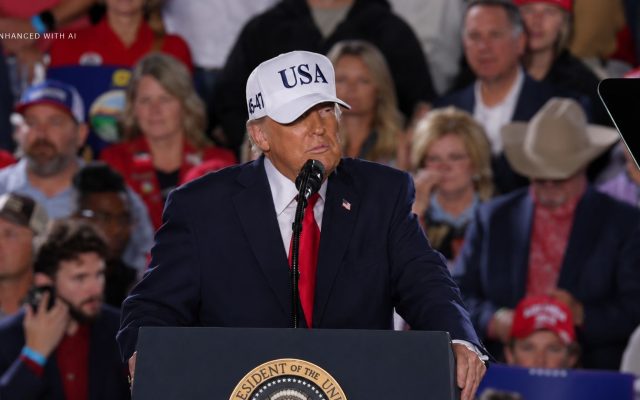
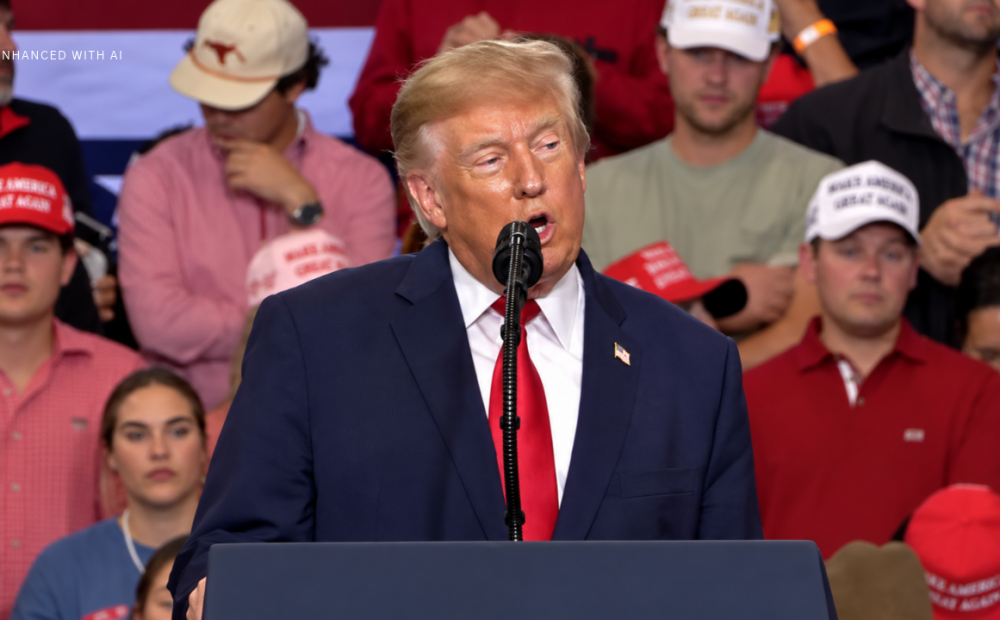
Speaking at a midterm election rally in Corpus Christi, Texas, on Tuesday, Trump touted an oil agreement with Venezuela and announced the arrival of a shipment he described as the first 1 million barrels of free Venezuelan oil.
“I want to thank Venezuela, where our relationship has become very, very good, a great one,” Trump told supporters.
Trump said the shipment would be processed at Texas refineries, including facilities in Corpus Christi, and argued that the arrangement would benefit the US economy while strengthening Washington’s position in global energy markets.
“It will be refined here in Texas, including right here in Corpus Christi,” he said.
The president described the agreement as a major victory for the United States, claiming it could eventually involve billions of barrels of oil without placing a financial burden on American taxpayers.
“We’re celebrating the greatest oil victory in history,” Trump said.
He also credited his administration’s energy policies with strengthening the Western Hemisphere’s position in global energy production. In a post on Truth Social ahead of the rally, Trump said his strategy had transformed the region into a global energy hub.
“By unleashing Energy Dominance from Alaska, all the way down to Venezuela, I have made the Western Hemisphere the Energy Capital of the World,” he wrote.
Trump Suggests Venezuela Could Join US
Moving beyond energy cooperation, Trump raised the possibility of Venezuela becoming part of the United States, presenting the idea as a potential future development before directly urging supporters to back it.
“It will become a prosperous country, and who knows? Maybe someday soon it will become a prosperous 51st state. That’s possible,” he said.
Trump subsequently went further, suggesting Venezuela could elect a governor instead of a president if it became a US state.
“Let’s make it. Let’s make it the 51st state. And instead of a president, we’ll have an election for a governor. How about that? You know, they have a lot of oil,” he said.
The remarks follow Trump’s earlier expressions of interest in expanding US territorial influence. He has previously floated the idea of Canada joining the United States and expressed interest in acquiring Greenland and Mexico.
Trump had also indicated earlier this year that he was seriously considering the possibility of Venezuela becoming a US state.
Venezuela Oil Deal Raises Questions Over Democracy
The growing energy partnership between Washington and Caracas has sparked questions about Venezuela’s political future and the US administration’s priorities in the country.
Critics and analysts have raised concerns that securing access to Venezuela’s oil reserves has taken precedence over efforts to establish a democratic transition.
The oil agreement was pursued with the backing of Venezuela’s interim government, which has received support from the Trump administration following the capture of Venezuelan President Nicolás Maduro by US forces in Caracas nine months ago. Maduro was subsequently taken to New York to face criminal charges.
Venezuela has not held elections since Maduro’s arrest, leaving questions over the country’s political transition and the future of its democratic institutions.
The agreement also comes as the US economy faces pressure from the ongoing war with Iran, which began in February. The conflict has disrupted energy markets, with Iran’s closure of the Strait of Hormuz affecting a critical shipping route that carries roughly one-fifth of the world’s oil supply.
The disruption has contributed to rising fuel prices in the United States, adding to economic concerns ahead of the midterm elections.
Trump has predicted that American fuel prices will fall sharply and has presented the Venezuelan oil arrangement as part of his broader effort to ease costs for consumers and strengthen domestic energy security.
His remarks in Texas come as his administration faces mounting scrutiny over its foreign policy, including the conflict with Iran and tariffs imposed on goods from multiple countries. Opinion polls indicating declining approval ratings have added to the political pressure on the president ahead of next week’s midterm elections.