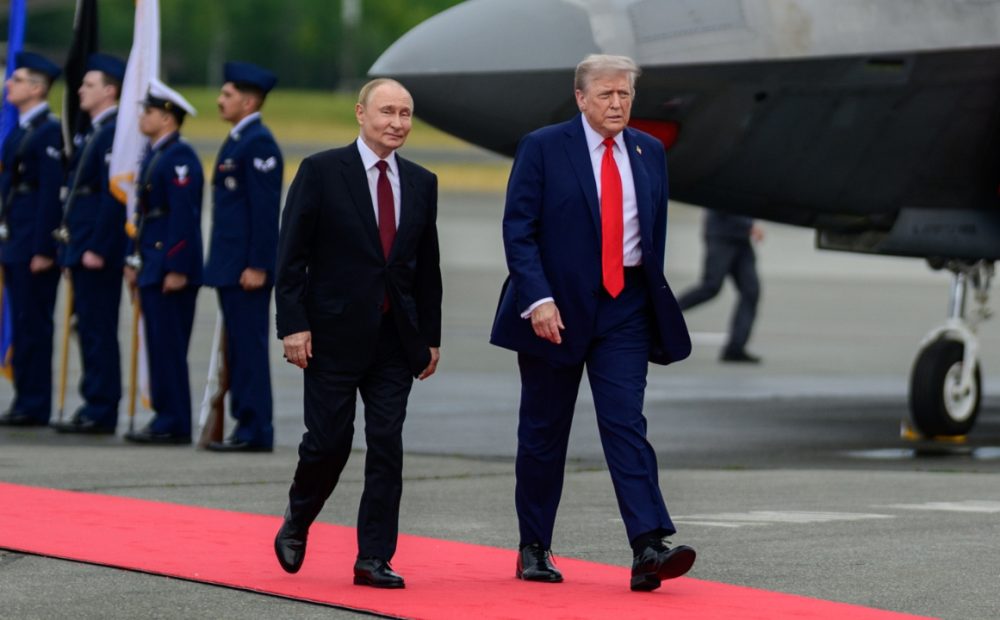
Washington DC: US President Donald Trump is exploring a series of major oil and business agreements with Russia as Washington seeks to secure an end to the ongoing war in Ukraine, according to a report by the Financial Times.
The proposed arrangements reportedly include allowing American energy companies to return to Russia’s oil sector after the conflict ends, restoring Russian oil supplies to European markets and expanding cooperation between the two countries across several industries.
The discussions represent another effort by Trump to persuade Russian President Vladimir Putin to make concessions towards a peace agreement as the war enters its fifth year. However, the prospect of Washington rebuilding economic ties with Moscow could further strain its already troubled relationship with Kyiv, particularly amid disagreements over Ukraine’s continued strikes on Russian energy infrastructure.
Sakhalin Oil Project, Druzhba Pipeline Among Key Proposals
According to people familiar with the discussions cited by the Financial Times, one proposal involves reviving the joint US-Russian oil venture off the coast of Sakhalin in Russia’s Far East.
Another initiative under consideration would facilitate the resumption of Russian oil deliveries to Europe through the Druzhba pipeline.
US special envoy Steve Witkoff reportedly discussed potential commercial arrangements during his meeting with Putin in early September. Witkoff, a former real estate executive, has faced criticism from both Democratic and Republican lawmakers, who have questioned his approach towards the Russian leader and accused him of being overly accommodating to Moscow.
The White House is reportedly seeking progress through proposed peace discussions involving Russian, Ukrainian and American officials in Abu Dhabi next month. If held, the meeting would mark the first trilateral engagement of its kind since February.
US officials have maintained that any economic agreements with Russia would be linked to a wider peace arrangement and would only come into effect after the war concludes.
However, the proposals face considerable uncertainty, including whether Putin is prepared to agree to an end to hostilities and whether American businesses would be willing to re-enter the Russian market amid continuing geopolitical and commercial risks.
ExxonMobil’s Return To Russia Remains Uncertain
ExxonMobil, the only American company associated with the Sakhalin oil venture, said last year that it had no plans to restart its operations in Russia. It remains unclear whether the energy major has since revised its position.
Beyond the oil and gas sector, Washington and Moscow have reportedly discussed potential cooperation in titanium production, a strategically important metal widely used in aircraft manufacturing.
Another proposal involves restoring US airlines’ access to Russian airspace, which could potentially reduce travel distances and fuel expenses on certain international routes.
Since returning to the White House, Trump has sought to reopen economic engagement with Moscow after years of Western isolation following Russia’s full-scale invasion of Ukraine in 2022.
Earlier this month, Trump agreed to a deal involving the import of thousands of barrels of Russian diesel, a move that drew sharp criticism from Kyiv and raised concerns among European allies and US lawmakers.
His administration has also reportedly deferred a fresh package of sanctions targeting Russian energy exports while increasing pressure on Ukraine to scale back attacks on Russian oil refineries.
Trump-Zelensky Relations Face Fresh Strain
The reported economic discussions threaten to further complicate relations between Trump and Ukrainian President Volodymyr Zelensky.
Kyiv has resisted calls to halt its long-range drone operations targeting Russian infrastructure and energy facilities. The disagreement has unfolded alongside reported disruptions in US intelligence-sharing with Ukraine and concerns over the country’s continued access to Starlink satellite services.
For Ukraine, Washington’s willingness to explore potentially lucrative commercial arrangements with Moscow while simultaneously urging Kyiv to limit its military operations raises fresh questions about the direction of US policy towards the conflict.
The developments could also complicate ongoing diplomatic efforts, particularly as Ukraine continues to insist that any settlement must safeguard its sovereignty and security interests.
European Leaders Reach Out To Putin
Meanwhile, European leaders are also reconsidering their approach to direct engagement with the Kremlin.
Finnish President Alexander Stubb and Norwegian Prime Minister Jonas Gahr Store spoke with Putin on Tuesday in a 90-minute telephone conversation, urging the Russian leader to bring the war to an end.
The outreach marks a departure from the approach adopted by several Western European governments, whose leaders have largely avoided direct communication with Putin since Russia launched its full-scale invasion of Ukraine.
Both Stubb and Store said they had emphasised the need for de-escalation during the conversation and reiterated their strong support for Ukraine.
The Kremlin, however, presented a different account of the discussion, claiming Putin had blamed the policies of Kyiv’s Western allies, which he described as confrontational, for prolonging the conflict.