Washington: US President Donald Trump has signed into law a sweeping sanctions package targeting Russia, granting his administration the authority to impose tariffs of up to 100% on countries that continue purchasing Russian oil and natural gas, including India and China.
The move intensifies pressure on Moscow over its war in Ukraine while creating fresh uncertainty for countries that maintain energy and trade ties with Russia.
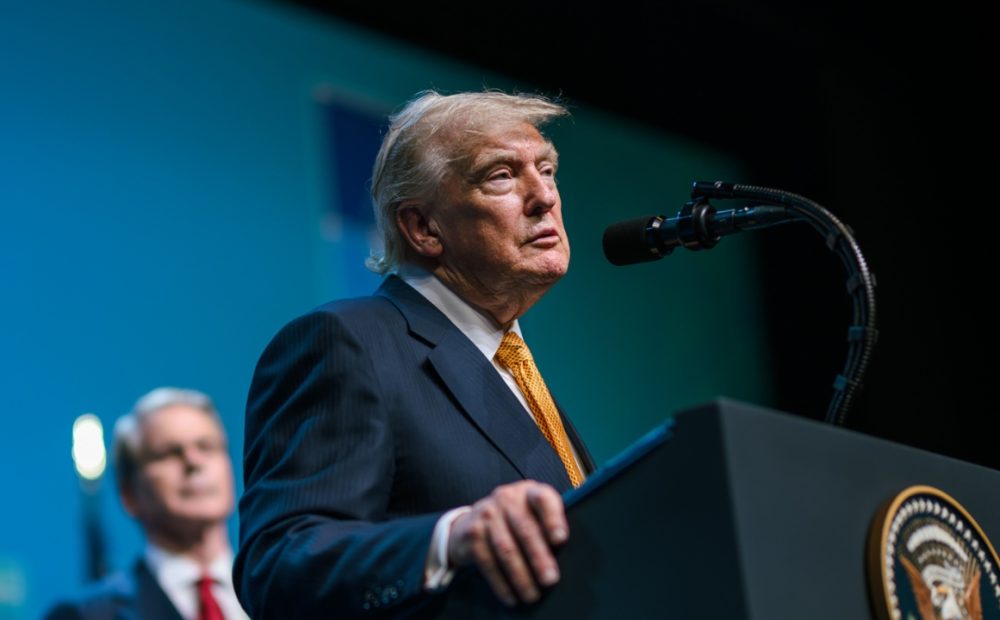
Trump signed the legislation Friday, two days after the Republican-led House of Representatives approved it in a 262-159 vote. The Senate had passed the bill in August.
Named the Lindsey O. Graham Sanctioning Russia and Iran Act of 2026, the legislation honors the late South Carolina Republican senator and longtime advocate of tougher measures against Moscow.
The law aims to restrict Russia’s ability to finance its war by targeting its energy sector, financial institutions, senior officials and foreign networks supporting its military operations.
What Does The New Law Say?
The legislation expands sanctions against Russian officials, banks and businesses linked to the country’s defense and energy industries. It also targets Russia’s so-called shadow fleet of oil tankers, which has been used to circumvent existing sanctions and facilitate energy exports.
Under the law, Trump can impose tariffs of up to 500% on Russian goods.
It also authorizes duties of up to 100% on imports from certain countries that purchase Russian oil and natural gas or assist in evading sanctions.
However, the legislation does not automatically impose a 100% tariff on India or China. It gives the president the authority to determine which countries will face additional duties and the rates that would apply.
The law also includes provisions targeting Russian President Vladimir Putin and senior government officials.
Why India Is Concerned?
India, one of the largest buyers of Russian crude oil, could face additional trade restrictions if the Trump administration decides to exercise its new powers.
During congressional deliberations, an amendment introduced by Democratic Rep. Steny Hoyer identified 10 countries that could potentially fall under the law’s secondary tariff provisions.
The countries included India, China, the United Arab Emirates, Türkiye, Singapore, Azerbaijan, Kazakhstan, Hungary, Kyrgyzstan and Slovakia.
The amendment did not impose an automatic 100% tariff on any of these countries. Instead, the legislation leaves the decision to the US president.
The potential impact on Indian exports will depend on the tariff rates, the products covered and the timing of any future US announcement.
India and the United States had faced significant trade tensions last year after Trump imposed an additional 25% tariff on Indian imports over New Delhi’s purchases of Russian crude oil. This was imposed on top of a reciprocal tariff.
The additional duty was removed in February 2026, while the reciprocal tariff was reduced to 18% under a US-India trade framework.
India’s Response To The Sanctions Bill
India has reiterated its commitment to protecting its energy security and economic interests amid the latest developments in Washington.
Following the House passage of the legislation, the Ministry of External Affairs said India would continue to secure energy supplies for its population through diversified sourcing and in response to changing market conditions.
“As stated on several earlier occasions, India remains firmly committed to ensuring energy security for its 1.4 billion people,” the ministry said.
The ministry added that India’s oil trade with Russia had been discussed extensively with US officials in recent months.
It said New Delhi had clearly communicated the potential consequences of the issue for both bilateral relations and international energy markets.
India has maintained that its energy procurement decisions are guided by national interests, market conditions and the need to ensure energy security.