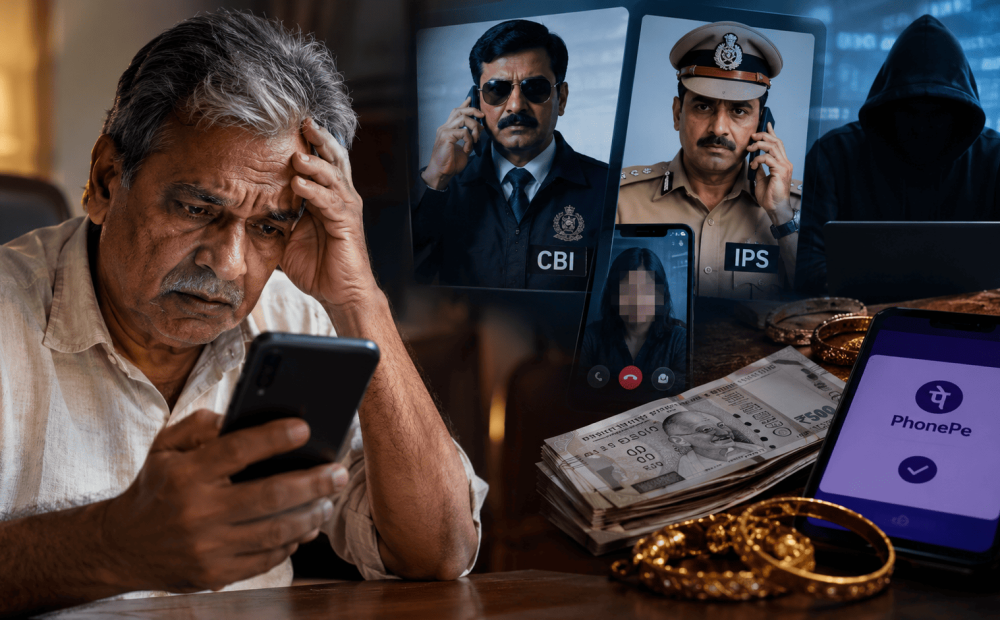
Raipur: A 64-year-old grocery shop owner was allegedly trapped in a 44-day “digital arrest” scam after cyber fraudsters posing as CBI and IPS officers accused him of being linked to a fake ₹6.8-crore money-laundering case and eventually extracted ₹8.5 lakh from him.
What began as a phone call on August 18 reportedly turned into weeks of intimidation, surveillance and repeated demands for money.
The victim, who lives in Bajrang Nagar in Urkura, was initially contacted by a woman who claimed that his bank account had surfaced in a money-laundering investigation. She allegedly questioned him about his family, property and bank accounts before handing the call over to other individuals claiming to be government officials.
One caller reportedly posed as a CBI officer, while another claimed to be an IPS officer. They allegedly told the man that ₹6.8 crore had been laundered through his ICICI Bank account and threatened him with arrest if he did not follow their instructions.
The callers allegedly created the impression of a live investigation by keeping the victim on video calls for extended periods. He was reportedly asked to give hourly updates, while his wife was also allegedly made to remain present during the calls.
The fraudsters then allegedly introduced money transfers as part of the purported investigation.
According to the complaint, the victim made nine payments totalling ₹8.5 lakh between September 4 and October 1. The transactions were reportedly made through PhonePe to several different accounts.
With the demands continuing, the man allegedly used his savings and even sold gold jewellery to arrange the money.
The situation came to light on October 3, when the victim finally told his younger brother about the calls and the payments. He approached Khamtarai police on October 4 and handed over bank statements, chats, messages and transaction receipts as part of his complaint.
Police said the suspects had impersonated CBI and IPS officers and used threats linked to a fabricated money-laundering case to frighten the victim into making the payments.
The case is another example of how “digital arrest” frauds exploit fear of law-enforcement action. Scammers typically impersonate police or investigative agencies, accuse targets of involvement in serious crimes and then pressure them into following instructions remotely.
Reader’s Note: No genuine police or investigative agency can place a person under “digital arrest” through a video call or demand money as part of an investigation. Anyone receiving such a call should immediately disconnect, avoid transferring money and report the incident to the cybercrime authorities.