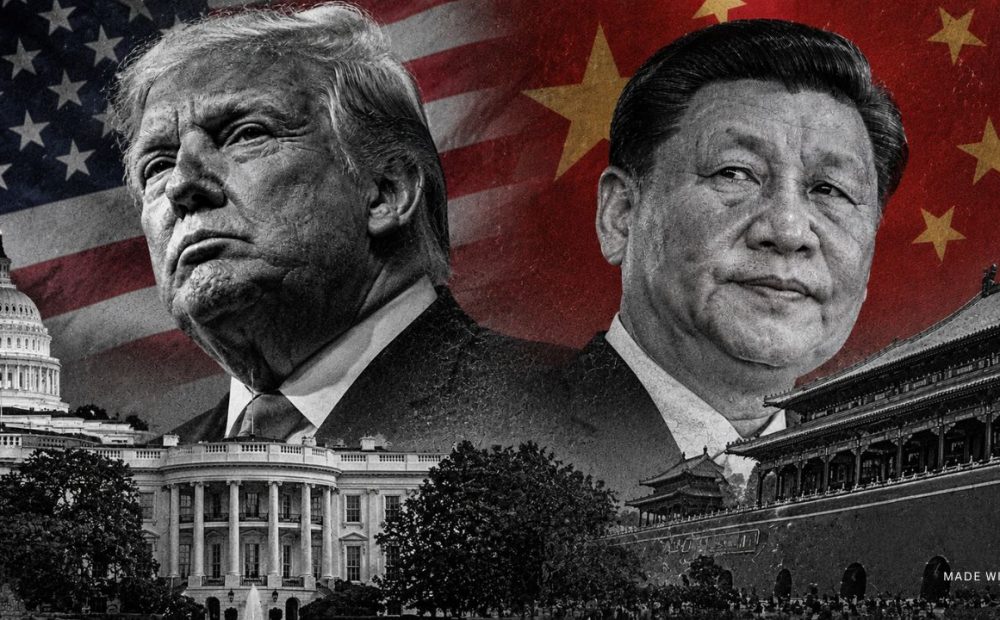
Washington, DC: Chinese President Xi Jinping is set to meet US President Donald Trump at the White House on Thursday as Washington and Beijing seek to stabilize ties strained by tariffs, technology restrictions and broader geopolitical disputes.
Xi arrived in Washington on Wednesday for a three-day state visit — his first to the United States in more than a decade. Trump and first lady Melania Trump personally welcomed Xi and his wife, Peng Liyuan, at Joint Base Andrews in Maryland, in an unusually high-profile arrival ceremony.
The White House has described the visit as a significant milestone in US-China relations. The summit comes as the world’s two largest economies attempt to manage their rivalry while keeping trade and diplomatic channels open.
A rare welcome for Xi
Trump’s decision to greet Xi at Joint Base Andrews underscored the importance Washington is placing on the visit. The Chinese president was accompanied by Peng, senior adviser Cai Qi and Foreign Minister Wang Yi, according to Chinese state media.
The arrival ceremony featured a red carpet and military honors, setting the tone for a closely watched state visit that combines diplomatic symbolism with negotiations over some of the most contentious issues between Washington and Beijing.
The two leaders last met in person in May, when Trump visited China. Thursday’s meeting will be their third face-to-face encounter in less than a year.
What is planned for Xi’s Washington visit?
Xi will receive a formal welcome at the White House on Thursday, followed by talks with Trump.
The ceremony is expected to include a military flyover and nearly 500 military personnel. Trump will later host Xi at a state dinner, with senior business leaders from both countries expected to attend.
The visit is scheduled to conclude Friday with a private tea involving the two presidential couples and a visit to the National Archives.
The two governments are expected to issue separate statements following the talks rather than a joint announcement, allowing Washington and Beijing to emphasize their respective priorities and outcomes.
Trade truce offers breathing room
Trade is expected to dominate the summit.
The United States and China have spent much of Trump’s second term locked in a tariff confrontation that has included steep duties, restrictions on critical minerals and disputes over access to advanced technology.
A temporary trade truce that had been due to expire later this year has been extended, giving negotiators additional time to work toward a broader arrangement. Reuters reported that preserving the truce rather than securing a sweeping trade agreement is a central objective of the meeting.
Washington is seeking greater access for US products to the Chinese market, while Beijing has pressed for relief from US restrictions on technology and other trade measures.
Rare-earth minerals are another key issue. China remains a major supplier of critical minerals used in electronics, clean-energy technologies and defense manufacturing, making export controls an important point of leverage in the relationship.
AI becomes a new front in US-China rivalry
Artificial intelligence is also expected to feature prominently.
Washington and Beijing are competing aggressively over advanced AI systems, semiconductor technology and computing capacity, even as both sides acknowledge the potential risks posed by increasingly powerful AI.
The United States has proposed establishing a mechanism through which Washington and Beijing could alert each other about serious AI-related incidents that could pose national security risks.
The discussions are unlikely to erase the wider technology rivalry, but officials are looking at ways to prevent competition from creating additional risks between the two countries.
Taiwan remains a major sticking point
Taiwan is expected to be among the most sensitive issues confronting Trump and Xi.
Beijing claims Taiwan as part of China and has repeatedly opposed U.S. arms sales to the island. Washington, meanwhile, maintains longstanding commitments to supporting Taiwan’s ability to defend itself.
The Trump administration has approved a major arms package for Taiwan, while another package reportedly remains under consideration. Trump has previously described Taiwan arms sales as a negotiating tool.
Xi is expected to press Beijing’s position on Taiwan during discussions with Trump, while the issue remains closely linked to wider US-China security tensions in the Indo-Pacific.
Iran adds another layer to the talks
The conflict involving the United States, Israel and Iran is another issue likely to enter the discussions.
China has maintained relations with Tehran, and Washington could seek to understand whether Beijing is prepared to use its influence to support diplomatic efforts. At the same time, Trump has indicated that he does not necessarily see a need for China’s assistance in addressing the conflict.
The issue gives the summit a broader geopolitical dimension beyond the bilateral U.S.-China relationship.
Trump-Xi ties: Personal warmth, strategic rivalry
The personal tone surrounding the summit contrasts with the underlying tensions between the two governments.
Trump has emphasized his relationship with Xi, while the elaborate welcome in Washington signals an effort to project stability at the leadership level.
But the relationship remains defined by competition over trade, technology, national security and influence.
The two sides have also sought to prevent their disagreements from escalating into a broader confrontation. Their latest meeting will test whether that approach can be sustained while Washington and Beijing continue to pursue competing strategic and economic interests.
What is at stake?
The Trump-Xi meeting is unlikely to be limited to a single issue. Trade, rare-earth supplies, AI, Taiwan, Iran and technology controls are all tied to the broader question of how the world’s two largest economies manage their rivalry.
For Trump, the talks offer an opportunity to seek concrete economic commitments from Beijing. For Xi, the summit provides a platform to press China’s concerns over tariffs, technology restrictions and Taiwan while maintaining high-level dialogue with Washington.
The outcome could determine whether the current period of relative stability between the two countries develops into a more durable framework for managing competition — or whether unresolved disputes once again push relations toward confrontation.