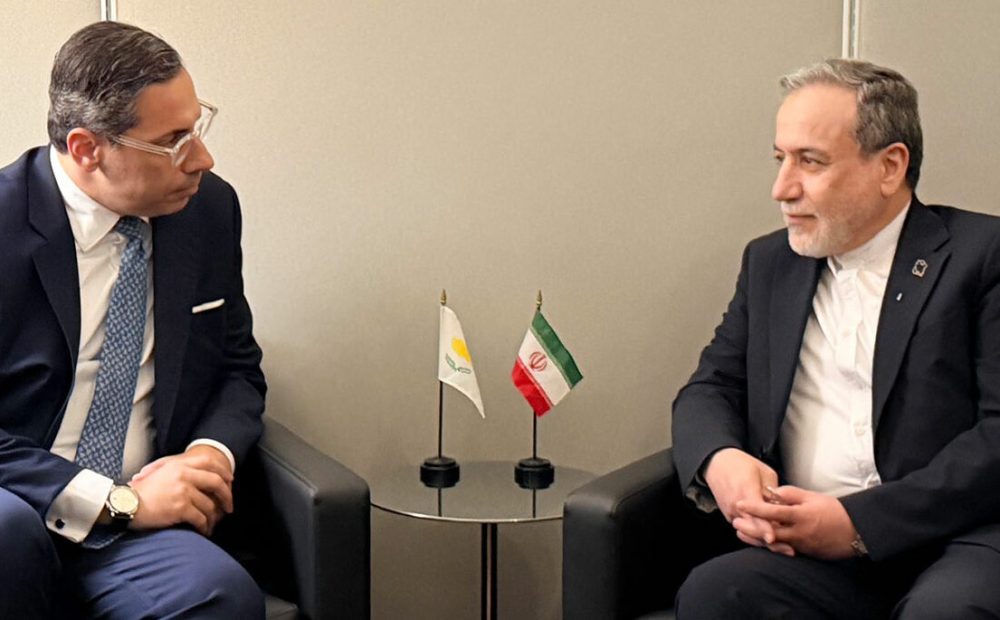
New York: Iranian Foreign Minister Seyed Abbas Araghchi said Iran has offered a seven-day plan to end the conflict in West Asia, with the proposal calling for the reopening of the Strait of Hormuz and the resumption of broader talks on Iran’s nuclear program, according to The New York Times.
Araghchi told reporters on the sidelines of the United Nations General Assembly that Tehran had conveyed the proposal to the United States through intermediaries. Under the plan, Iran would reopen the Strait of Hormuz by the end of the seventh day if certain conditions were met, while negotiations would resume.
“We have introduced a plan to the United States through the intermediaries that if certain conditions are met, the Strait of Hormuz would be open on the end of the seventh day and talks would restart,” he was quoted as saying by The New York Times. Araghchi also said reaching a deal before the U.S. midterm elections would be preferable.
The proposal comes after a memorandum of understanding reached between the United States and Iran in June, which outlined a framework for ending hostilities and negotiating a broader agreement on Iran’s nuclear program. The June agreement also included provisions related to reopening the Strait of Hormuz and lifting the U.S. naval blockade of Iranian ports.
Earlier, during a meeting with German Foreign Minister Johann Wadephul, Araghchi said Iran had conveyed its “reasonable conditions and requirements” to the United States for advancing diplomacy.
He said restoring security in the region requires an end to what he described as U.S. interventionist and aggressive actions against Iran.
Araghchi also reaffirmed Iran’s commitment to diplomacy over its nuclear program. He said Iran’s good faith in negotiations could not be ignored, while also accusing the United States and Israel of military aggression against Iran during the talks.
The Iranian foreign minister further criticized European countries, including Germany, for what he described as their failure to address U.S. violations of international law and acts of “bullying.”
He also outlined Tehran’s position on international developments, saying confidence in the United Nations can be restored only if all countries adhere to the principles and purposes of the U.N. Charter and international law.
Meanwhile, in an interview with Fox News, Iranian President Masoud Pezeshkian blamed U.S. President Donald Trump and Washington for the failure to implement the agreement reached between the two sides in June.
“We did reach an agreement with your president, that agreement was signed, and based on that, we are willing and still wish to move forward. And the framework was agreed upon,” Pezeshkian said.
He claimed Iran had not closed the Strait of Hormuz before the United States attacked Iran and accused Washington of undermining diplomacy through military action and a blockade.
“They attacked us. They assassinated and martyred our esteemed supreme leader. … The problem is that America, instead of conducting dialogue, they descend into the arena by bombing us first, by blocking every pathway. We are ready,” Pezeshkian told Fox News.
Pezeshkian also said Tehran remained open to verification of its nuclear program and indicated that Iran was willing to dilute enriched uranium as part of a potential agreement.
Iran had earlier conveyed a proposal through intermediaries offering to reopen the Strait of Hormuz within seven days if the United States eased military pressure and lifted its blockade on Iranian ports, according to Reuters. The proposal was submitted to the U.S. through mediators on Sept. 16, according to the report.