Why do educated, experienced professionals sometimes fall for online scams? A study by researchers at IIT Madras suggests that cyber fraud is not always about a lack of awareness. Doctors, bankers, IT professionals, finance experts and even people with cybersecurity qualifications have reported becoming victims.
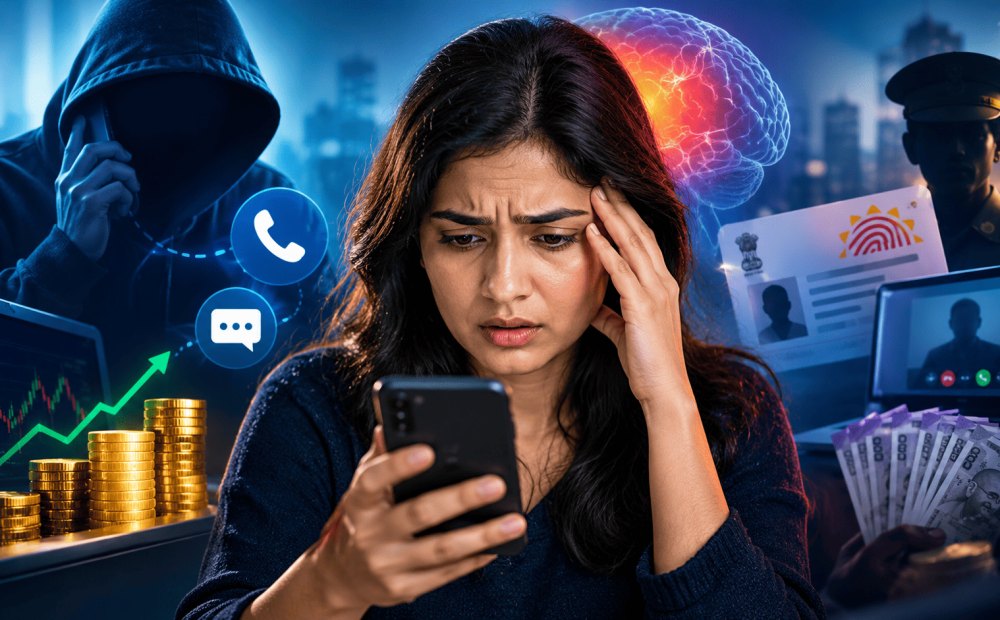
Researchers describe one tactic as an “engineered brain freeze” — a state where fear, urgency or emotional pressure makes it difficult for a person to think clearly and question what they are being told.
Scammers often create this pressure deliberately. A caller may claim that a bank account is linked to illegal activity, threaten arrest over Aadhaar-related issues, promise a limited-time investment opportunity or pose as a government official. By insisting that the victim act immediately, the fraudster leaves little time for independent verification.
The study, based on interviews with 33 victims across Chennai, Bengaluru, Hyderabad, New Delhi and Mumbai, found cases involving investment fraud, job scams, digital-payment fraud, malware and “digital arrest” schemes. Reported losses ranged from thousands of rupees to more than ₹1 crore. Victims also described sleeplessness, shame and emotional distress.
The researchers noted that some victims were approached during already stressful periods, including illness in the family, retirement, job searches or workplace pressure.
The simplest way to break the cycle is to pause. Never act solely on an urgent call or message. Disconnect and verify through an organisation’s official contact details. Remember, police do not conduct “digital arrests” through video calls.
If money is lost, report it immediately to 1930 or cybercrime.gov.in.