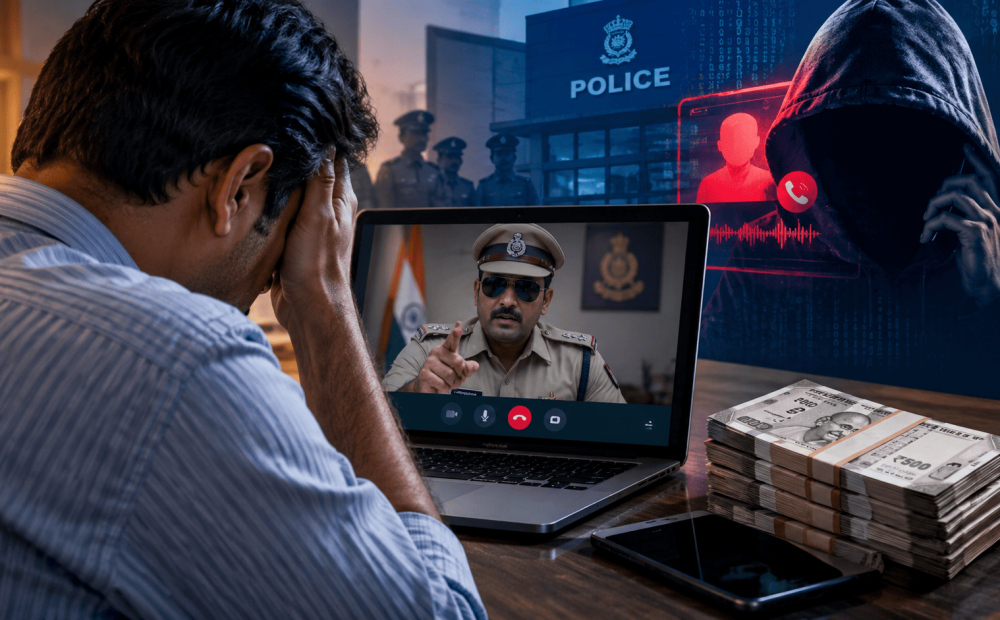
Ahmedabad: An accountant from Ahmedabad’s Vadaj area allegedly lost ₹50 lakh after cybercriminals posing as law-enforcement officials subjected him to a prolonged video-call interrogation and pressured him into transferring his savings.
The fraud began with an unexpected call in which the accused allegedly claimed that the victim’s bank account and personal details had surfaced in a serious money-laundering case linked to national security.
The callers then allegedly escalated the pressure by presenting themselves as senior officials and showing what appeared to be police documents, identification and official seals. The victim was told that he was under investigation and could face arrest if he failed to cooperate.
According to the complaint, the scammers kept him connected to a video call and instructed him not to contact family members or disconnect from the conversation. This created what cybercrime investigators commonly describe as a “digital arrest” situation, where victims are made to believe they are under virtual detention.
Under the pressure, the accountant was allegedly persuaded to move money from his accounts on the pretext of verifying his assets and proving that his funds were legitimate.
He ultimately transferred around ₹50 lakh through multiple transactions to accounts specified by the fraudsters.
The deception came to light after the victim realised that the supposed investigation was part of a cyber-fraud operation and approached the authorities.
The Ahmedabad Cyber Crime Police are investigating the case and are tracing the money trail, bank accounts and digital communication channels allegedly used by the suspects.
The case highlights a key feature of digital arrest scams: fraudsters do not necessarily begin by asking for money. They first create fear by impersonating police officers, government officials or financial regulators, then keep victims under constant psychological pressure until they comply with financial demands.
Authorities have repeatedly warned that police officers, courts, government agencies and financial regulators do not conduct investigations through video calls or ask individuals to transfer money to “verify” their bank accounts or assets.
Anyone receiving such a call should disconnect, independently contact the concerned department through an official number and report suspected cyber fraud through the national cybercrime reporting system or by calling 1930.
Reader’s Note:
A genuine police or government investigation will not require you to remain on a video call, transfer money for “verification” or keep an investigation secret from your family. If someone threatens arrest and demands an immediate payment, stop communicating and verify the claim independently before taking any financial action.