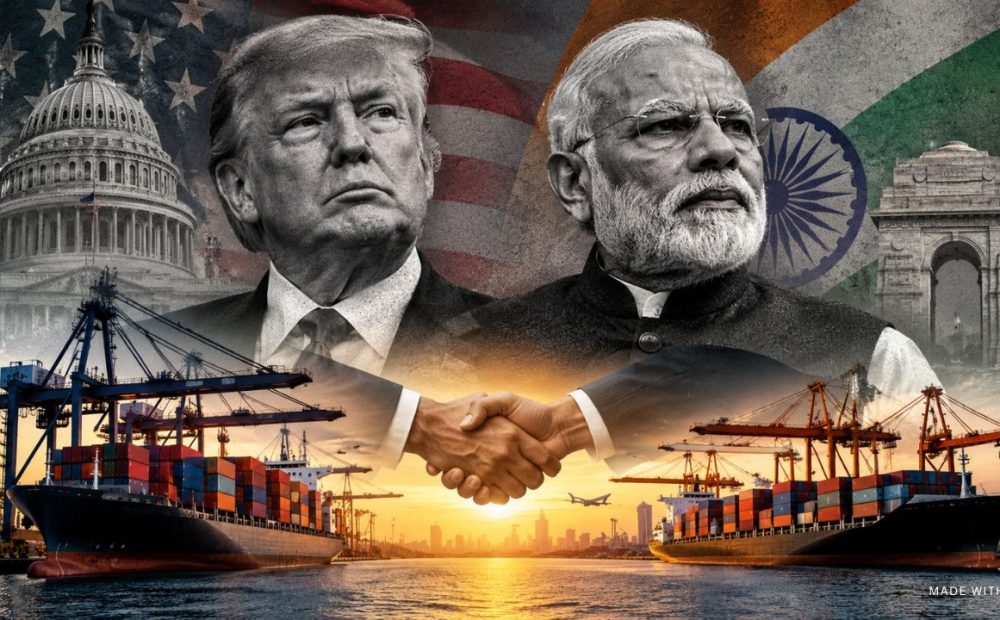
Washington, DC: The India-US trade deal could emerge as a major economic and strategic win for both countries despite the hurdles that have slowed negotiations in recent weeks, with differences between New Delhi and Washington narrowing and both sides remaining conscious of the larger stakes involved.
Sources familiar with the discussions indicate that an interim trade agreement is being worked on, even as negotiations continue to address a number of difficult issues.
Union Minister of Commerce and Industry, Piyush Goyal, before leaving the United States after his recent visit, held discussions with US Trade Representative Jamieson Greer aimed at resolving outstanding differences and moving the interim agreement forward. Goyal and Greer had already described their recent discussions as productive, with both sides working toward an early conclusion of an interim agreement.
Breaking 🇺🇸🇮🇳 India-US trade deal will be a big win for both the countries. Despite hiccups deal inching closer and differences have narrowed
Just before he left for India .@PiyushGoyal had a meeting with the USTR .@jamiesongreer in DC to iron out differences. Sources say an interim deal in the works, another call between.@POTUS .@narendramodi expected. .@WhiteHouse .@PMOIndia both mindful of the strategic win from the deal to both US and India with huge employment and trade boost coming from the deal. The deal will also drive the strategic partnership stronger. #Tradedeal #US #India— Saurabh Shukla सौरभ शुक्ल (@isaurabhshukla) October 7, 2026
According to sources, another conversation between US President Donald Trump and Prime Minister Narendra Modi is also expected as the two governments assess the progress made in the negotiations.
The possibility of another Trump-Modi conversation comes after the two leaders spoke by phone on Sept. 30 and reviewed bilateral cooperation in trade, defense, energy and critical technologies. Both leaders reaffirmed their commitment to advancing the India-US Comprehensive Global Strategic Partnership and agreed to remain in close contact.
The latest developments are significant because the negotiations have publicly appeared to reach a difficult stage.
Greer said last week that the negotiations were in their “short strokes” and that the two sides had identified the remaining sticking points, but cautioned that an agreement was not imminent. Indian Finance Minister Nirmala Sitharaman has also acknowledged that the talks have reached a point where additional concessions from either side could be difficult.
Yet, behind the public caution, negotiations continue.
The current negotiations are rooted in the framework announced by India and the United States in February for an interim agreement under the broader Bilateral Trade Agreement. The framework envisaged tariff reductions, greater market access, action on non-tariff barriers and cooperation in areas including digital trade and supply chains.
Tariffs, agriculture and India’s continued purchase of Russian crude remain among the key challenges. Washington has sought greater access for US agricultural products and pressed India over Russian energy purchases, while New Delhi has sought to protect sensitive sectors and safeguard its strategic and economic interests.
The stakes are significant. The United States is India’s largest export market, while deeper access to the American market could provide a boost to Indian exports, manufacturing, investment and employment.
For Washington, closer economic integration with India would create opportunities for American businesses in energy, aviation, technology, manufacturing and agriculture, while strengthening supply-chain resilience.
But the deal is about more than trade.
India and the United States have steadily expanded cooperation in defense, critical technologies, semiconductors, energy and regional security. A trade agreement could provide a stronger economic foundation for that broader strategic partnership.
Both New Delhi and Washington are therefore mindful of the larger strategic win that a deal could deliver.
Despite the remaining differences, continued ministerial engagement and the possibility of another conversation between Trump and Modi indicate that neither side has walked away from the negotiating table.
The immediate challenge is to bridge the remaining gaps and finalize an interim agreement that can provide greater certainty to businesses while keeping the larger Bilateral Trade Agreement negotiations on track.
For India and the United States, the potential gains extend beyond tariff numbers, with greater trade, investment and employment on one side and a stronger strategic partnership on the other.