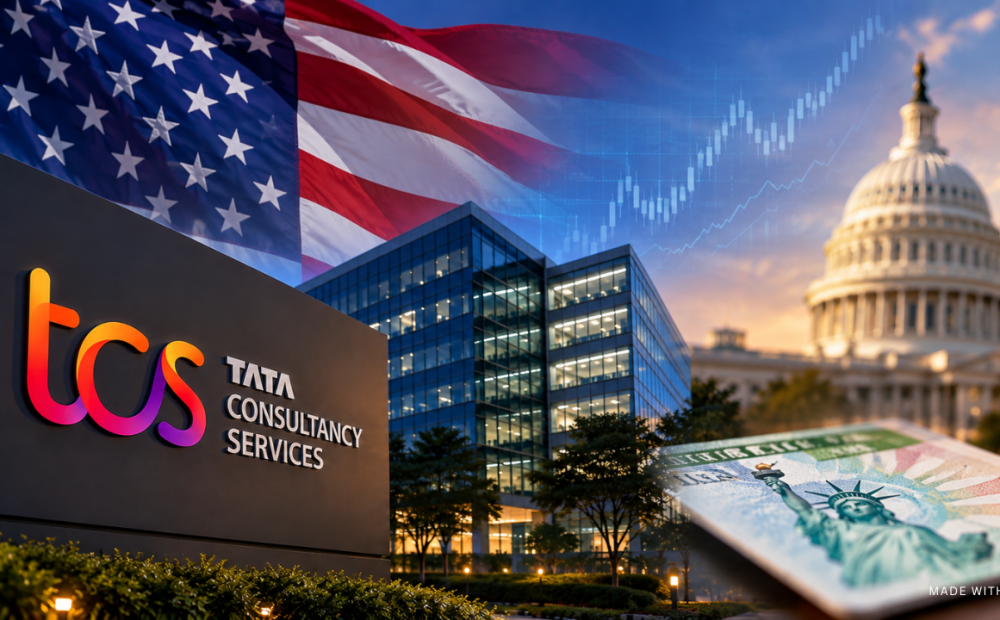
New Delhi: Tata Consultancy Services (TCS), India’s largest IT services exporter, said Friday that the US government’s suspension of the Permanent Labor Certification (PERM) program is unlikely to disrupt its workforce strategy or client engagements, citing limited reliance on the green card application process.
TCS is among eight technology companies barred from submitting new PERM applications or processing pending cases under the Trump administration’s crackdown on employment-based immigration. The move, announced Thursday, targets companies accused by US officials of exploiting the system at the expense of American workers.
In a filing with the BSE, TCS said it had taken note of the government’s announcement and would comply with directives issued by the US Department of Labor.
“Our workforce strategy in the US is anchored in hiring local talent, supported by a robust campus recruitment model,” the company said.
TCS added that its PERM applications had remained in the single digits over the past two years, making it unlikely that the suspension would significantly affect its hiring plans or relationships with clients.
The company said it has established a substantial local workforce across 31 offices and delivery centers in the US. It reiterated its plan to recruit an additional 15,000 employees in the country over the next five years to strengthen its domestic workforce.
Eight IT companies face US immigration restrictions
The suspension affects five Indian IT companies — Cognizant, Infosys, TCS, Wipro and HCL, along with three US-based technology businesses: Capgemini, Microsoft and Adobe.
PERM certification is a key step in most employment-based green card applications. Under the process, employers must generally demonstrate that hiring a foreign worker will not adversely affect the wages and working conditions of similarly employed US workers and that qualified American workers are not available for the position.
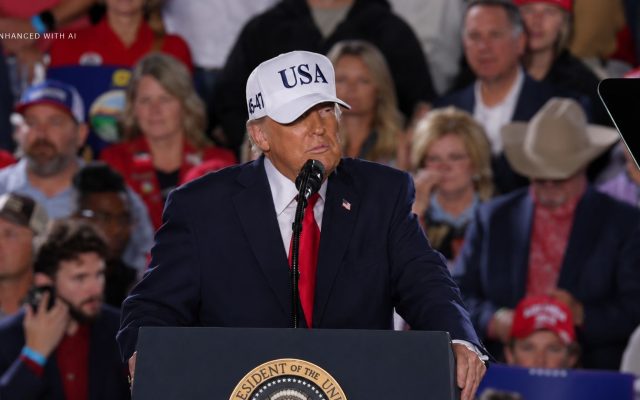
US Vice President JD Vance defended the administration’s action, singling out Microsoft over its use of foreign-worker visa programs.
Vance alleged that Microsoft laid off 6,000 American employees in 2025 while continuing to seek foreign workers for positions that included roles held by the laid-off staff. He cited the company’s H-1B visa approvals and PERM filings as evidence of what the administration considers an abuse of the immigration system.
Vance also criticized companies that rely heavily on foreign-worker visas, describing some employers as “visa mills” and referring to H-1B workers in disparaging terms.
US cites millions of foreign-worker requests
US Labor Secretary Keith Sonderling said the Department of Labor would neither accept new PERM applications nor process pending permanent labor certification cases involving the eight companies.
Sonderling said the companies had collectively requested nearly 3 million foreign workers since 2009. According to him, they had received more than 230,000 H-1B visa approvals and over 100,000 permanent labor certifications.
The administration maintains that the programs have been used in ways that disadvantage American workers. However, the figures cited by officials do not, by themselves, establish that every foreign-worker position displaced an American employee.
The restrictions could create uncertainty for affected companies and foreign professionals seeking permanent residency through employer-sponsored applications, although the immediate impact on individual workers will depend on their immigration status and the stage of their cases.
Indian professionals account for more than 70% of approved H-1B petitions annually, making changes to US employment-based immigration policy particularly significant for India’s technology workforce.
For TCS, the company’s stated reliance on local recruitment and its limited recent use of PERM applications could help cushion the immediate impact. Its commitment to add 15,000 US employees over the next five years also signals that it intends to continue expanding its American workforce despite the new restrictions.