New Delhi: Delhi’s Jantar Mantar has long been a prominent symbol of protests and movements in the country. From the anti-corruption movement to farmers’ and wrestlers’ protests, this place has witnessed several important events from close quarters.
However, on October 12, 2026, Delhi Police removed Jantar Mantar Road from the list of designated protest sites. Along with this, three new sites were designated for protests in the national capital. This decision has once again brought Jantar Mantar’s history and its role as a protest site into discussion.
Jantar Mantar Was Built in 1724
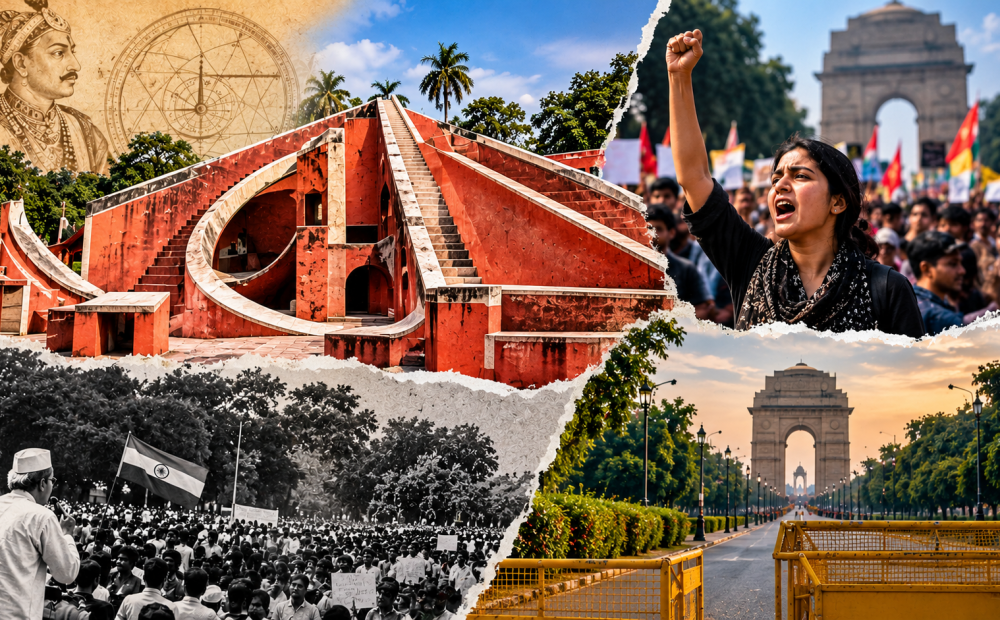
The history of Jantar Mantar is linked to the 18th century. Maharaja Sawai Jai Singh II of Jaipur had this observatory built in Delhi in 1724. It was used for astronomical calculations and to study the positions of celestial bodies, including the Sun and the Moon.
However, the Jantar Mantar known today for protests is primarily the road located near the historic observatory. Over time, this road became a prominent site for people raising their voices on political, social and civic issues.
How Did the Centre of Protests Move From Boat Club to Jantar Mantar?
Before the 1990s, major political protests in Delhi were often held in the Boat Club area near India Gate. In October 1988, a major farmers’ movement led by farmer leader Mahendra Singh Tikait drew huge crowds to this area.
After this, bans and restrictions on protests in the Boat Club area increased. Around 1993, Jantar Mantar Road emerged as one of the major protest sites. Its proximity to Parliament and key central government offices made it an important location for protesters.
However, holding a protest here did not mean that every group was allowed to demonstrate without permission or under any conditions. From time to time, the police and administration also enforced rules based on circumstances related to crowds, traffic and law and order.
From Anna Hazare to the Wrestlers’ Protest
Jantar Mantar Road provided space for several prominent movements. During the anti-corruption movement led by Anna Hazare in April 2011, the site remained at the centre of national attention. The movement, which demanded a Jan Lokpal, drew attention from people across the country.
In March 2017, farmers from Tamil Nadu held a prolonged protest here over their demands. Meanwhile, in 2023, Indian wrestlers protested at Jantar Mantar over allegations against and demands for action against Brij Bhushan Sharan Singh, the then president of the Wrestling Federation of India.
These movements ensured that the place was not limited to Delhi alone but became one of the major public sites for presenting the demands and dissent of people arriving from different parts of the country.
Legal Battle Began With NGT’s 2017 Order
Local residents had raised objections to problems such as noise, waste and cleanliness caused by long-running protests at Jantar Mantar. In October 2017, the National Green Tribunal (NGT) directed that protests on Jantar Mantar Road be stopped and shifted to Ramlila Maidan.
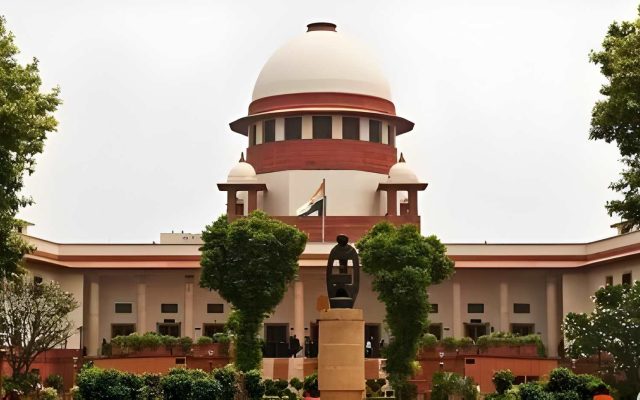
However, in July 2018, the Supreme Court quashed the order imposing a complete ban on peaceful protests at Jantar Mantar and the Boat Club area. The court clarified that guidelines could be framed to regulate protests, but imposing a complete ban was not an appropriate solution.
This case brought to the forefront the debate over balancing the right to register peaceful protest with the need to maintain public order.
What Changed in October 2026?
On October 12, 2026, Delhi Police announced that Jantar Mantar Road would no longer remain a designated protest site. According to the Police Commissioner’s order, three alternative sites have been designated for organising protests and sit-ins based on the recommendations of a committee constituted by the Union Home Ministry.
These sites are:
Ramlila Maidan — Central Delhi
Burari Maidan — North Delhi
CBD Maidan — East Delhi
According to the police, a detailed Standard Operating Procedure (SOP) for organising protests at these new sites is to be issued separately.
Have Protests Been Banned in Delhi?
Removing Jantar Mantar Road from the list of designated protest sites does not mean that all protests have been banned in Delhi. The police have announced three alternative sites for organising demonstrations. Protests can be held at these locations in accordance with the applicable rules and permission requirements.
Article 19 of the Indian Constitution gives citizens the right to assemble peacefully and without arms. However, reasonable restrictions can be imposed on this right on grounds specified in the Constitution, including public order. The right to protest at a particular location is not unlimited; the administration must also make decisions in accordance with applicable laws and court directions.
Jantar Mantar’s journey began as an astronomical observatory and eventually led to its inclusion among the country’s prominent sites for major movements. Its role as a designated protest site has now changed. However, the movements associated with its history and the debate over the right to peaceful protest will continue to remain important in the broader context of Indian democracy.