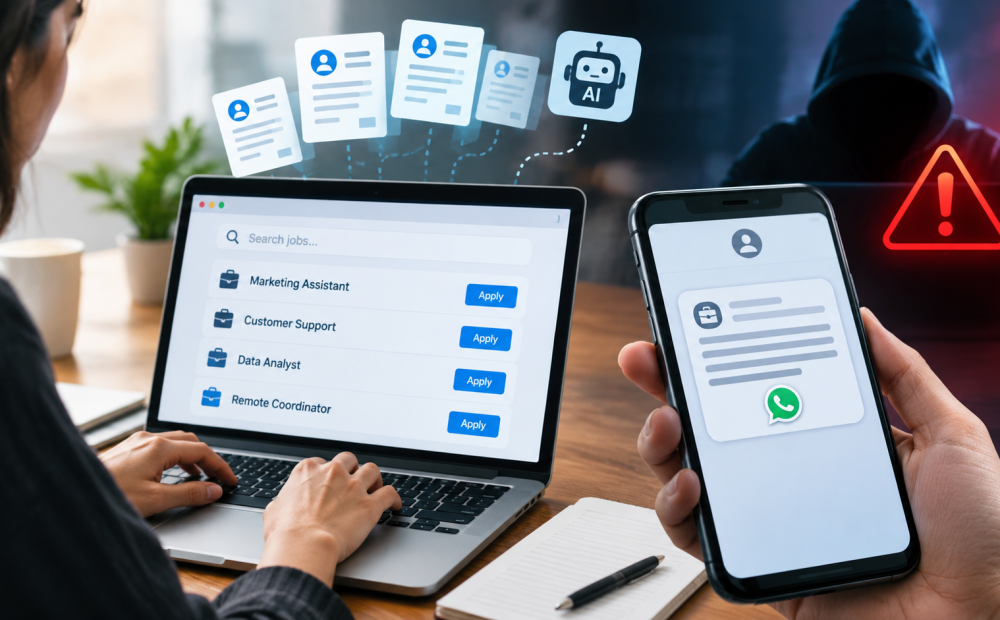
Jobseekers applying for multiple vacancies through AI-powered tools could find it harder to distinguish genuine recruitment messages from fraudulent offers, particularly when they lose track of the companies they have approached.
A report by Malwarebytes highlights how the growing use of artificial intelligence for large-scale job applications may overlap with rising concerns about fake recruitment messages. While there is no evidence establishing a direct link between mass applications and scam victimisation, the combination creates opportunities for fraudsters to exploit jobseekers’ expectations.
According to the report, recruitment scams range from fake interview invitations and malicious application software to fraudulent job listings designed to steal personal information and login credentials. Some schemes also involve advance payments or requests to complete online tasks in exchange for promised earnings.
One example involved a suspicious message impersonating UK marketing company The Goat Agency. The sender offered remote work involving product reviews, promising daily earnings of £500 to £1,000 for 60 to 90 minutes of work and directing interested applicants to WhatsApp. The message displayed characteristics associated with task scams.
Separately, research commissioned by Virgin Media O2 found that nearly half of surveyed UK residents aged 18 to 24 had received unsolicited job offers. Such messages can appear credible when they do not contain exaggerated salary promises or other obvious warning signs.
Security experts advise applicants to maintain a record of submitted applications, including company names, job titles and original listings. Recruiters should be verified through independently obtained company contact details, rather than links or numbers supplied in unexpected messages.
Jobseekers should also avoid paying money to access supposed earnings, downloading unverified software or sharing sensitive information before confirming an opportunity’s legitimacy. Enabling multi-factor authentication and using updated anti-malware protection can provide additional safeguards.
As AI-assisted job hunting becomes more accessible, verifying unexpected recruitment approaches remains essential, even when a message appears connected to a familiar employer.