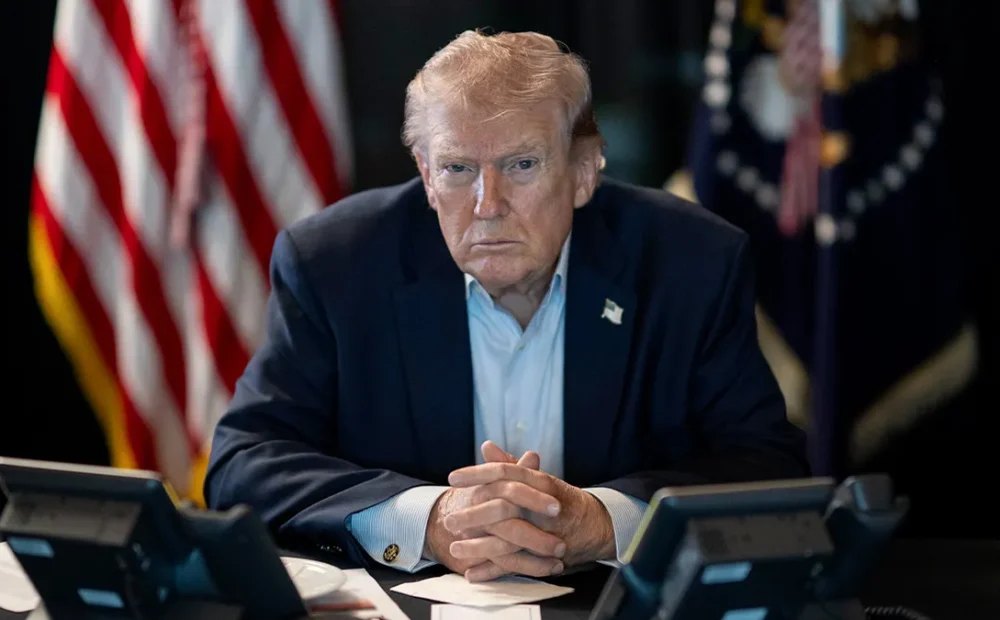
Washington DC: US President Donald Trump has said Washington is no longer negotiating with Iran, warning that developments involving Tehran could unfold “fairly soon” as reports of renewed US-Israeli military strike plans fuel concerns over escalating tensions in West Asia.
In an interview with NewsNation’s White House correspondent Libbey Dean on Wednesday, Trump offered few details about the next steps in his administration’s approach toward Iran, leaving open the possibility of further developments in the coming weeks.
Asked whether negotiations with Tehran were continuing, Trump acknowledged some activity but remained noncommittal.
“A little bit, but we’ll see what happens,” he said.
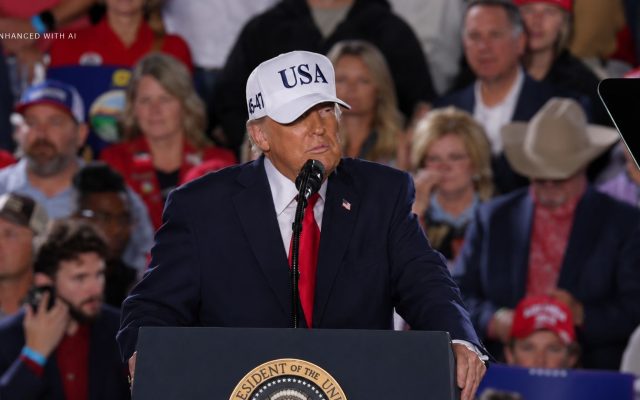
When asked whether he had finished negotiating with the Iranian government, Trump replied, “No, I think we’re not negotiating … we are going to have something, one way or the other. It’ll happen fairly soon.”
He added that some observers expected developments to come after the US midterm elections.
“Most people think, seem to think it’s after the election, and we’re going to see what happens,” Trump said.
The US president also praised his administration’s handling of the confrontation with Tehran, describing its efforts as “amazing” and claiming Washington was performing well on both military and economic fronts.
“I think our sanctions ended the real deal over there. But we’re doing very well militarily and financially against Iran,” he said.
Trump did not clarify what action he was anticipating or provide a specific timeline for a potential agreement or military escalation.
US, Israel Reportedly Prepare Fresh Strike Options
Trump’s remarks come amid a report by The New York Times that the US and Israeli militaries have drawn up plans for a renewed campaign against Iran following the American midterm elections.
According to the report, the proposed operation could involve a short but intensive series of strikes targeting Iran’s energy infrastructure, nuclear facilities, and missile and drone capabilities.
Citing US officials and others familiar with the discussions, the newspaper reported that military preparations have intensified, including exercises involving aircraft flying over Iraq to practise strike manoeuvres.
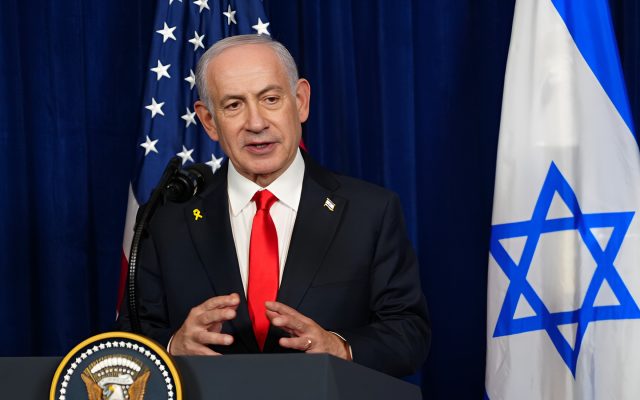
US War Secretary Pete Hegseth also met Israeli Prime Minister Benjamin Netanyahu in Israel this week to discuss the possibility of renewed military action, the report said.
Some US officials reportedly believe another round of attacks could further weaken Iran’s economy and pressure its leadership into making diplomatic concessions after nearly eight months of conflict.
The report also said Washington was assembling a substantial military force expected to be in place by early November. The deployment could include three aircraft carriers, thousands of Marines, fighter jets and Special Operations forces.
Political considerations may influence the timing of any operation, with Trump having previously indicated that he would not strike Iran before the midterm elections.
The military preparations, however, do not establish that a final decision to launch fresh attacks has been made.
Iran Threatens To Unveil ‘Father Of All Bombs’
Tehran has warned that any renewed American military action would draw a response, with an Iranian military spokesperson issuing a threat involving a weapon described as the “Father of All Bombs.”
According to Iran’s state-affiliated Student News Network, Islamic Revolutionary Guard Corps spokesperson Hossein Mohebbi said, “The United States has the ‘Mother of All Bombs.’ We will show them the ‘Father of All Bombs,’ and it will definitely be something new for them.”
Iran has not disclosed details about the weapon or explained what capabilities the statement refers to.
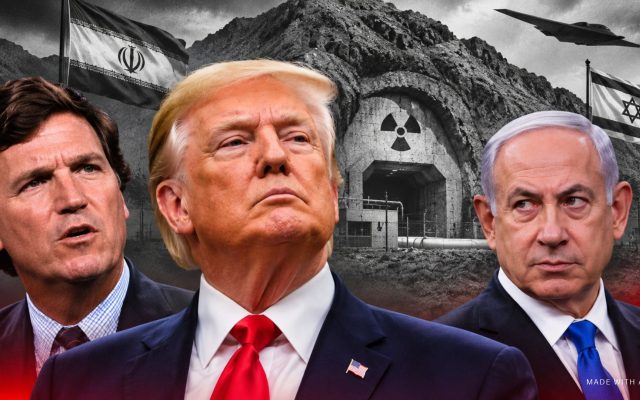
The warning follows reports that Trump has considered deploying the 22,000-pound GBU-43/B Massive Ordnance Air Blast, or MOAB, against Iran’s deeply buried Pickaxe Mountain nuclear facility. The weapon is widely known as the “Mother of All Bombs.”
There has been no confirmation that the US president has authorised such an operation.
Iranian President Says Tehran Faces ‘Super-Challenge’
Iranian President Masoud Pezeshkian has acknowledged the difficulties facing his country amid the prolonged confrontation with Washington.
Addressing Iran’s Parliament, Pezeshkian said an earlier memorandum of understanding had been favourable to Tehran but described the current situation as damaging for Iran and the wider region.
“The memorandum of understanding we signed was very good; we hadn’t given anything. The current situation is neither good for us, nor for the region, nor for the world,” he said.
He added that Iran was confronting a challenge far greater than an ordinary political or diplomatic dispute.
“We are in a super-challenge, not a challenge. America didn’t think we would stand firm despite the pressure and war, but we stood firm, and we will continue to stand firm,” Pezeshkian said.
Separately, Iran’s representative to the United Nations alleged, as reported by SNN, that Starlink had been used to identify targets during military attacks against Iran. The representative also claimed that the country’s space and scientific infrastructure had come under attack.
The allegations add to Tehran’s accusations surrounding the conduct of the conflict.
Nuclear Programme And Strait Of Hormuz At Centre Of Dispute
The New York Times report said Washington was seeking to use the prospect of renewed military action as leverage in negotiations over Iran’s nuclear programme and control of the Strait of Hormuz, a strategically important waterway for global energy supplies.
Iranian negotiators, however, have resisted making concessions on the nuclear issue, arguing that the matter should be addressed at a later stage of the talks.
The standoff leaves diplomatic efforts facing significant obstacles even as both sides signal their readiness for further confrontation.
With reports of expanded military deployments, threats of retaliation and no clear indication of a breakthrough in negotiations, uncertainty continues to surround Washington’s next move.
Trump’s latest remarks have added to speculation about a possible shift in the US approach toward Iran, but the president has yet to outline a concrete course of action or confirm whether renewed military strikes are imminent.