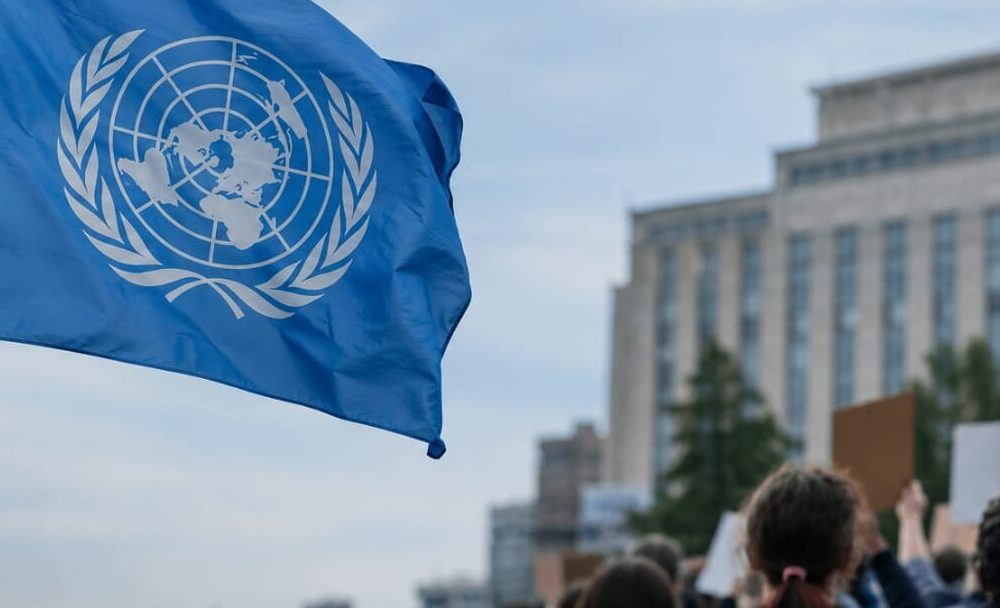
From student demonstrations in France to rallies defending public universities in Argentina and protests over electoral-roll revisions in India, growing concerns over the handling of public demonstrations have brought renewed attention to the United Nations’ ability to protect the right to peaceful assembly and hold governments accountable for alleged human rights violations.
While the UN can raise concerns, document alleged abuses and urge authorities to investigate, its ability to enforce human rights protections remains limited, particularly when governments reject international criticism.
In France, Human Rights Watch reported on October 14 that high school students protesting over school conditions faced tear gas, batons, rubber bullets and other forms of forceful policing. In Argentina, demonstrations in defence of public universities have also drawn scrutiny over police responses, with tear gas, rubber bullets and water cannons reportedly used against protesters.
In India, UN human rights experts on October 20 called for an independent investigation into alleged excessive force, arbitrary detentions and restrictions on peaceful demonstrations. The following day, India pushed back against the criticism, arguing that unverified allegations and incomplete statistics should not be used to portray the country negatively.
These developments highlight a broader challenge for international human rights mechanisms: while the right to protest is recognised under international law, ensuring that governments respect it remains a complex task.
The right to peaceful assembly is protected under Article 21 of the International Covenant on Civil and Political Rights (ICCPR). Although governments may impose certain restrictions for legitimate purposes, including public safety and public order, such measures must have a legal basis and be necessary and proportionate.
The United Nations has several mechanisms to examine alleged human rights violations and press governments to fulfil their international obligations. Independent experts appointed by the UN Human Rights Council, including special rapporteurs, can communicate with governments, seek explanations, issue public statements and recommend investigations. They can also present findings and recommendations to UN human rights bodies.
The Office of the UN High Commissioner for Human Rights can document concerns and call for compliance with international standards, while treaty-monitoring committees examine how countries implement the human rights agreements they have ratified.
However, these mechanisms have important limitations. UN-appointed experts are not law-enforcement agencies or courts, and their recommendations do not automatically compel governments to release detainees, lift restrictions on demonstrations or prosecute officials.
The Human Rights Council can establish investigative mechanisms and adopt resolutions, while the UN Security Council has broader powers under the UN Charter to address threats to international peace and security. However, allegations arising from domestic protests do not automatically trigger Security Council intervention, and political disagreements among its members can further constrain action.
Governments can challenge the evidence behind allegations, dispute the conclusions of international experts or argue that external scrutiny interferes with domestic affairs. Although the UN can continue to raise concerns and encourage cooperation, it cannot guarantee that authorities will implement its recommendations.
Consequently, accountability often depends on institutions within the countries concerned. National courts, independent investigative bodies and human rights commissions can examine allegations of excessive force, assess the legality of arrests and restrictions, and provide remedies where violations are established. Journalists and civil society organisations also play an important role in documenting events and bringing alleged abuses to public attention.
At the same time, allegations must be assessed on the available evidence. International criticism alone does not establish legal responsibility, just as a government’s rejection of allegations does not, by itself, resolve the concerns raised.