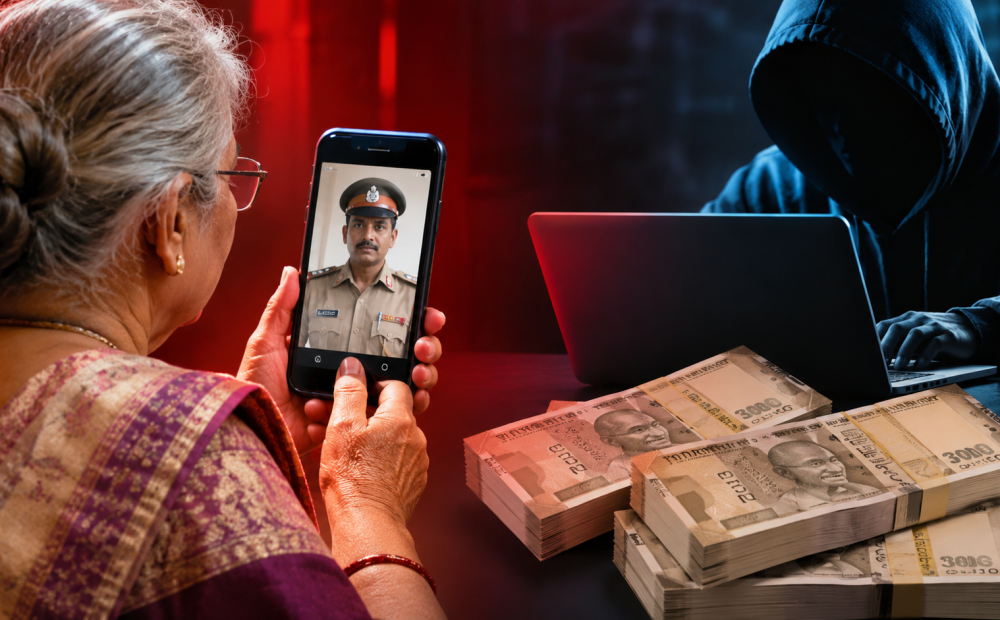
Mumbai: A 76-year-old woman in Mumbai allegedly lost ₹1.18 crore to cyber fraudsters posing as law enforcement officials in a digital arrest scam, leading to the arrest of a 24-year-old man suspected of receiving a portion of the stolen money.
According to reports, the woman received a phone call on September 6 from a person claiming to be an employee of the Crime Branch. During the conversation, the caller asked about her husband and learnt that he had died in 2014.
The accused subsequently allegedly threatened the elderly woman with accusations of financially supporting terrorists and claimed that a money laundering case had been registered against her. The fraudsters then conducted an inquiry through video calls to make their claims appear credible.
The woman was allegedly told that she had been placed under “digital arrest” and was instructed not to reveal the matter to anyone. Exploiting her fear of legal action, the callers asked her to transfer her bank balance to accounts provided by them, assuring her that the money would be returned once the investigation was completed.
Believing the claims, the woman transferred ₹1.18 crore to multiple bank accounts specified by the accused.
She later informed her daughter about the incident. Realising that the woman had been cheated, her daughter helped her approach the Mumbai Cyber Police and report the fraud.
During the investigation, police arrested a 24-year-old man who had allegedly received part of the defrauded amount. According to the report, he told investigators that he had forwarded the money to other cyber fraudsters and retained a commission.
Digital arrest scams involve criminals impersonating police officers, investigators or other government officials to intimidate victims with fabricated legal cases. Authorities warn that genuine law enforcement agencies do not place people under digital arrest or require them to transfer money for verification or investigation purposes.
The case highlights how cybercriminals exploit fear and impersonation to target vulnerable individuals, particularly senior citizens.