Jerusalem: Israeli Prime Minister Benjamin Netanyahu’s Likud Party has emerged as the largest single party in the parliamentary election, but exit polls suggest that neither his right-wing alliance nor the opposition led by former military chief Gadi Eisenkot has secured the 61 seats required to form a government.
Preliminary figures released by Israel’s Central Election Committee showed Likud securing approximately 27% of the vote after the first 100,000 ballots were counted. Eisenkot’s opposition bloc, campaigning on a platform of political change, received about 17%, according to the data.
Revised exit polls projected around 27 seats for Likud, while the broader coalitions led by Netanyahu and Eisenkot were each expected to win approximately 51 seats in the 120-member Knesset. Arab-led parties were projected to secure the remaining 18 seats.
The projections marked a shift from initial exit polls that had given Eisenkot’s bloc a narrow advantage. The outcome points to a deeply divided electorate, with Netanyahu’s alliance facing dissatisfaction over its partnership with far-right parties and public anger over exemptions from military service for ultra-Orthodox Jews.
With neither side approaching the majority threshold, the election has opened the door to prolonged coalition negotiations, with the possibility of another election if political leaders fail to reach an agreement.
Final results are expected within 48 hours, although the process of forming a government could take considerably longer.
Netanyahu rejects government backed by Arab parties
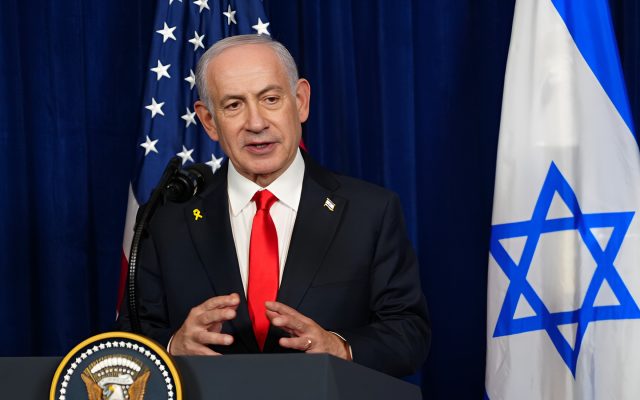
Addressing supporters after the vote, Netanyahu stopped short of declaring victory but highlighted Likud’s projected position as the largest party and vowed to establish a new government.
Calling for unity among right-wing parties, Netanyahu said Israel needed a strong government that reflected the country’s Jewish and Zionist majority.
“It is out of the question to have a government that is backed by Arab parties,” he said, drawing cheers from supporters.
His remarks underscored the central challenge facing both camps. While Arab-led parties made significant gains, their potential role in determining the next government remains politically contentious.
An opposition government could require support from Arab lawmakers, either through a formal coalition or parliamentary backing on key votes. However, Eisenkot has ruled out forming a government with Arab parties, complicating his path to power.
The result also reflects the difficulties facing Netanyahu’s right-wing alliance, which has relied on support from religious and nationalist parties to maintain its parliamentary strength.
Eisenkot says voters have rejected Netanyahu
Eisenkot, meanwhile, told supporters in Tel Aviv that the exit polls reflected a loss of public confidence in Netanyahu and pledged to move quickly to form a government.
He pointed to voter turnout of nearly 78%, the highest since 1999, as evidence of strong public engagement and argued that the results should pave the way for a change in leadership.
“The public has voted for change,” Eisenkot said, urging Netanyahu to acknowledge the outcome and step away from political life.
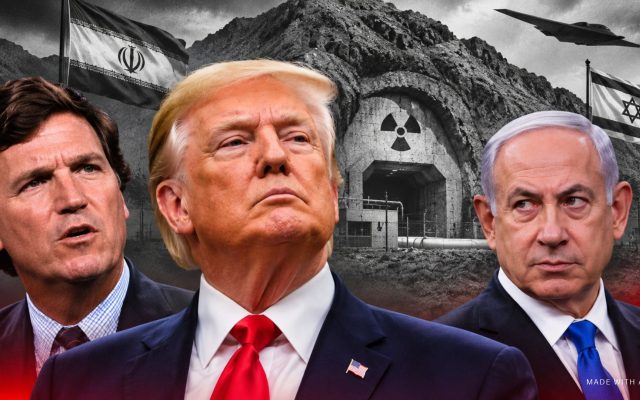
Eisenkot also warned Netanyahu against using national security concerns to advance his political interests, referring to the prime minister’s threats of renewed military action against Iran.
“Netanyahu, don’t you dare use Israel’s security for your political needs,” he said.
The warning comes as the prospect of renewed conflict with Iran adds another layer of uncertainty to the political transition. Netanyahu would remain caretaker prime minister during the negotiations, retaining the authority to make decisions on security and military matters.
Coalition negotiations could determine Israel’s next government
The immediate challenge for Eisenkot is to assemble enough parliamentary support to reach the 61-seat threshold without alienating potential partners.
Cooperation with Arab-led parties could offer a route to power, but such an arrangement would face resistance from sections of the opposition and could undermine efforts to build a stable governing alliance.
Mansour Abbas, a prominent Arab political leader, said he believed the right-wing camp had suffered a significant setback and indicated that he was open to working with Eisenkot.
Even without formally joining a coalition, Arab lawmakers could support an opposition-led minority government in parliamentary votes. Whether such an arrangement could remain viable would depend on the positions taken by other parties.
Far-right leader Itamar Ben Gvir, whose party performed below expectations in the exit polls, warned Netanyahu against pursuing a unity government with Eisenkot.
Ben Gvir, known for his hard-line positions on Palestinian issues and support for extremist Israeli settlers in the occupied West Bank, said such an arrangement would be a serious mistake.
Political scientist Gideon Rahat of the Hebrew University of Jerusalem said Ben Gvir had helped mobilize votes among Israeli Arab voters. However, he cautioned against interpreting Netanyahu’s weakened position as an automatic victory for the opposition.
“Even if Netanyahu lost, that doesn’t mean Eisenkot won,” Rahat said.
The remark captures the uncertainty surrounding the results: Netanyahu’s bloc appears to have fallen short of a majority, but Eisenkot has yet to demonstrate that he can unite enough parties to replace him.
If coalition talks fail, Israel could face another round of elections. Until a new government is formed, Netanyahu is expected to remain in office as caretaker prime minister, leaving the country’s political future — and decisions over possible military action against Iran — uncertain.