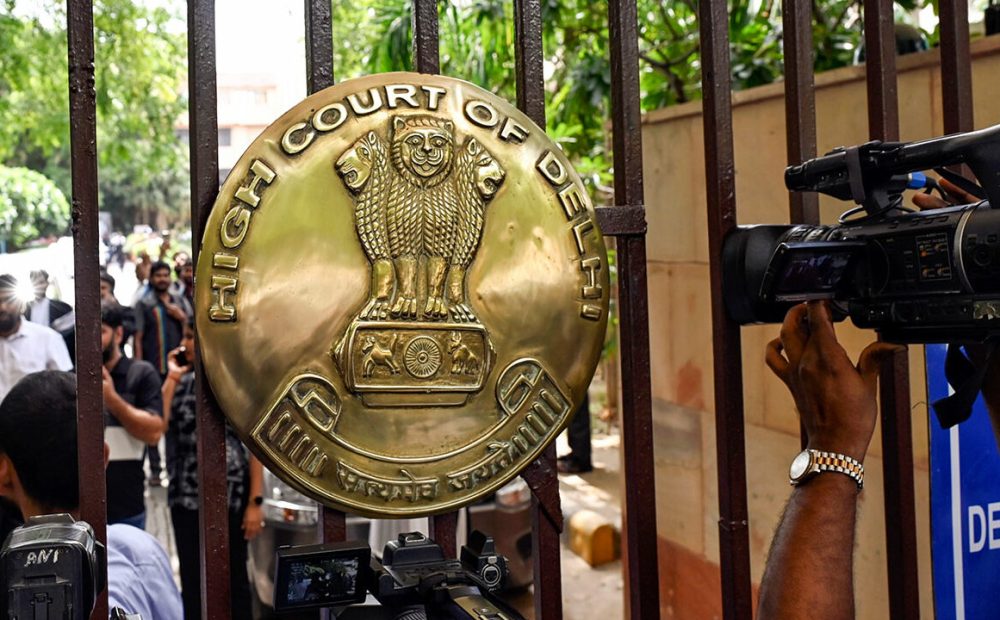
New Delhi: The Delhi High Court has held that providing a social media platform for communication and social interaction does not, by itself, constitute a governmental function or public duty. The court observed that Meta Platforms India cannot be subjected to the High Court’s writ jurisdiction under Article 226 of the Constitution merely because Instagram plays a significant role in disseminating information and shaping public opinion.
Justice Amit Mahajan made the observations while hearing a petition filed by Sarthak Bhagat, who challenged the disabling of his Instagram accounts without prior notice or an opportunity to respond.
The court observed that Instagram’s primary function is to provide a platform for expression, with public discourse being a consequence of its operations rather than a public duty.
“Respondent No. 3 is neither obligated to provide such a platform in discharge of a public duty nor legally compelled to offer its services, which are voluntary and user-driven,” the court said in its October 27 order.
It further observed that Meta’s operations remain private and that no governmental mandate delegates any traditional State function to the company. The court held that Meta Platforms India does not perform a public function or discharge a public duty that would make it amenable to writ jurisdiction. It observed that the petitioner could seek damages, if any, through a civil suit.
Bhagat alleged that his accounts were disabled for violating Instagram’s Community Standards without prior notice or an opportunity to respond. The notification stated that the accounts’ information would be permanently deleted and that another review could not be requested. He said his in-app review request failed to restore the accounts and provided no specific reasons.
He also informed the court that an appeal filed before the Grievance Appellate Committee on September 11, 2026, under Rule 3A of the Information Technology (Intermediary Guidelines and Digital Media Ethics Code) Rules, 2021, remained pending beyond the contemplated 30-day period.
The court declined relief against the Union of India, finding no established failure to discharge a statutory duty warranting a writ of mandamus. However, it directed the committee to decide Bhagat’s appeal expeditiously and disposed of the petition and pending applications.