With just five days left before Americans head to the polls on November 3, the 2026 US midterm elections have become a referendum on affordability, President Donald Trump’s leadership, and an unfinished war with Iran that threatens to erupt again the moment votes are counted. Early voting is already breaking records, control of both chambers of Congress hangs in the balance, and the campaign’s final stretch has been overshadowed by intelligence warnings of fresh hostilities in the Middle East.
Record Early Turnout as Election Day Approaches
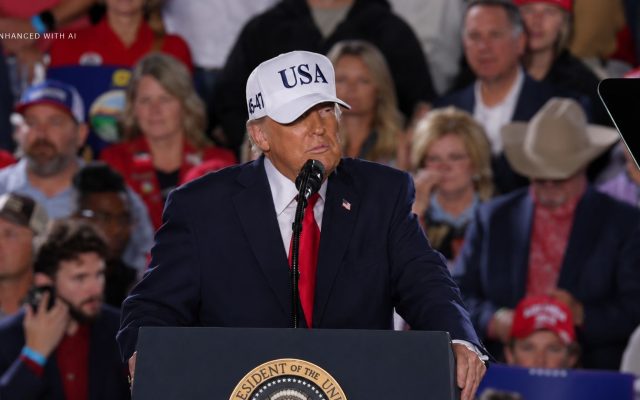
Election Day is Tuesday, Nov. 3, and early voting is underway throughout the country. Election Day is Tuesday, Nov. 3, and early voting is underway throughout the country, with more than 42 million Americans having voted early as of Thursday afternoon, according to tracking by election researchers. President Trump has thrown himself into the campaign’s closing days, heading to South Carolina to campaign for Republican Senator Darline Graham before returning to the White House for the annual Halloween celebration with First Lady Melania Trump. The president has also urged Ohio voters to “pretend I’m on the ballot,” an appeal aimed at energising his base even as it risks galvanising opposition turnout.
The Fight for Congress: Senate and House Battlegrounds
Control of Capitol Hill remains genuinely contested. In a midterm environment that disfavors the party in power, Republicans’ narrow 218-214 seat advantage in the House appears all but certain to give way to Democratic control, with the latest ratings from the Cook Political Report finding Democrats favored in 220 seats, 17 listed as “toss-ups” and another 30 leaning toward the GOP but potentially competitive. Nationally, the latest NPR/PBS News/Marist poll finds Democrats have a 10-point advantage among registered voters and 8 points with likely voters on the generic congressional ballot.
The Senate map features several marquee contests. In Maine, Jackson tends to lead Collins by anywhere from 2 to 7 percentage points, with new polls from CNN and Marist University showing Jackson ahead by 4 points and 2 points respectively. In Michigan, eleven of twelve October polls have shown El-Sayed in the lead over Mike Rogers, by anywhere from 1 to 7 percentage points, with new surveys from CBS Detroit and CNN both giving him a 7-point lead. In Ohio, Sherrod Brown has edged Jon Husted in nearly every poll conducted since early October, with a new Echelon Insights poll showing a tie and a Suffolk University poll giving Brown a 3-point lead. North Carolina’s open seat also leans Democratic, with Roy Cooper leading Michael Whatley by nearly 11 points on average, and one recent nonpartisan survey showing him ahead by 14. Alaska’s race has taken a surprising turn after GOP Senator Lisa Murkowski endorsed Democratic gubernatorial candidate Jonathan Kreiss-Tomkins despite President Trump’s endorsement of a Republican rival, while polling shows Peltola leading Sullivan by anywhere from 2 to 7 points in that state’s Senate contest.
Trump’s Approval Slide and the Affordability Crunch
Hovering over every race is the president’s standing with voters. Trump’s approval rating has fallen to an all-time low of 31%, according to a Reuters/Ipsos poll, and the economic picture is even starker: Trump’s economic approval rating is hitting an all-time low, with 65% of Americans saying they disapprove. Eight out of 10 Americans rate the economy as fair or poor, the highest number since December 2023, and the same survey found Americans now prefer Democratic control of Congress by a 52% to 45% margin, a 3-point gain for Democrats since July.
Cost of living dominates voter concerns nationwide. Voters have consistently ranked the cost of living as the top issue this election cycle, with half of registered voters citing it as the most important factor in how they will vote, alongside healthcare, gasoline, food and housing costs. Compounding the squeeze, an unpopular war with Iran has disrupted global oil supplies and driven up the cost of gasoline, home heating and diesel, feeding directly into the affordability anxiety that Democrats have made the centrepiece of their closing message.
Redistricting Wars Reshape the Map
This cycle has also been defined by an unprecedented mid-decade redistricting battle. Donald Trump called on the Texas legislature to redraw the state’s maps to help Republicans win five more House seats, prompting California and Virginia to pass counter-maps likely to favor Democrats — though Virginia’s new maps were ultimately ruled unconstitutional by the state Supreme Court. In total, Alabama, California, Florida, Louisiana, Missouri, North Carolina, Ohio, Tennessee, Texas and Utah have changed or attempted to change their congressional maps ahead of this election, a wave of gerrymandering that analysts say has scrambled the competitive landscape in ways still not fully settled even days before the vote.
Iran’s Shadow Over the Vote
No storyline has loomed larger over the final stretch than the unresolved war with Iran, a tension NewsMobile first flagged as early voting began in mid-October. In the days since, the warnings have only intensified. A memo from Director of National Intelligence Jay Clayton said agencies received intelligence that Iran has “substantially increased efforts to target U.S. personnel” in the region, and the alerts followed the U.S. order for non-emergency government employees to leave Saudi Arabia this week. Most strikingly, officials have begun openly discussing what comes after the ballots are counted: U.S. officials have told several Middle East countries and regional allies to be prepared for potential renewed military action against Iran after next week’s midterm elections, as well as the possibility that Iran will attempt to retaliate against them. A source briefed on the planning told reporters the U.S. and Israel are preparing plans for a possible attack on Iran in early November, after the U.S. midterm elections, while Tehran has signalled it will not be caught off guard — Iran’s Foreign Minister Abbas Araghchi said “we are just as prepared for diplomacy as we are for war”.
Earlier in October, Trump had sought to keep the conflict from overshadowing the campaign, telling reporters the U.S. will not attack Iran ahead of the Nov. 3 midterm elections. That pledge now appears to have simply pushed the decision — and the political risk — to the week immediately following the vote, a timeline that has already shaped security advisories covered in NewsMobile’s Morning Brief and related dispatches tracking the region.
What Happens Next
With legal fights also flaring over election administration — a federal judge this week rejected the Trump administration’s bid to require California election officials to separate out mail ballots received from roughly 20,000 people it claims are not U.S. citizens — the final days before November 3 are likely to remain turbulent on multiple fronts simultaneously: at the ballot box, in the courts, and potentially on the battlefield. Whichever party emerges with control of the House, Senate, or both, the result will immediately collide with decisions on Iran, government funding, and an economy that a majority of Americans currently view as weak. For now, the country waits, with tens of millions of ballots already cast and the outcome still genuinely uncertain.