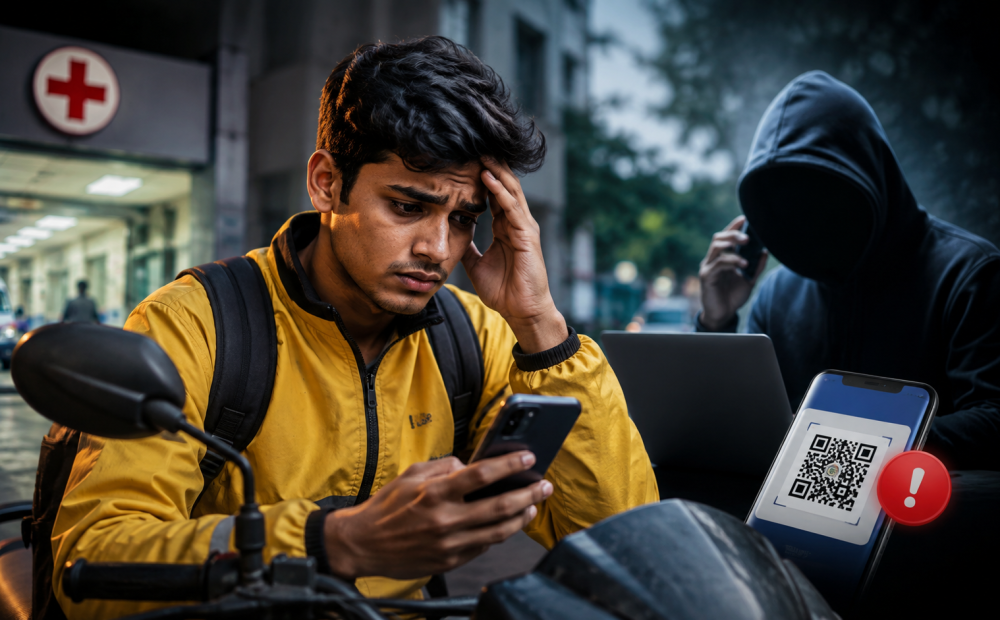
A Bengaluru college student working as a Rapido driver to earn some extra money lost ₹1,000 after scammers used a fake hospital emergency to trick him into making a payment.
The seventh-semester student shared his experience on Reddit, saying he had been driving for Rapido to earn some extra pocket money. On the day of the incident, he had planned to give his entire day’s earnings to his mother.
The scam began when he accepted a pickup request from Lakshmi Hospital in Bengaluru’s RT Nagar. Soon after, a man contacted him from another number and claimed that a woman had been admitted to the hospital and needed to be discharged. He said his UPI was not working at the hospital billing desk and urgently needed help.
The caller promised to send ₹5,000 for the hospital bill along with an additional ₹300 for the student’s help. Believing the emergency was genuine, the student shared his mother’s phone number so the supposed payment could be transferred.
His mother then received an SMS appearing to confirm that ₹5,000 had been credited to her account. Believing the transaction was genuine, she sent ₹5,000 from her own account to the student so he could make the payment.
The scammer then sent a QR code and asked the student to pay an initial ₹1,000 “desk fee”. Without verifying the transaction, the student scanned the code and paid the amount from his own pocket. The scammer immediately sent another QR code and began pressuring him to transfer more money.
The fraud was exposed when the student’s mother checked her banking app and contacted the bank. There was no record of the ₹5,000 credit. The SMS she had received was fake and had been spoofed to look like a genuine bank alert.
The student refused to send any more money and asked the scammer to return his ₹1,000. Instead, the caller disconnected and blocked him.
While the student said he could recover the lost amount, he expressed concern about delivery and ride-hailing workers who depend on their daily earnings to support their families.
The incident highlights a common digital payment scam tactic: fraudsters create a sense of urgency, use a convincing emergency story and then rely on fake payment confirmations to make victims act before verifying the transaction.
Bank SMS alerts, screenshots or messages showing a payment has been received should never be treated as proof of payment. Always verify the transaction directly through your banking app or bank before sending money or scanning a QR code.