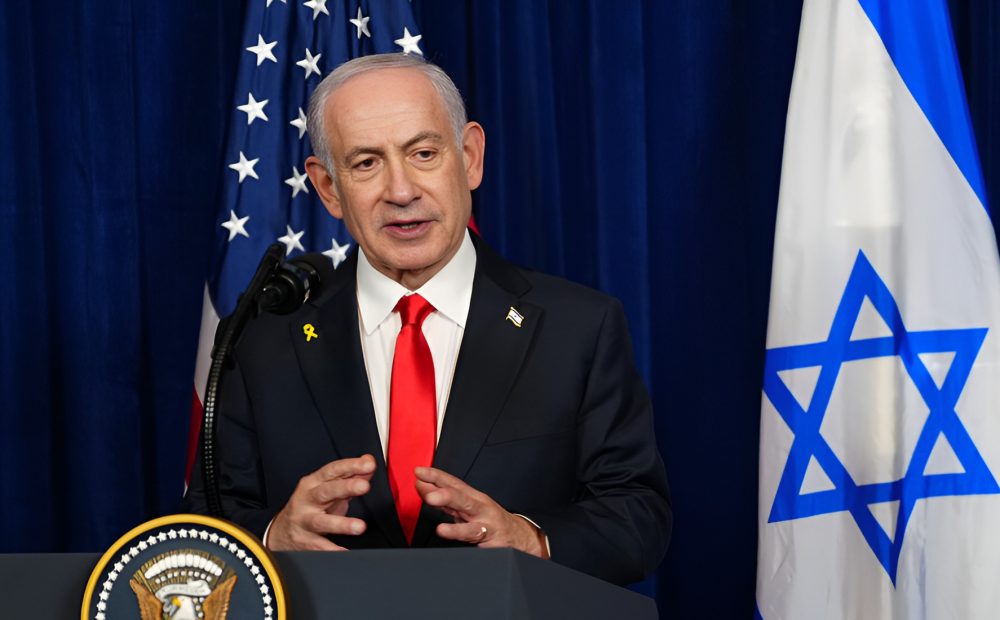
Israeli Prime Minister Benjamin Netanyahu has not ruled out forming a coalition government with opposition leader Gadi Eisenkot, despite publicly denying plans for a unity government, according to the reports.
According to the reports, Netanyahu’s Likud party said the prime minister was “examining every option” amid concerns that Eisenkot could join Arab-led parties and ultra-Orthodox factions to form an alternative government.
In Israel’s October 27 parliamentary elections, Netanyahu’s bloc secured 53 seats in the 120-member Knesset, down from 68 in the outgoing parliament.
Eisenkot’s opposition bloc won 48 seats, while Arab-led parties secured 19 seats. Although the opposition and Arab-led parties together have enough seats for a majority, an agreement between them remains uncertain.
Netanyahu described a possible alliance between Eisenkot and Arab parties as treason, drawing criticism from opponents. Protests have also taken place outside Eisenkot’s home over the possibility of such a coalition.
Likud has questioned the election process, citing suspected voter bribery cases. Several activists and suspects linked to alleged cash payments were arrested, while the Islamist Ra’am party denied involvement. Israel’s Shin Bet is also investigating possible foreign interference.
However, election committee chief Noam Sohlberg said the suspicions, even if substantiated, would not undermine the integrity of the election or its overall results.
Eisenkot accused Netanyahu of trying to delegitimize the outcome, while Qatar denied funding efforts to influence the vote.
The results are expected to be certified this week. President Isaac Herzog will begin consultations with elected parties on Wednesday before assigning a candidate to form the next government.
If coalition talks fail, another candidate may be given the opportunity, with fresh elections possible.