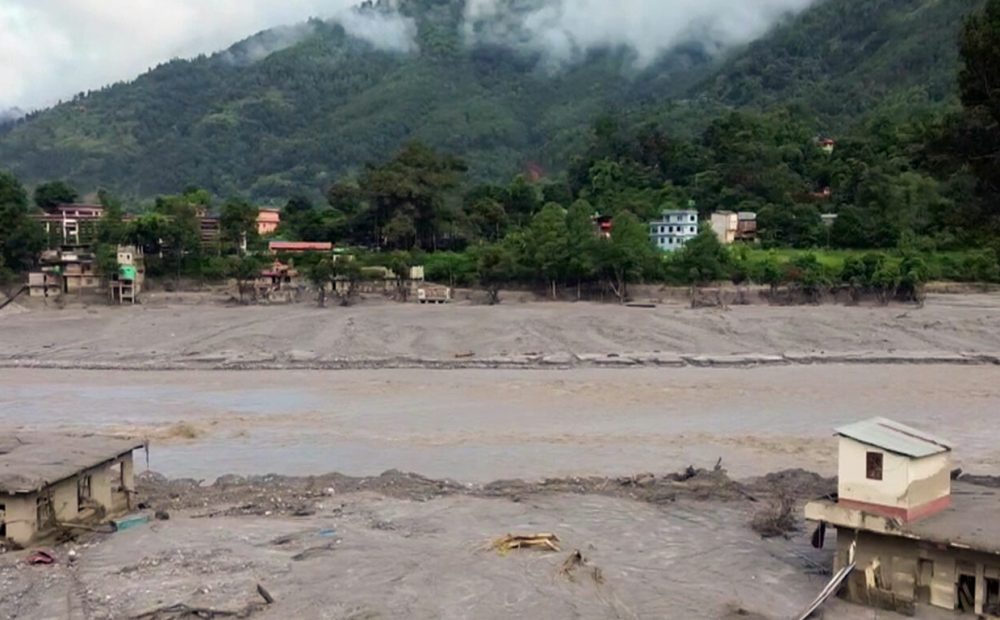
Kathmandu: The death toll from the devastating flash floods that struck Nepal on August 26 has risen to 1,344, the Nepal Police said on Saturday as rescue and relief operations continued across the country.
The Nepal Police shared the latest death toll in a post on X.
The floods have affected several aspects of life in Nepal, while authorities are also dealing with concerns over contaminated drinking water sources and the possible spread of communicable diseases in flood-hit areas.
According to The Kathmandu Post, five of the 15 drinking water sources in flood-hit Bidur were found to be contaminated with E. coli.
Officials are considering cholera vaccination for around 1,00,000 vulnerable people and measles vaccination for more than 75,000 children. Bidur is among the areas worst affected by the Bhote Koshi floods.
The floods caused extensive destruction, sweeping away entire settlements and damaging or destroying vital infrastructure, including roads, bridges and drinking water systems.
Public health experts have warned that the risk of communicable, non-communicable and vector-borne diseases could increase in the aftermath of the disaster. They have advised authorities to strengthen preventive and relief measures, particularly for young children, elderly people and those living with non-communicable diseases.
As relief and rehabilitation efforts continue, the Government of Nepal has announced immediate cash support for affected areas. The National Disaster Risk Reduction and Management Authority (NDRRMA) stated that NPR 10 million each has been allocated to Rasuwa and Nuwakot, NPR 5 million to Dhading, while NPR 135 million has been distributed among 15 affected local governments.
Earlier, a group of US lawmakers on Friday (local time) urged US Secretary of State Marco Rubio to step up American relief and search-and-rescue efforts in flood-hit Nepal. They called for the deployment of a Disaster Assistance Response Team (DART), additional humanitarian assistance and significant reconstruction support as the death toll continued to mount.
Meanwhile, Indian specialised tunnel rescue and medical teams continue their complex search operations in flood-hit Nepal alongside the Nepalese Army.
Indian Ambassador to Nepal Naveen Srivastava on Thursday highlighted India’s ongoing humanitarian aid, specialised tunnel rescue contingents, and a 19-member forensic team supporting relief efforts in flood-ravaged Nepal. He also assured that India would respond positively to its neighbour’s request for reconstruction aid.
Highlighting the speed of India’s response following the August 26 flash floods, Ambassador Srivastava noted that India has mobilised five relief flights carrying emergency supplies, while direct outreach with top Nepalese leadership began immediately.
Rescue, relief and rehabilitation operations remain underway as authorities continue to assess the scale of destruction caused by the floods and address emerging humanitarian and public health concerns.