New York: Twenty-five years after the attacks that changed America and reshaped the world, New York is once again turning its attention to Ground Zero.
The 25th anniversary of Sept. 11 comes with a familiar scene, families gathering to remember loved ones, names being read out, and New York pausing to reflect on a tragedy that continues to shape the city a quarter-century later.
But this year’s commemoration also carries a new political dimension.
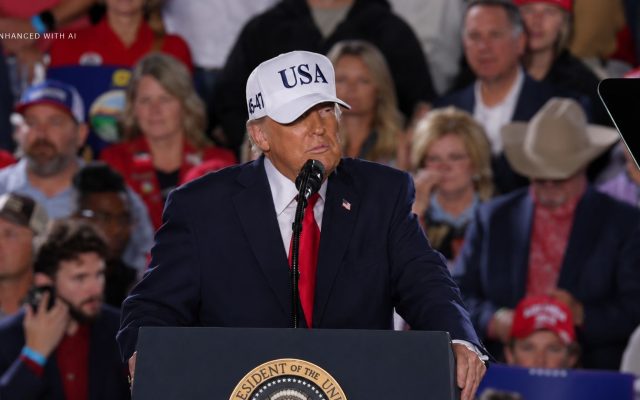
US President Donald Trump will mark the anniversary at the Pentagon rather than in New York, while Vice President JD Vance and former presidents George W. Bush, Bill Clinton, Barack Obama and Joe Biden are expected at the Ground Zero ceremony.
The ceremony itself will remain focused on remembrance. There will be no speeches. Instead, relatives of the victims will read the names of those killed, while bells will mark significant moments.
For many, the anniversary remains as much about remembering the victims as it is about understanding the lasting consequences of that day.
“Memorials like this and discussions about those events are an important part of keeping it alive and understanding how we prevent tragedies like this from ever happening again,” said Robert Kafka, a Chicago resident visiting the 9/11 Memorial.
This year’s ceremony is also unfolding against a political controversy surrounding New York Mayor Zohran Mamdani, the city’s first Muslim mayor.
Mamdani is expected to attend the Ground Zero commemoration alongside the former presidents, despite a campaign calling on him to stay away.
The campaign, backed by the New York Post and former New York Mayor Rudy Giuliani, has drawn more than 100,000 signatures. It accuses Mamdani of associating with people who are allegedly dismissive of American institutions or insufficiently critical of extremist ideologies.
Supporters of the mayor have pushed back against the campaign, arguing that he should not be treated differently because of his faith.
“It’s concerning to me that the mayor is being treated differently simply because he is Muslim,” New York City Council member Shahana Hanif said.
Mamdani has, however, received praise for turning attention toward another part of the 9/11 legacy — the health consequences faced by those exposed to the toxic environment around Lower Manhattan after the attacks.
The immediate devastation was followed by months of dust and pollution around the World Trade Center site.
Thousands of people who lived, worked or responded to the disaster have since developed serious illnesses, including cancers.
More than 9,400 people have died from 9/11-related illnesses, according to the federal program established to provide medical care to those affected.
Mamdani recently released thousands of documents detailing what city officials knew about air toxicity in Lower Manhattan in the aftermath.
“People got sick because the leaders they trusted lied and told them they were safe to breathe in toxic air,” Mamdani said this week.
Twenty-five years on, the debate over the response to 9/11 therefore extends far beyond the events themselves. It includes questions about public health, government accountability and the responsibility to those who survived.
The anniversary is also increasingly becoming a generational story.
Millions of Americans alive today have no personal memory of 9/11. Around 100 million Americans were either not born or were too young to remember the attacks.
For families who lost loved ones, however, the passage of time has not erased the consequences.
Logan Miller lost his uncle in the attacks and later lost his grandfather to a 9/11-related illness.
He said younger people can find it difficult to comprehend the scale of what happened, but their questions are also a way of keeping the memory alive.
That question of memory has become increasingly important as the anniversary reaches 25 years.
What does 9/11 mean to a generation that knows it largely through archival footage, photographs and the stories of parents and grandparents?
For New York, the answer can be found in the annual rituals at Ground Zero.
Huge crowds are expected in Lower Manhattan for Friday’s ceremony.
The Secret Service has established a tight security perimeter around the 9/11 Memorial and Museum. New York Police Commissioner Jessica Tisch said an anti-drone team will also be deployed as a precaution, while stressing that there is no intelligence pointing to a specific threat against the gathering.
In New York, the focus remains on remembrance.
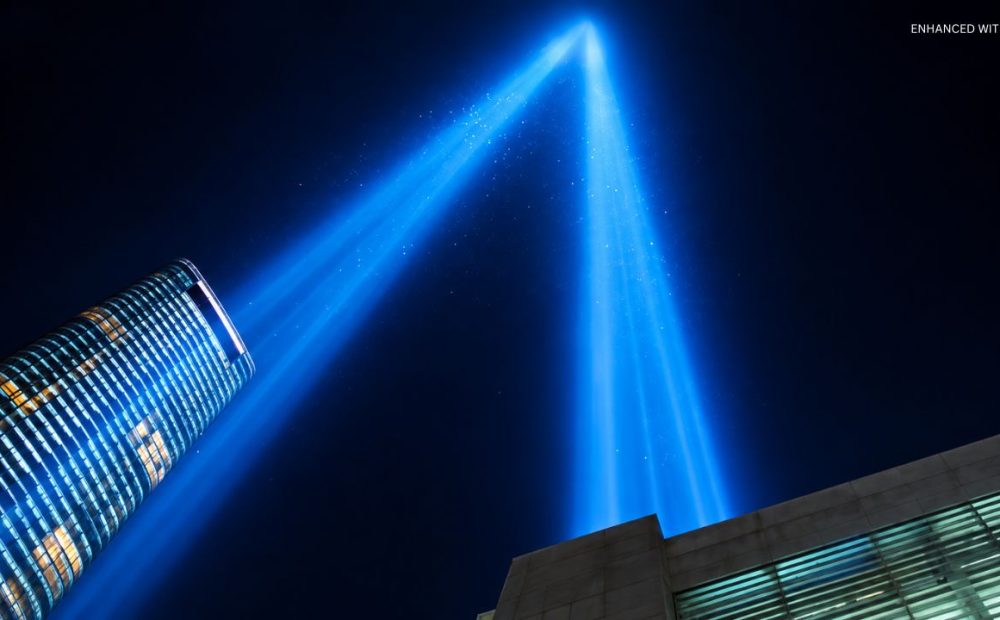
Ahead of the anniversary, 2,977 lights rose above New York Harbor, one for every person killed in the attacks.

It was a simple but powerful reminder that behind the history, the politics and the decades of consequences are 2,977 individual lives.
Twenty-five years later, New York remembers them.
And as another generation grows up with no memory of 9/11, the challenge is no longer simply to remember what happened.
It is to ensure that the memory — and the lessons that came with it — does not disappear.