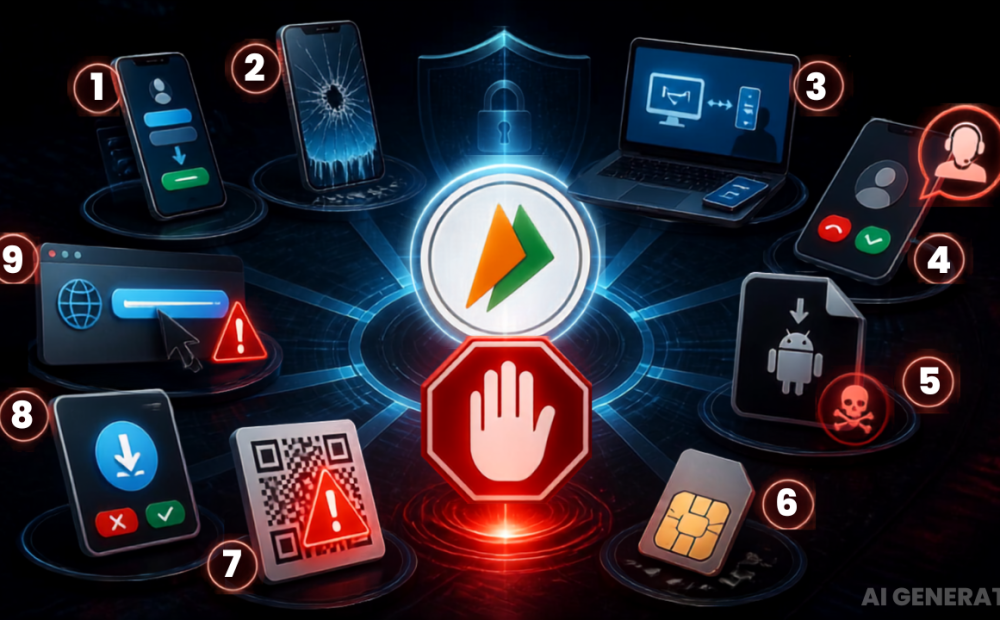
UPI has made digital payments quick and convenient, but scammers are finding new ways to exploit the same convenience. Instead of directly stealing a UPI PIN, fraudsters are increasingly targeting smartphones, SIM cards, banking apps and unsuspecting users. From fake customer-care calls to malicious apps and digital arrest threats, these scams can give criminals access to sensitive information or trick victims into authorising payments.
Here are nine UPI scams users should watch out for.
1. Frozen Phone Scam
A phone may suddenly freeze after a user clicks an unfamiliar link or advertisement. Soon after, a caller claiming to be from technical support may offer to fix the problem and ask the victim to install an app. The app could give scammers access to SMS, notifications or accessibility features, allowing them to monitor sensitive information.
2. Screen-Sharing Scam
Scammers often pose as bank officials, customer-care executives or delivery agents and ask victims to install remote-access applications. Once connected, fraudsters can watch the victim’s screen and potentially see OTPs, banking details and transaction information while manipulating them into making a payment.
3. Fake Customer-Care Scam
Searching online for a bank or UPI app’s helpline number can lead users to fake customer-care numbers. Fraudsters posing as support executives may ask for sensitive information, payment details or remote access to the phone. Always use the customer-care option inside the official app or website.
4. Malicious APK Scam
Fraudsters may send APK files claiming they are needed for KYC verification, refunds, cashback, deliveries or other services. Once installed, these apps can request dangerous permissions and potentially access messages, notifications and other sensitive information. Avoid installing apps sent by unknown people or through unfamiliar links.
5. SIM Swap Scam
In a SIM-swap fraud, criminals obtain a duplicate SIM linked to the victim’s mobile number. Once the original SIM stops working, the fraudster may receive banking OTPs and other alerts. A sudden and unexplained loss of mobile connectivity should be treated seriously and reported to the telecom provider and bank.
6. QR Code Scam
A fraudster may send a QR code claiming it is required to receive a refund, cashback or payment. But scanning a QR code and entering a UPI PIN generally authorises a payment. Remember: you do not need to enter your UPI PIN simply to receive money.
7. Fake Refund Scam
Scammers may contact users claiming that a payment was cancelled or that a refund is waiting to be processed. They then send a payment request, QR code or link and convince the victim to approve it. A refund should never require you to transfer money first.
8. Fake Investment or Payment Link Scam
Fraudsters may lure victims with investment opportunities, discounts, rewards or attractive returns and send links to fake platforms. Once money is deposited, the victim may be asked to pay additional fees or taxes before withdrawing the supposed earnings. Such platforms can be designed entirely to steal money and personal information.
9. Digital Arrest Scam
In digital arrest scams, criminals impersonate police officers, government officials or investigators and claim that the victim’s Aadhaar, SIM card, bank account or identity has been linked to a crime. They create panic and demand money in the name of verification, investigation or account protection. No genuine law-enforcement officer will demand money over a video call to clear such allegations.
Stay Alert
Never share your UPI PIN, OTP or banking passwords with anyone. Do not install unknown apps, scan suspicious QR codes or give strangers remote access to your phone. If you suspect financial cyber fraud, contact your bank immediately and report it by calling 1930 or through the National Cybercrime Reporting Portal.
The safest approach is simple: Stop, verify independently and never act under pressure.