
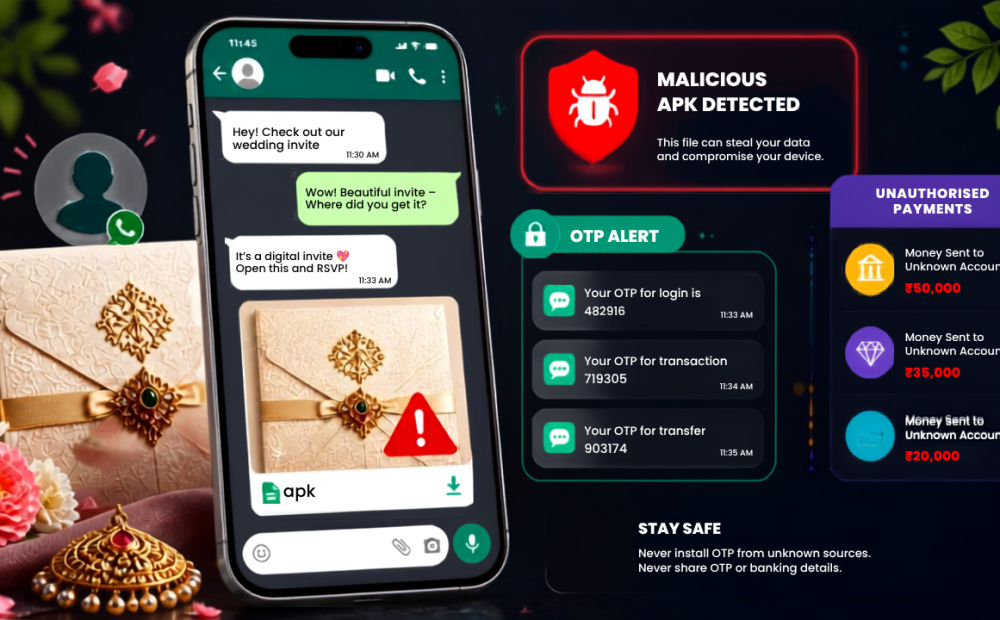
A jeweller in Vadodara lost Rs 4.17 lakh after cybercriminals allegedly used a malicious APK file disguised as a wedding invitation to gain control of his mobile phone and facilitate unauthorised bank transfers.
Chetan Soni, associated with Babubhai Jewellers in Subhanpura, received the suspicious APK file a few days ago from a friend’s WhatsApp number. The number reportedly belonged to Killol Bhatt, whose phone had been compromised. Soni was unable to open the file at the time.
However, on September 10, Soni began receiving multiple OTPs on his mobile phone. Shortly afterwards, Rs 4.17 lakh was transferred from his bank account to accounts belonging to unknown recipients.
Soni reportedly does not use UPI applications such as Google Pay or PhonePe, raising concerns that malware installed on the device may have enabled the fraudsters to access messages and intercept OTPs.
After discovering the unauthorised transactions, Soni immediately got his bank account frozen and contacted the cybercrime helpline by calling 1930.
What To Do If You Receive A Suspicious APK
Cybersecurity experts advise users not to install APK files received through WhatsApp or other messaging platforms, especially when they come from unexpected or compromised accounts.
If an APK has been downloaded but not installed, delete the file without opening it.
If the file has already been installed, immediately disconnect the phone from the internet by switching off mobile data and Wi-Fi or enabling flight mode. Users should then remove any unfamiliar apps that were installed around the time the suspicious file was opened.
It is also advisable to review WhatsApp’s media auto-download settings and disable automatic downloads for unknown or unnecessary media.
If there are strong indications that the phone has been compromised, users should consider a factory reset after securely backing up essential data. They should also contact their bank immediately and report any unauthorised transaction to the cybercrime helpline at 1930.
The incident highlights how malicious APK files can be used as an entry point for cyber fraud, with criminals potentially gaining access to sensitive information and OTPs once the malware is installed.