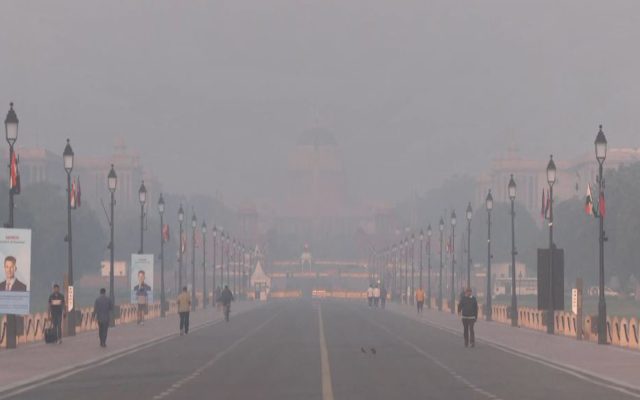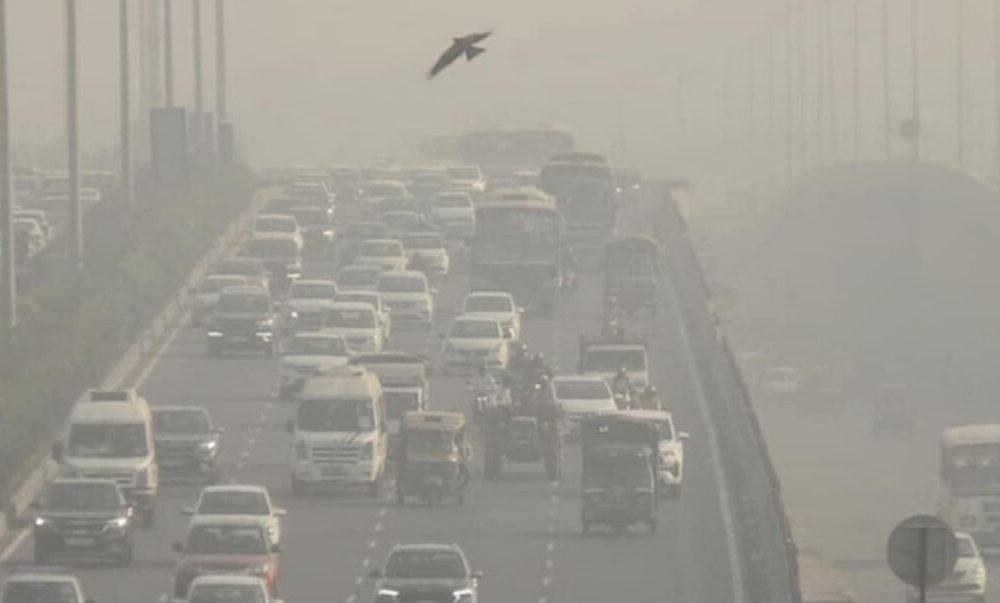
Delhi ranked second among the world’s most polluted major cities, while Lahore in Pakistan topped the list, according to IQAir’s live global air quality ranking.
Delhi recorded a US Air Quality Index (AQI) of 203, placing it in the “very unhealthy” category. Lahore registered an AQI of 410, falling in the “hazardous” category. Dakar in Senegal ranked third with an AQI of 196.
Kuala Lumpur in Malaysia ranked fourth with an AQI of 172, followed by Kolkata at 170 and Singapore at 169. Mumbai stood seventh with an AQI of 163, while Dubai, Jakarta and Beijing rounded out the top 10, recording AQI readings of 161, 159 and 156, respectively.
The ranking placed three Indian cities — Delhi, Kolkata and Mumbai — among the world’s 10 most polluted major cities at the time of the readings. Delhi’s AQI was in the very unhealthy category, while Kolkata and Mumbai fell in the unhealthy range.
Other cities featuring in the ranking included Medan and Jakarta in Indonesia, Cairo in Egypt, Riyadh in Saudi Arabia, Doha in Qatar, Kuching in Malaysia and Dhaka in Bangladesh. AQI readings across these cities ranged from 138 to 153. Medan, Cairo, Riyadh and Doha each recorded an AQI of 153, while Kuching registered 152.
Further down the ranking, Karachi in Pakistan recorded an AQI of 110, while Kinshasa in the Democratic Republic of the Congo and Tel Aviv-Yafo in Israel registered 102 each. Istanbul in Turkey and Hanoi in Vietnam recorded readings of 97, while Kathmandu in Nepal stood at 95.
According to IQAir, its live ranking compares hourly AQI readings from more than 100 major cities worldwide. The figures are updated as air quality conditions change and represent a snapshot of pollution levels rather than a daily average or an annual assessment.
Under the US AQI classification used by IQAir, readings between zero and 50 indicate good air quality, while values from 51 to 100 are considered moderate. Readings between 101 and 150 are classified as unhealthy for sensitive groups, while values from 151 to 200 indicate unhealthy air quality. An AQI between 201 and 300 is considered very unhealthy, while readings above 300 fall in the hazardous category.
High pollution levels can pose significant health risks, particularly for children, older adults and people with respiratory or cardiovascular conditions. The latest ranking underscores the persistent air pollution challenge facing major cities across South and Southeast Asia.