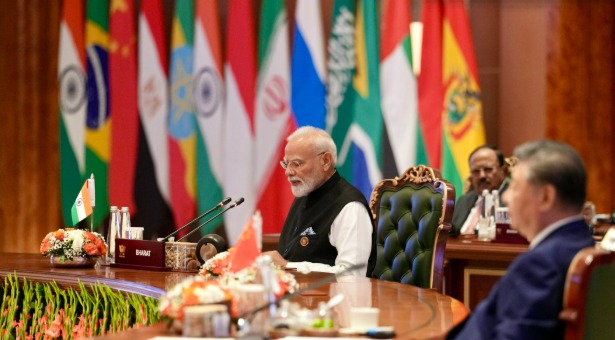
BRICS leaders have called for stronger international cooperation to tackle organised digital fraud and cross-border “scam compounds”, while also pushing for greater coordination on rules governing artificial intelligence.
The New Delhi Declaration, unanimously adopted by the bloc’s 11 member countries, raised concern over the growing use of digital technologies, payment systems and online platforms by organised fraud networks.
These groups often operate across borders and use fake investment schemes, romance scams and fraudulent job offers to target victims. The proceeds are then moved through digital payment channels and other financial networks, making such crimes difficult to trace.
The leaders called for closer coordination among law enforcement agencies, financial intelligence units, customs and tax authorities, regulators and other supervisory bodies. Telecommunications companies and technology platforms have also been urged to strengthen information-sharing and use data analytics to identify suspicious transactions and disrupt money laundering linked to cyber fraud.
Cybersecurity expert Sandeep K Shukla, director at IIIT Hyderabad, said the declaration recognises the challenges posed by cross-border cybercrime and scam compounds, particularly in Southeast Asia. However, he noted that the commitments remain non-binding and do not lay out a detailed mechanism for implementing the proposed cooperation.
He also pointed to difficulties surrounding the sharing of personal information across countries because of differences in privacy laws. According to him, stronger coordination through CERTs, financial intelligence units and law enforcement agencies will be essential for investigating crimes that span multiple jurisdictions.
The declaration also encouraged countries to sign the United Nations cybercrime convention. Shukla noted that India has not yet signed the treaty, while more than 70 countries have done so.
BRICS leaders further backed the creation of a BRICS Central Bank Hub for capacity building and supported annual cybersecurity exercises aimed at strengthening resilience in the financial sector.
The declaration also called for greater efforts to prevent fraud involving cross-border payment systems.
On artificial intelligence, the leaders backed efforts to develop coordinated global approaches to AI governance, reflecting growing concerns over the technology’s impact, security risks and responsible use.
The push comes as BRICS countries seek closer cooperation on emerging technologies while confronting increasingly sophisticated forms of digital crime.