BRICS Summit: India’s Global Balancing Act Takes Centre Stage
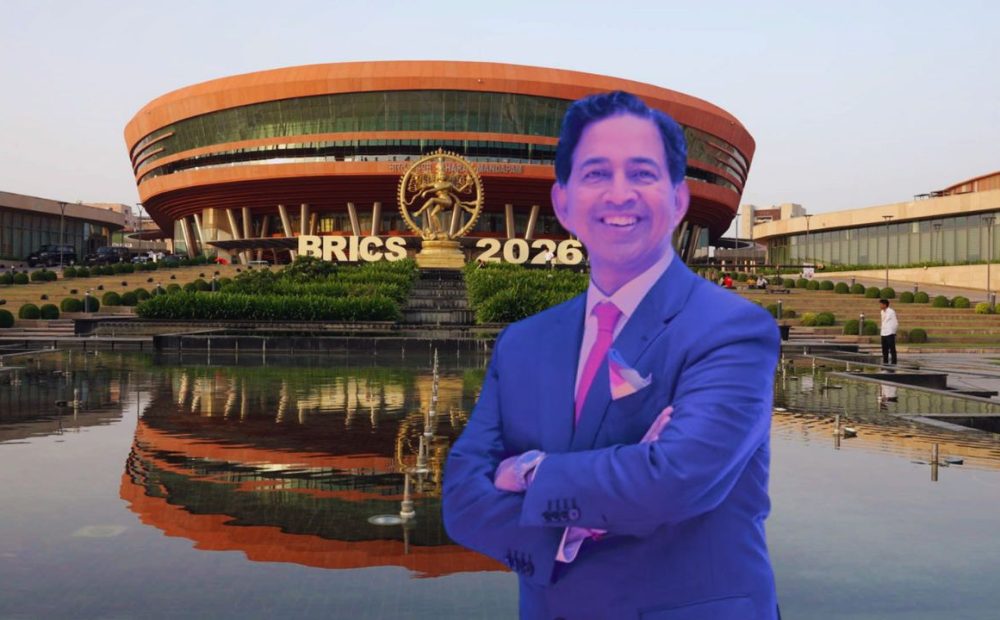
As the world grapples with geopolitical turbulence, the BRICS Summit offers India an opportunity to reinforce its position as a key global player while carefully balancing its relationships with major powers, NewsMobile Editor-in-Chief Saurabh Shukla said in his analysis.
Shukla noted that the summit comes at a critical moment, with the Iran war creating wider geopolitical and economic repercussions, the Russia-Ukraine conflict remaining delicately poised and US tariff policies reshaping global trade.
Against this backdrop, the presence of leaders such as Russian President Vladimir Putin and Chinese President Xi Jinping alongside Prime Minister Narendra Modi in New Delhi gives the summit added strategic significance.
🌍🇮🇳 Decoding the BRICS Summit with Saurabh Shukla
NewsMobile Founder & Editor-in-Chief @isaurabhshukla breaks down what the 18th BRICS Summit means for India, from its global image and diplomatic balancing act to New Delhi’s push to put India’s national interests at the centre… pic.twitter.com/NDs8s2oan7
— NewsMobile (@NewsMobileIndia) September 11, 2026
According to Shukla, the world needs what could be described as a “geopolitical balm” to address the fissures created by recent shocks. The BRICS grouping, which brings together countries accounting for nearly 40% of the global economy, could provide a platform for discussions on shared economic challenges, including energy pressures, currency instability and unemployment.
India’s Fine Balancing Act
For New Delhi, however, the summit is also about managing competing strategic interests.
India remains keen to deepen engagement with BRICS members, particularly Russia and China, but at the same time does not want to disrupt its important bilateral relationship with the United States.
Shukla pointed to India’s simultaneous engagement with the Quad, involving the US, Japan and Australia, as well as military exercises with Washington and Japan, as evidence of New Delhi’s broader strategic approach.
The message, he said, is particularly significant for China: India is willing to engage and pursue better relations, but it will not compromise on its strategic interests or national security.
This approach reflects what Shukla described as India’s emphasis on self-preservation and the defence of its national interests while maintaining engagement with multiple power centres.
China, US And The New Geopolitical Equation
The timing of the summit is also significant because Xi is scheduled to meet US President Donald Trump, adding another layer to the evolving US-China-India dynamic.
Shukla argued that China’s interest in closer economic ties with India could also provide Beijing with additional geopolitical leverage at a time when countries are increasingly placing their own national interests above broader multilateral considerations.
He suggested that the traditional notion of multipolarity is being reshaped by a more country-specific approach to diplomacy, where national economic and strategic interests increasingly dominate both bilateral and multilateral engagements.
India Seeks Centre Stage
Against this backdrop, BRICS gives India a platform to position itself at the centre of global diplomacy.
With the grouping representing a substantial share of the global economy, the summit provides New Delhi with an opportunity to bring together countries with overlapping economic and geopolitical interests while simultaneously demonstrating that India can engage with competing power blocs.
For India, therefore, the summit is not merely about BRICS. It is also about projecting itself as a consequential global power capable of navigating an increasingly fractured international order.
As the summit unfolds, New Delhi’s ability to maintain ties with Russia and China while strengthening strategic partnerships with the US, Japan and Australia will be closely watched.
The larger message, Shukla said, is clear: India wants to engage with all sides, but on its own strategic terms.