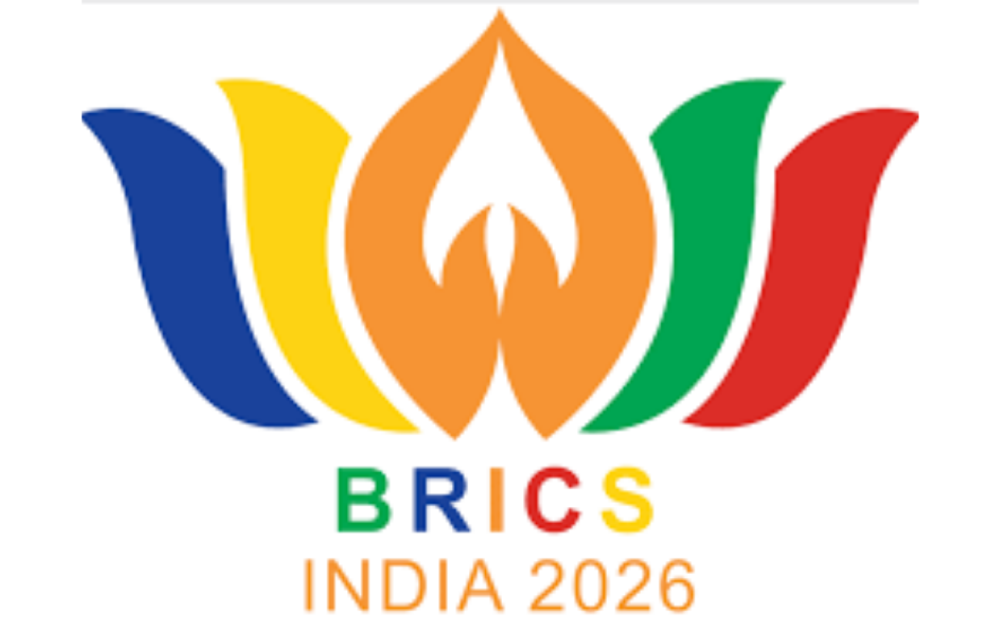
India is set to host the 18th BRICS Summit at Bharat Mandapam in New Delhi on September 12-13, as the grouping marks 20 years since its establishment. India assumed the BRICS chairship on January 1 for the fourth time after 2012, 2016 and 2021.
India’s 2026 theme is “Building for Resilience, Innovation, Cooperation and Sustainability”, reflecting the “Humanity First” approach. More than 350 meetings and high-level engagements have been held across over 25 Indian cities during the presidency.
The summit will focus on resilient supply chains, trade, cross-border payments, greater use of national currencies, MSMEs, startups, AI, digital technologies, energy security, climate resilience, development finance and reform of global governance institutions.
Proposed initiatives include a BRICS Global Value Chains Action Plan 2026-30, invoice-discounting mechanism for MSMEs, MSME Cooperation Portal, Startup Innovation Fund, Digital Agriculture Network, farmers’ seed-rights forum, health cooperation, smart-grid and energy-storage initiatives, climate-resilient urban infrastructure, logistics cooperation and a Digital Public Infrastructure Repository.
BRICS Members and Key Leaders
BRICS has 11 members: Brazil, China, Egypt, Ethiopia, India, Indonesia, Iran, Russia, Saudi Arabia, South Africa and the UAE. It also has 10 partner countries: Belarus, Bolivia, Cuba, Kazakhstan, Malaysia, Nigeria, Thailand, Uganda, Uzbekistan and Vietnam.
Prime Minister Narendra Modi will host the summit. Russian President Vladimir Putin has confirmed attendance, while Chinese President Xi Jinping is expected. South African President Cyril Ramaphosa, Egyptian President Abdel Fattah el-Sisi, Indonesian President Prabowo Subianto, Iranian President Masoud Pezeshkian and other leaders are also expected. UN Secretary-General António Guterres may participate.
Schedule and Key Events
The BRICS Business Forum will be held on September 11 at Bharat Mandapam, alongside a Women’s Business Alliance meeting. The Leaders’ Summit will take place on September 12-13.
A joint Leaders’ Declaration is expected, although its final wording will depend on consensus among members. Political differences, particularly over the West Asia conflict, remain a major challenge.
Delhi Security and Route Restrictions
Delhi has imposed extensive security and traffic measures for VVIP movements. The Delhi Traffic Police has identified 22 diversion points and more than 35 roads for regulation during motorcades.
Traffic diversions and regulated movement were also imposed for the September 6 motorcade rehearsal. A detailed advisory said restrictions could operate from 9 am to 10 pm, while an earlier update cited the 10 am-4 pm period.
TRAFFIC ADVISORY
In connection with traffic arrangements for an event on 05.09.2026, traffic movement is likely to be affected from 1800 hrs to 2100 hrs on key roads and stretches in North Delhi.Commuters are advised to avoid the affected routes, plan their journeys in… pic.twitter.com/H0oZjFNMjq
— Delhi Traffic Police (@dtptraffic) September 5, 2026
Commuters have been advised to avoid unnecessary travel on affected routes, use the Metro and public transport, allow extra time and follow traffic personnel’s instructions. Emergency and essential-service vehicles will receive priority passage.
Central government offices in Delhi and Delhi government offices, autonomous bodies and PSUs will remain closed on September 11 to facilitate summit arrangements.