New Delhi: New Delhi is gearing up for the 18th BRICS Summit, with the capital under heightened security and extensive traffic restrictions as leaders from major emerging economies arrive for the two-day meeting.
Russian President Vladimir Putin has already reached New Delhi, while Chinese President Xi Jinping is also set to visit India for the summit. Iranian President Masoud Pezeshkian is among the other key leaders attending the meeting.
Prime Minister Narendra Modi is scheduled to hold bilateral meetings with Putin and Pezeshkian, with trade, economic cooperation and other strategic issues expected to figure prominently in the talks. Modi is also expected to meet Xi on the sidelines of the summit.
The summit comes as BRICS grapples with differing positions among its expanded membership on the wars in Ukraine and the Middle East, while also seeking to deepen economic cooperation and push for a greater role for developing countries in global institutions.
What Is BRICS?
BRICS was established in 2009 as a grouping of major emerging economies seeking a stronger voice in global institutions traditionally dominated by Western powers.
The grouping has since expanded considerably. Its current 11-member lineup comprises:
- Brazil
- China
- Egypt
- Ethiopia
- India
- Indonesia
- Iran
- Russia
- Saudi Arabia
- South Africa
- United Arab Emirates
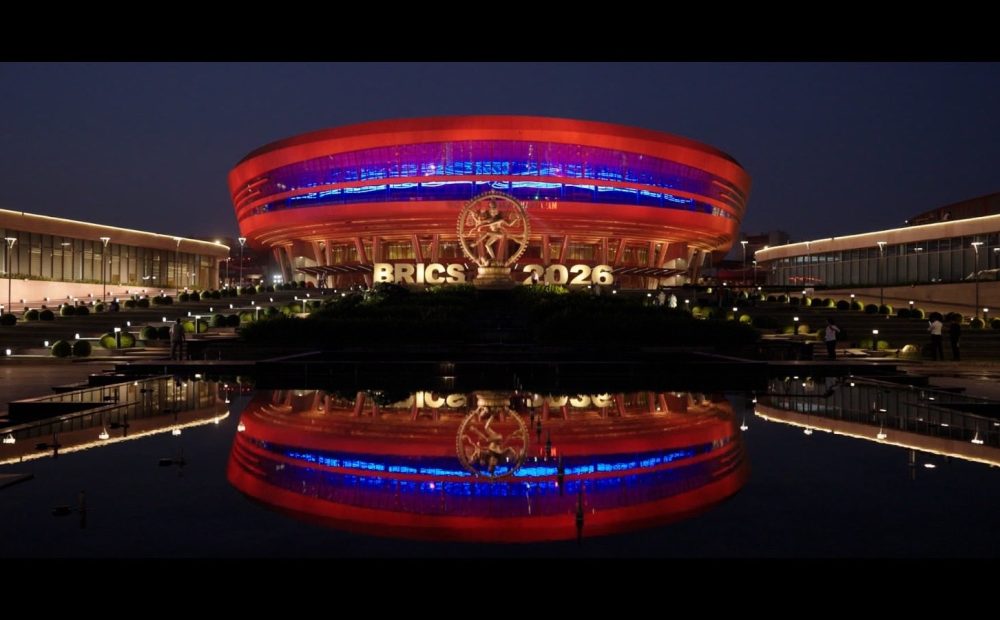
India is chairing BRICS in 2026 and is hosting the summit in New Delhi.
What Is On The Agenda?
According to the Ministry of External Affairs, leaders will discuss ways to strengthen cooperation among BRICS countries on shared priorities and exchange views on global and regional issues of common interest.
The agenda is expected to span global governance, multilateralism, economic cooperation, innovation, sustainability and inclusive growth.
The expanded grouping also presents a diplomatic challenge because its members do not have identical positions on major international conflicts, particularly the wars in Ukraine and the Middle East.
India is expected to use its chairmanship to highlight cooperation among developing countries while pushing for practical outcomes in areas of shared interest.
Prime Minister Modi has said he expects the summit to produce positive and meaningful discussions focused on global welfare.
Why Putin’s Visit Matters?
Russian President Vladimir Putin’s presence is one of the major highlights of the summit.
Putin is scheduled to meet Modi for bilateral talks, with trade and economic ties expected to be high on the agenda.
India and Russia have maintained close ties despite the disruption to global trade and geopolitics caused by the Ukraine war. Their relationship spans defence, energy, trade and strategic cooperation.
The bilateral meeting is therefore expected to provide an opportunity for both sides to review existing ties and explore ways to expand economic engagement.
Xi Jinping’s India Visit: Why Is It Significant?
Chinese President Xi Jinping’s visit marks an important moment in India-China relations.
Xi is visiting India after a gap of nearly six years, following a prolonged chill in bilateral ties after the 2020 Galwan Valley clash, in which 20 Indian soldiers were killed. China also suffered casualties, although it did not immediately disclose the full number.
Relations between the two nuclear-armed neighbours have shown signs of improvement in recent months, with the gradual restoration of direct flights, visas and high-level contacts.
Xi is expected to meet Modi on the sidelines of the BRICS Summit, making the interaction closely watched for signals on the future trajectory of bilateral relations.
Who Is Attending?
Besides Modi, Putin, Xi and Pezeshkian, several heads of government and state are expected to participate in the summit and related meetings
Among those attending are:
South African President Cyril Ramaphosa
Belarusian President Alexander Lukashenko
Egyptian President Abdel Fattah el-Sisi
Indonesian President Prabowo Subianto
Ethiopian Prime Minister Abiy Ahmed
Malaysian Prime Minister Anwar Ibrahim
Thai Prime Minister Anutin Charnvirakul
Kazakh President Kassym-Jomart Tokayev
Brazilian President Luiz Inacio Lula da Silva is expected to be represented by Foreign Minister Mauro Vieira.
The United Arab Emirates is expected to be represented by Abu Dhabi Crown Prince Sheikh Khaled bin Mohamed bin Zayed Al Nahyan instead of President Sheikh Mohamed bin Zayed Al Nahyan.
United Nations Secretary-General Antonio Guterres is also expected to participate, although a formal announcement was still pending.
BRICS Summit 2026 Schedule
Friday, September 11
Venue: Bharat Mandapam
9:30 a.m.-10:15 a.m.: Opening session
10:30 a.m.-2:35 p.m.: Thematic session
2:35 p.m.-3:30 p.m.: Lunch
3:30 p.m.-4:30 p.m.: Showcasing India’s BRICS journey
5 p.m.-6 p.m.: Leaders’ session
Saturday, September 12
Venue: Bharat Mandapam
2 p.m.: Arrival of BRICS member-country leaders
2:35 p.m.: Closed session on “Inclusive Global Governance and Strengthening Multilateralism”
4:25 p.m.: Visit to the Bharat Innovates Exhibition
5:05 p.m.: Family photo
5:10 p.m.: Joint tree plantation
7:30 p.m.: Gala dinner hosted by Prime Minister Modi
Sunday, September 13
Venue: Bharat Mandapam
9:55 a.m.: Arrival of leaders of BRICS partner countries and Outreach Invitees
10:35 a.m.: Family photo
10:50 a.m.: Open session on “Resilience, Innovation, Cooperation, and Sustainability: Shaping the Future for Inclusive Global Growth”
Delhi Under Heavy Security
Delhi has been placed under heightened security ahead of the arrival of several world leaders.
Around 15,000 Delhi Police personnel, 200 companies of paramilitary forces and more than 500 CCTV cameras have been deployed as part of the security arrangements.
The New Delhi zone will have round-the-clock surveillance through a dedicated monitoring system. The arrangements include high-resolution cameras, facial recognition technology and vehicle number plate-reading systems.
Security measures cover the airport, hotels, Bharat Mandapam and other locations that visiting dignitaries are expected to travel to.
Authorities have also strengthened access control, verification procedures, intelligence gathering, traffic management and emergency response systems.
Will Delhi Be Shut Down?
No
Delhi Traffic Police has said there will be no citywide shutdown, but commuters should expect temporary stoppages, diversions and restrictions when VVIP convoys move through the capital.
The duration of these stoppages will not be fixed. Traffic will be released in phases depending on the security situation and prevailing ground conditions.
More than 35 roads could be affected during the summit period.
Major roads likely to see restrictions or diversions include:
Mathura Road
Sardar Patel Marg
Shanti Path
Janpath
Ashoka Road
Barakhamba Road
Tolstoy Marg
Africa Avenue Road
Niti Marg
Panchsheel Marg
APJ Abdul Kalam Road
Which Commuters Could Be Most Affected?
The traffic impact is expected to be particularly noticeable for commuters travelling:
Between Noida and central Delhi
Between East Delhi and central Delhi
From Dwarka and west Delhi toward Dhaula Kuan
Toward Delhi airport
Toward South Delhi
Police have advised commuters to plan their journeys in advance and factor in possible delays caused by movement of foreign dignitaries.
Why This BRICS Summit Matters?
The 2026 BRICS Summit comes at a time when the grouping is considerably larger and more politically diverse than when it was founded.
India’s challenge will be to build consensus among countries with different strategic interests while keeping the focus on economic cooperation, multilateral reform and issues affecting the developing world.
For New Delhi, the summit is also an opportunity to showcase India’s growing diplomatic and economic role and its ability to convene major global powers despite their differences.
With Putin, Xi and leaders from across the expanded BRICS grouping converging on the Indian capital, the summit is set to be closely watched for both economic outcomes and geopolitical signals.