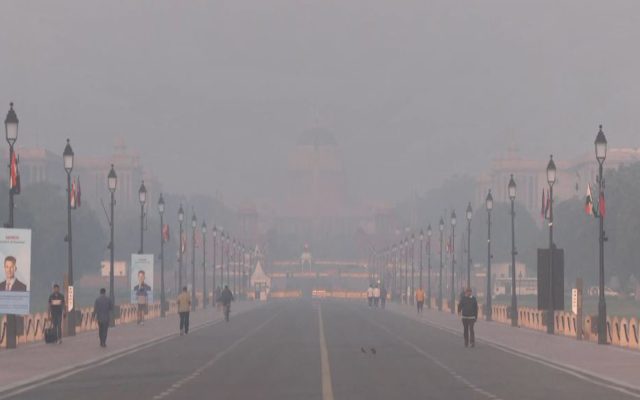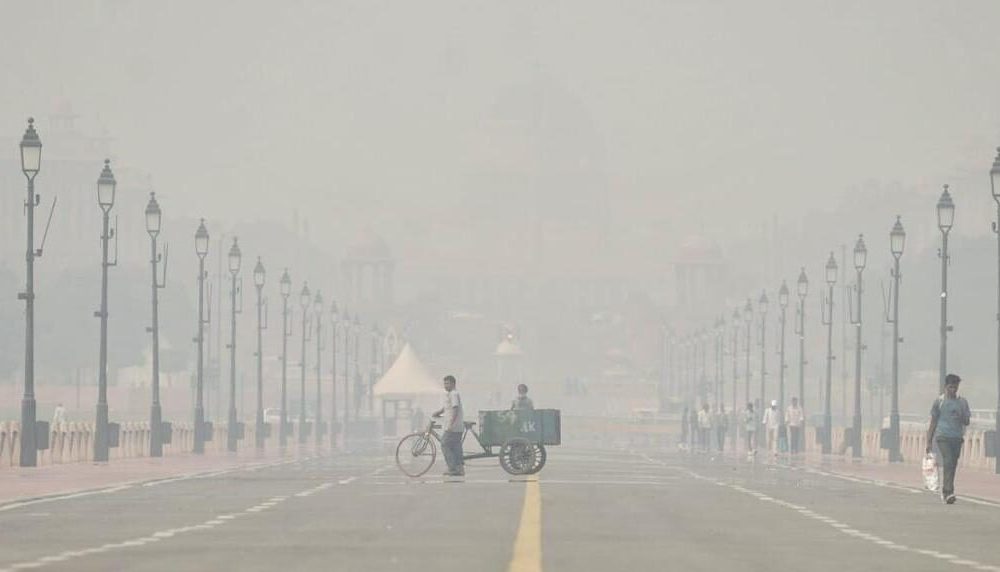
New Delhi: Delhi’s air quality remained in the poor category on Friday, with the Air Quality Index (AQI) recorded at 223 at 8 am, while the contribution of stubble burning to the city’s PM2.5 pollution rose to 15.9 per cent.
Of the 57 air quality monitoring stations in the capital, 38 recorded poor air quality, while 19 reported moderate levels, according to the monitoring data.
The Air Quality Early Warning System has forecast that the city’s air quality is likely to remain poor until October 25, with no immediate improvement expected over the following six days.
According to the India Meteorological Department (IMD), Safdarjung recorded a minimum temperature of 19 degrees Celsius on Friday, 1.8 degrees above normal. The minimum temperature at the Ridge was 19.2 degrees Celsius, while Lodi Road, Ayanagar and Palam recorded 18.6, 19.1 and 18.3 degrees Celsius, respectively.
No rainfall was recorded at the five weather stations in the 24 hours ending at 8.30 am on Friday.
The contribution of stubble burning to Delhi’s PM2.5 concentration increased from 7.4 per cent on Thursday to 15.9 per cent on Friday, according to the Decision Support System for Air Quality Management in Delhi, developed by the Indian Institute of Tropical Meteorology (IITM), Pune.
Satellite data detected 114 crop-residue burning incidents across six states on Thursday, including 56 in Rajasthan, 36 in Punjab, 11 in Uttarakhand, seven in Madhya Pradesh, three in Uttar Pradesh and one in Haryana. No incidents were detected in Delhi.
Between September 15 and October 22, a total of 1,507 farm-fire incidents were recorded across the six states and Delhi, with Punjab accounting for 510, Madhya Pradesh 400, Rajasthan 308, Uttar Pradesh 193, Uttarakhand 83, Haryana 12 and Delhi one.
Transport remained the largest estimated contributor to Delhi’s pollution at 17.32 per cent, followed by other sources at 17.28 per cent, the Decision Support System data showed.
An AQI between 201 and 300 is classified as poor under the Central Pollution Control Board’s scale.