New Delhi: The Delhi government has announced a series of measures to tackle the national capital’s worsening air quality well ahead of the winter season, when pollution levels typically rise sharply.
The measures, announced nearly three months before the peak pollution period, include doubling parking charges, staggered office timings, partial work-from-home arrangements and restrictions on construction and demolition activities.
Parking Charges To Double From November 1
Under the new plan, parking charges across Delhi will be doubled from November 1 in an effort to discourage the use of private vehicles and reduce vehicular emissions.
The government has also announced staggered working hours for offices from November 1 through February 28, 2027.
Offices under the Municipal Corporation of Delhi (MCD) will operate from 8:30 a.m. to 5 p.m., while Delhi government offices will function from 10 a.m. to 6:30 p.m.
50% Staff To Work From Home
The government has further directed government and private offices to reduce their physical workforce by half during the winter period.
Under the arrangement, 50% of employees will work from home, while the remaining 50% will report to offices. The measure will remain in effect from November 1 to February 28, 2027.
The government expects the staggered timings and work-from-home arrangement to help reduce traffic volumes during the winter months.
Construction, Demolition Activities To Face Restrictions
Construction and demolition activities that generate dust will also be prohibited during a designated period in the winter season.
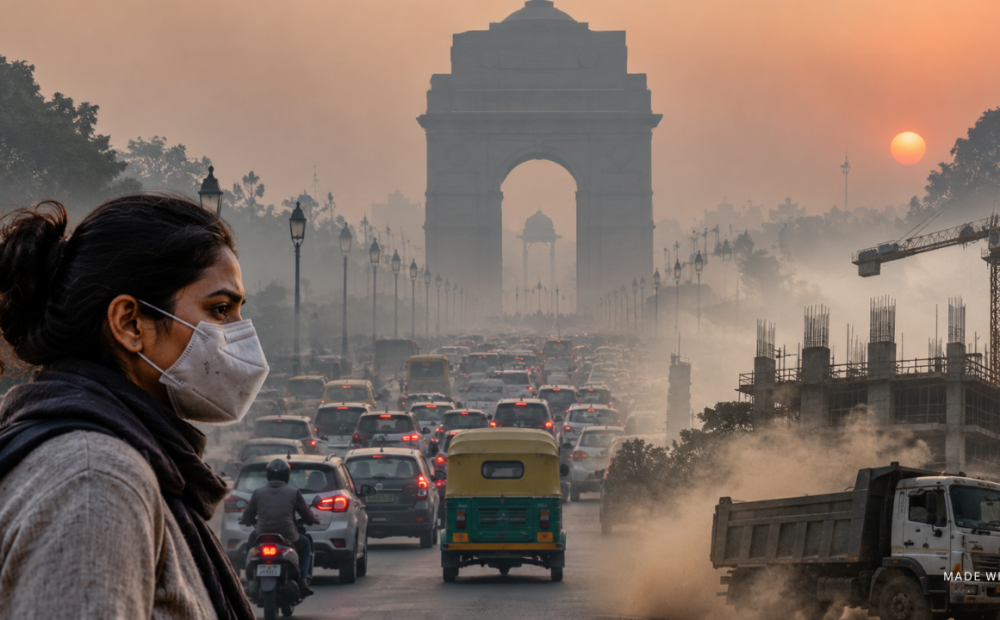
Dust from construction sites has long been identified as one of the contributors to Delhi’s air pollution, alongside vehicle emissions, industrial activity and other sources.
Delhi’s Winter Pollution Challenge
Delhi has repeatedly introduced emergency and preventive measures to deal with its winter pollution crisis. In previous years, these have included restrictions on construction activity and the odd-even vehicle scheme, under which vehicles with odd- and even-numbered registration plates were allowed to operate on alternate days.
However, the city’s pollution problem is not limited to vehicular emissions.
Dust, industrial emissions and other local sources contribute significantly to deteriorating air quality, while pollution from neighbouring states can further compound the problem during the winter months.
Stubble Burning Remains A Concern
Crop-residue burning, particularly in neighbouring Punjab and Haryana, has also been identified as a factor contributing to Delhi’s winter pollution.
As temperatures fall and atmospheric conditions become less favourable for dispersing pollutants, emissions from multiple sources can combine to push the city’s air quality into the severe category.
With this year’s measures being announced well ahead of winter, the Delhi government is seeking to shift from a largely reactive approach to an early intervention strategy aimed at reducing pollution before the season reaches its peak.