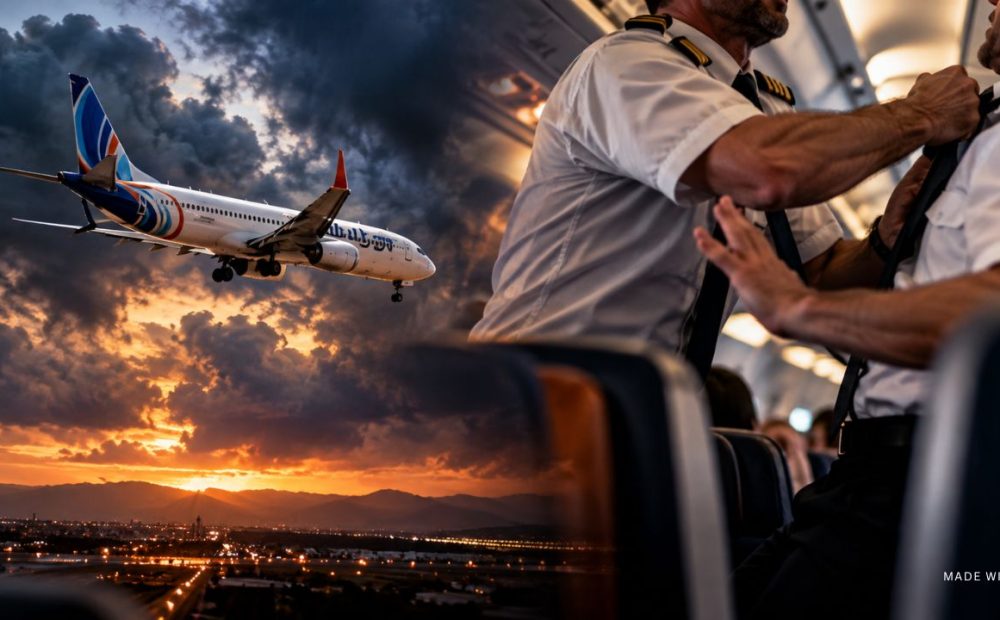
The Omani co-pilot accused of attacking an Indian pilot aboard a flydubai flight may have attempted to shut down the aircraft’s engines after an alleged plan to crash the Boeing 737 into a building in Tel Aviv failed, according to a report by Italian newspaper Corriere Della Sera.
The newspaper reconstructed the sequence of events aboard the Dubai-to-Tel Aviv flight using testimonies from people directly involved in the incident, information provided to safety authorities by the flight crew, accounts from airport personnel and air traffic controllers, and data from aviation tracking platforms.
According to the report, Israeli intelligence believes Hammam al-Hammami’s alleged plan was to kill Flight Captain Smit Machchhar, take control of the aircraft and deliberately crash it into a skyscraper in Tel Aviv.
The incident reportedly began when al-Hammami appeared to be praying inside the cockpit before taking a crash axe and attacking Machchhar from behind.
Machchhar initially believed he had been struck by a loose or broken component inside the cockpit. He soon realised he was being attacked when the blows continued.
The Indian pilot suffered severe head injuries and a serious injury to his arm and was bleeding heavily. He reportedly attempted to open the cockpit door, but al-Hammami initially shut it. Machchhar managed to open the door again.
The commotion was heard by a female passenger whose daughter was in the aircraft’s toilet. She alerted other passengers and two off-duty pilots traveling on the flight.
Several passengers then rushed toward the cockpit and found Machchhar seriously injured and lying in a pool of blood.
According to Corriere Della Sera, al-Hammami then appeared to abandon the alleged plan to reach Tel Aviv and instead attempted to crash the aircraft in a desert area.
The report said he disengaged the autopilot and pushed the control stick forward. Within about 30 seconds, the Boeing 737 reportedly lost approximately 16,000 feet of altitude and began descending rapidly toward the ground.
The newspaper also raised questions about whether the aircraft’s engines had been deliberately shut down.
Videos recorded during the struggle inside the cabin reportedly showed the aircraft’s emergency lighting activated at high altitude. The report said this could indicate that the plane had lost its main electrical power supply and switched to battery power.
Investigators are reportedly examining whether al-Hammami moved the engine fuel-control switches from “Run” to “Cutoff,” potentially interrupting fuel flow to the engines.
As the aircraft descended rapidly, its speed reportedly exceeded 970 kph, causing damage to its tail rudder.
Al-Hammami allegedly continued trying to interfere with the aircraft’s controls before passengers overpowered him.
Yaniv Hayoun, a plumber traveling on the flight, reportedly grabbed the control stick and pulled it back, preventing the aircraft from continuing its descent.
Two off-duty pilots then took control of the aircraft and began working to stabilise it.
The report said the aircraft lost altitude again around 9:25, possibly because of insufficient engine thrust. The off-duty pilots reportedly restored the aircraft to a stable configuration and determined that the flight parameters were consistent with restarting the engines.
Saudi air traffic controllers subsequently instructed the aircraft to turn around. The crew was later directed to make an emergency landing at Tabuk in Saudi Arabia.
The pilots successfully landed the aircraft. Machchhar was taken to a hospital for treatment, while al-Hammami was handed over to Saudi authorities.
Israeli authorities have described the incident as a terror attack and are investigating how an Omani national was cleared to operate a flight bound for Tel Aviv despite Israel and Oman not having diplomatic relations.
The allegations regarding al-Hammami’s intentions, the possible shutdown of the aircraft’s engines and the sequence of events remain subject to investigation.