India on Tuesday rejected China’s objections to the standardisation of names for 28 geographical features in Ladakh, reiterating that the Union Territory is an integral part of the country and that Beijing’s claims cannot alter this position.
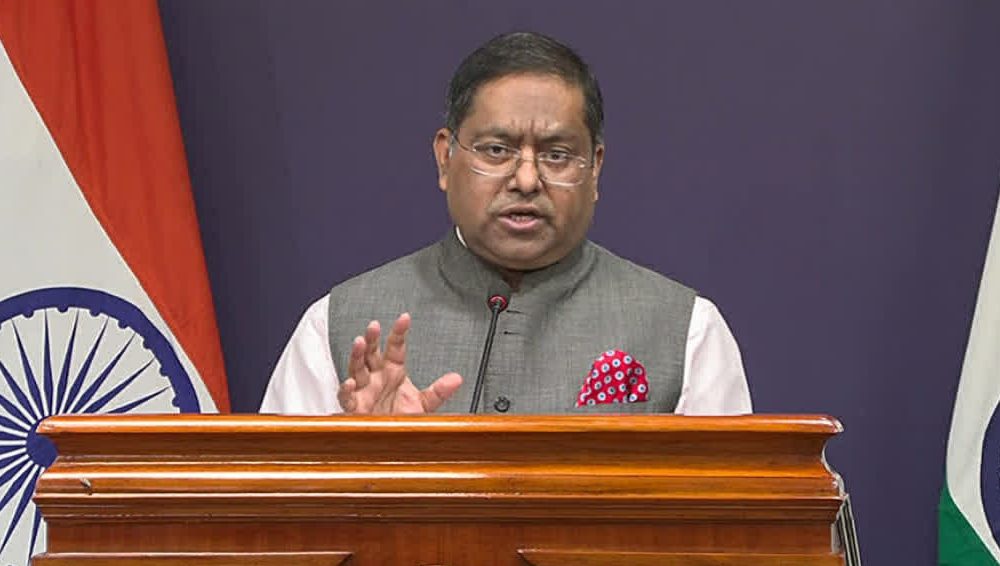
Responding to China’s criticism, Ministry of External Affairs (MEA) spokesperson Randhir Jaiswal said India’s position on Ladakh remained unchanged and dismissed Beijing’s objections to the exercise.
“No amount of denial by the Chinese side can change this established fact,” Jaiswal said, reaffirming India’s sovereignty over the Union Territory.
The diplomatic exchange followed China’s opposition to India’s decision to incorporate standardised names for 28 locations and geographical features in Ladakh on official Survey of India maps.
Chinese Foreign Ministry spokesperson Mao Ning had termed the move illegal and invalid, asserting that the areas concerned in the western sector of the China-India boundary belonged to China. Beijing also accused India of acting unilaterally.
Rejecting the objections, the MEA said the exercise was undertaken in consultation with the Ladakh administration and local stakeholders. The initiative aims to ensure consistent identification of geographical features and improve public awareness of their locations, the ministry said.
The Ministry of Home Affairs announced the standardisation on October 2, covering a range of geographical features, including mountain peaks, passes, glaciers, valleys, rivers, lakes and other land areas.
The list includes Gogra and Hot Spring, both of which figured in the 2020 India-China military standoff in eastern Ladakh, along with Dehra Compass, Zorawar Peak, Kanishka Peak, Parpik Glacier and Shkorga Valley.
The updated map also identifies features such as Guru Rinpoche Lake and the Yangpa River, alongside several mountain peaks and passes.
The move comes amid continuing territorial differences between India and China along the Line of Actual Control (LAC). Both countries have maintained competing positions on sections of the boundary, particularly in eastern Ladakh.
India has consistently rejected Chinese claims over its territory and maintained that attempts by Beijing to dispute Indian sovereignty or assign names to locations do not change the ground position.