Brasília: Brazilian President Luiz Inacio Lula da Silva has secured a historic fourth term after defeating right-wing senator Flavio Bolsonaro in a dramatic runoff election, overcoming a first-round setback to retain power in Latin America’s largest country.
Lula won 51.8% of the valid votes, compared with Bolsonaro’s 48.2%, according to Brazil’s Superior Electoral Court. The result marks an unprecedented comeback for the veteran left-wing leader, who will become the first candidate since the country’s return to democracy in the 1980s to win the presidency after finishing second in the first round.
Bolsonaro, the son of former far-right President Jair Bolsonaro, refused to concede defeat and demanded that the election results be annulled. He questioned the extension of voting hours, describing the move as unprecedented, despite both candidates having requested it.
The outcome offers a boost to left-of-center forces across Latin America and could influence the region’s political direction amid growing tensions over US influence. Brazil and Mexico, the region’s two most populous countries, will now be led by left-leaning governments.
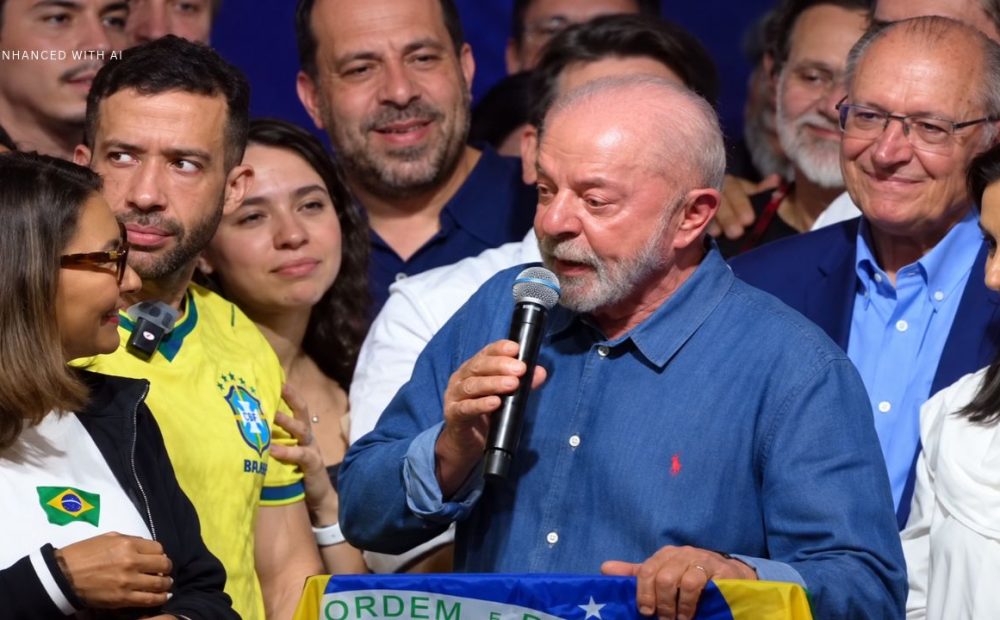
Following the announcement, Lula’s campaign released a video showing the president celebrating with First Lady Rosangela da Silva and political allies. Wearing red, star-shaped glasses, the veteran leader kissed his wife as supporters gathered along a major avenue in Sao Paulo to celebrate his victory.
A Comeback Built On Welfare And Pragmatism
Lula’s victory marks another remarkable chapter in a political career spanning nearly five decades. Born into poverty in northeastern Brazil to a family of illiterate farmers, he rose from working as a metalworker and trade union leader to become one of the country’s most influential political figures.
He first served as president from 2003 to 2011, gaining widespread support through social welfare programmes and policies aimed at reducing poverty. His political fortunes later suffered a major setback when he was imprisoned from 2018 to 2019 on corruption charges that were subsequently overturned, allowing him to return to electoral politics.
Lula defeated Jair Bolsonaro in the 2022 presidential election and, during his third term, oversaw falling inflation and unemployment while expanding efforts to combat hunger. However, concerns over living costs, public safety and corruption allegations involving his Workers’ Party continued to weigh on his popularity.
His defeat in the first round of the latest election initially appeared to put his political future in jeopardy. But his campaign quickly mobilised supporters through large rallies under the slogan “Never Again Bolsonaro,” reviving criticism of the former president’s handling of the COVID-19 pandemic, policies affecting the Amazon rainforest and reductions in public programmes.
Lula also sought to connect with younger voters and Brazil’s growing population of informal workers by overhauling his social media strategy. He began recording video selfies and bought his first cellphone as part of efforts to modernise his campaign’s outreach.
His final push combined populist promises with economic and labour reforms. Proposals included free public transport nationwide on weekends, subject to congressional approval, and a 15% increase in payments under his flagship welfare programme, which was already being implemented.
He also championed a constitutional amendment that became one of Brazil’s most significant labour reforms in decades and secured broad support in Congress.
National sovereignty emerged as another central campaign theme. Lula accused his rival of aligning too closely with the United States under President Donald Trump, arguing that Brazil should resist external commercial and diplomatic pressure.
“Choose a country where the flag is respected,” Lula told voters during the campaign, portraying the election as a choice between defending Brazil’s independence and allowing foreign influence to shape its policies.
Conservative Congress Poses Major Challenge
Despite his electoral victory, Lula faces a difficult governing landscape. Brazil has elected its most conservative Congress since the return to democracy in the 1980s, strengthening the opposition’s ability to obstruct his legislative agenda.
Bolsonaro’s Liberal Party and its allies are projected to command more than 280 seats in the lower house and as many as 50 seats in the Senate, giving conservative lawmakers substantial influence over legislation and government policy.
The balance of power could force Lula to rely on complicated political alliances to advance his priorities, including welfare spending, labour reforms and economic measures.
Oliver Stuenkel, a professor of international relations at the Getulio Vargas Foundation in Sao Paulo, warned that Lula could begin his new term with limited political room to manoeuvre.
The incoming legislature is expected to reinforce the growing influence of Congress over Brazil’s executive branch, potentially restricting Lula’s leverage over Supreme Court nominations and increasing the risk of legislative deadlock. Political tensions could also expose his administration to impeachment threats.
Age presents another challenge. Lula, who turns 81 on Tuesday, will be 85 by the end of his new term in 2030. His re-election would extend his time in the presidency to approximately 16 years across his four terms.
His victory also highlights Brazil’s deep political divisions, with nearly half of voters backing Bolsonaro and signalling a desire for a different political direction.
Economic hardship remains a concern for many households. Tereza Cristina Ramos, a 68-year-old retiree who voted in Rio de Janeiro, described the difficulties faced by ordinary Brazilians, saying rising living costs had made even basic food items unaffordable for some families.
Security And Cost Of Living Remain Key Concerns
Lula’s administration will also face mounting pressure to address violent crime and insecurity, particularly in working-class neighbourhoods where criminal factions exert control and threaten residents.
Public safety, household expenses and economic opportunity are likely to remain central issues as the president seeks to translate his campaign promises into tangible improvements in people’s lives.
While the result secures Lula’s place in Brazilian political history, his fourth term begins with a divided electorate, a powerful conservative opposition and significant expectations from supporters who backed his promises of social protection and economic relief.
The challenge now will be to turn his electoral comeback into effective governance while navigating a more hostile Congress and addressing the persistent economic and security concerns confronting Brazil.