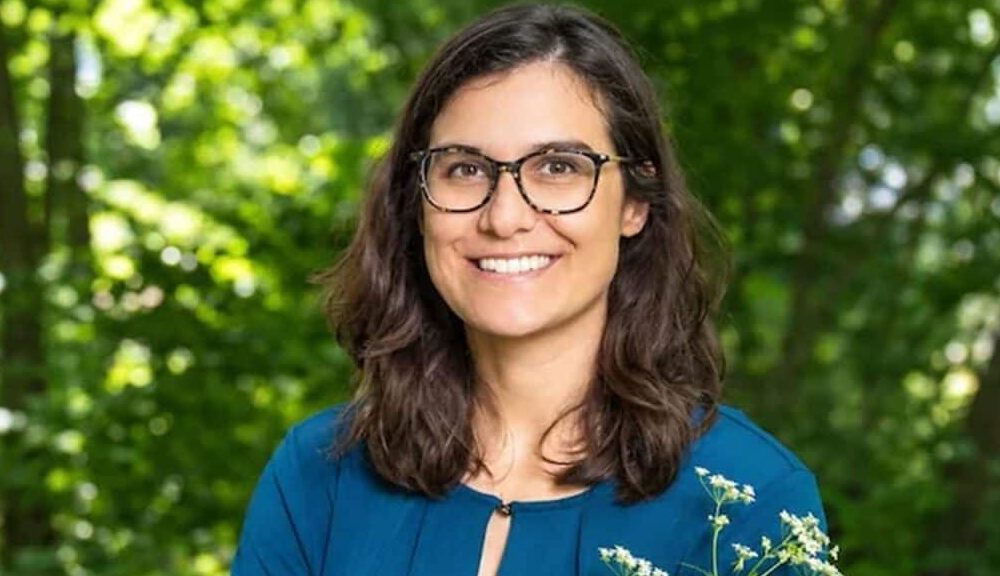
Nila Vikhe Patil, niece of Maharashtra BJP minister Radhakrishna Vikhe Patil, has been elected to Sweden’s Parliament from the Stockholm City constituency, marking her entry into the 349-member Riksdag.
Vikhe Patil, 41, contested the September 13 parliamentary election as a candidate of Sweden’s Green Party. The Swedish Election Authority formally established the final Riksdag results on September 19, with the Green Party securing 22 seats.
Born in Sweden, Nila spent her early years in Ahmednagar, Maharashtra. She is the daughter of educationist Ashok Vikhe Patil, granddaughter of former Union minister Balasaheb Vikhe Patil and great-granddaughter of Vithalrao Vikhe Patil, who founded what is described as Asia’s first cooperative sugar factory.
Nila has been involved in Swedish politics for around 25 years. She previously served as a political adviser in the Swedish Prime Minister’s Office during Stefan Lofven’s tenure, where she worked on finance, taxation and housing. She later served on the Stockholm City Council and held various positions within the Green Party and its youth organisations.
She holds a bachelor’s degree and an MBA from the Gothenburg School of Business, where she studied economics and law, and also studied at the Complutense University of Madrid. Since 2020, she has worked with PricewaterhouseCoopers (PwC) and became an authorised public accountant in April 2025.
Speaking after her election, Nila said she looked forward to contributing to Stockholm and Sweden. She said she wanted to be “a voice for those who cannot vote” and work towards creating opportunities for children, while stressing the need for a habitable planet, clean water and protection of nature.
Nila also said she remained closely connected to India and recalled her grandfather Balasaheb Vikhe Patil, saying she hoped her election would make him proud. Radhakrishna Vikhe Patil has also publicly congratulated his niece on her election to the Swedish Parliament.
Sweden’s September 13 election resulted in a narrow parliamentary majority for the opposition grouping, which won 176 of the 349 Riksdag seats, against 173 secured by parties forming or supporting the outgoing conservative-led government. Prime Minister Ulf Kristersson subsequently resigned.