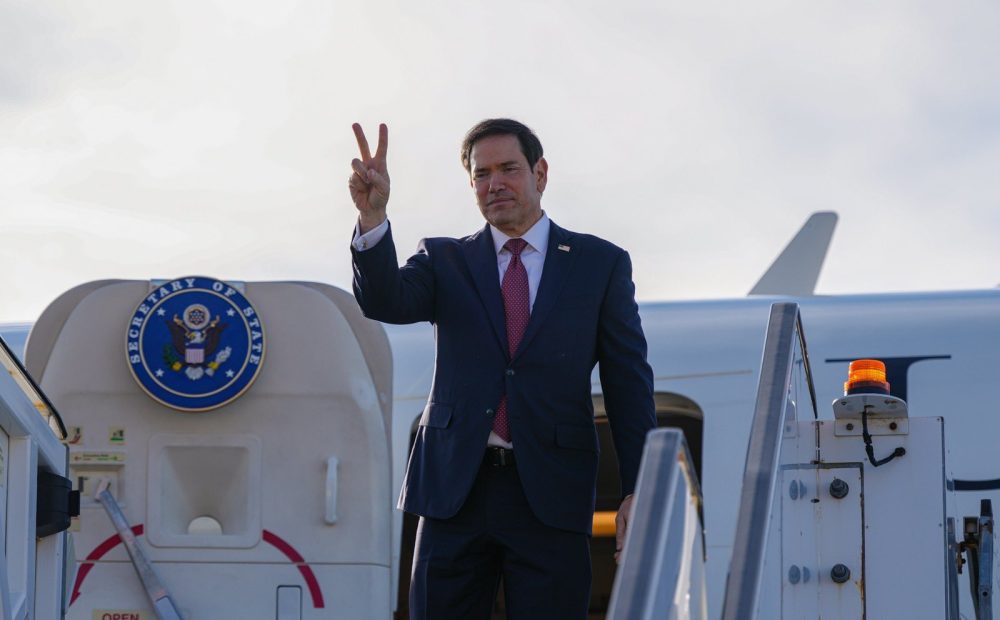
Washington, DC: US Secretary of State Marco Rubio will visit Uzbekistan and India from October 17-22, with discussions expected to focus on strategic ties, energy cooperation and economic engagement, the US State Department said.
Rubio’s itinerary includes Samarkand in Uzbekistan, followed by Mumbai and Jamnagar in India. The trip will mark his second official visit to India this year.
In Uzbekistan, Rubio will participate in the C5+1 Ministerial, a diplomatic platform connecting the US with five Central Asian nations — Uzbekistan, Kazakhstan, Tajikistan, Turkmenistan and the Kyrgyz Republic.
The discussions will underscore the importance of strategic cooperation in advancing regional stability, prosperity and closer ties between Washington and Central Asia. Rubio will also hold bilateral meetings with senior officials from all five countries.
A key focus of the Uzbekistan leg will be commercial engagement. Rubio will lead a US business delegation comprising more than 200 business leaders, with the visit aimed at expanding trade and investment opportunities and strengthening commercial cooperation between the US and Central Asian countries.
Rubio will travel to India after concluding his engagements in Uzbekistan, where he is scheduled to meet senior government officials to discuss ways to deepen the US-India strategic partnership.
The discussions are expected to cover regional and global developments, alongside opportunities to expand cooperation in the energy sector. Rubio will also engage with business leaders to promote commercial investment and strengthen economic ties between the two countries.
The visit comes as Washington seeks to deepen its strategic and economic partnerships across Central Asia and the Indo-Pacific region, with India remaining a key partner in its broader regional engagement.
The State Department said the trip would provide an opportunity to advance diplomatic priorities and explore new avenues for cooperation with both Central Asian nations and India.