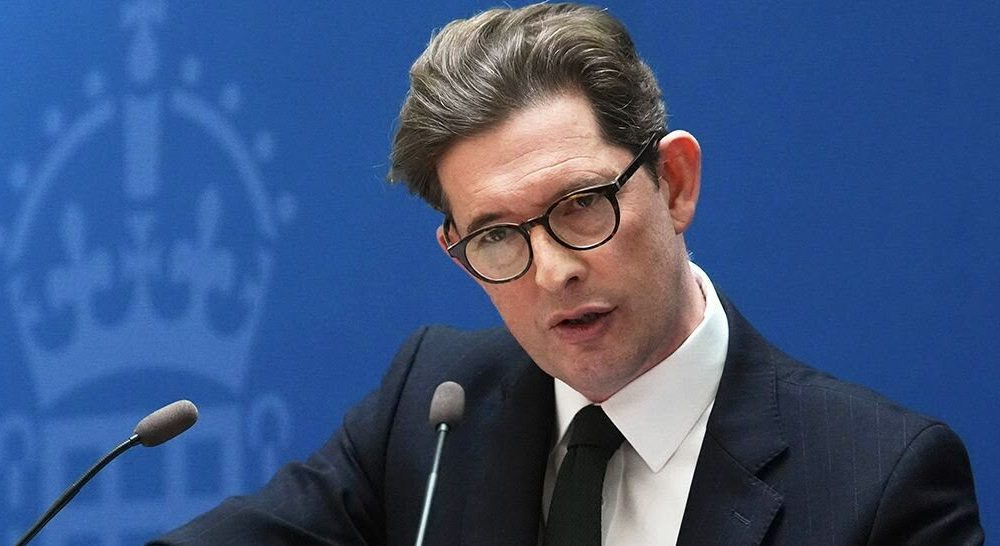
MI5 chief Ken McCallum has warned that Britain faces escalating security threats from Russia, Iran, artificial intelligence (AI) and terrorism, saying foreign adversary threats have quadrupled over the past decade.
Speaking at his annual address in London on Tuesday, McCallum described Russia as “aggressor number one” and said Moscow was intensifying hybrid warfare through cyberattacks, sabotage and misinformation.
The expulsion of nearly 1,000 Russian officials since the invasion of Ukraine has pushed the Kremlin towards recruiting criminal proxies, he said. Russia denies involvement in hostile activities.
McCallum said Iran had expanded operations targeting opponents, Jewish communities and Israeli interests, with more than 50 UK arrests linked to Iranian activities in the past year.
He also warned of growing interest in military sites, including activity beyond RAF Fairford, where seven people were arrested and bailed following a security investigation.
On AI, McCallum said the technology was strengthening both cyber attackers and defenders, enabling tailored propaganda, improved attack planning and AI-powered drones.
He identified the potential development of biological weapons and new pathogens by terrorists as a major concern. MI5 has established an AI Threat Assessment Centre to assess emerging risks.
Britain’s terrorism threat level was raised to “severe” in April, meaning an attack is highly likely within six months.
McCallum warned that Islamist groups and extreme right-wing networks continued to inspire attacks, with anti-immigration and anti-Muslim grievances increasingly turning into terrorist intent. A probe into a radicalised 13-year-old helped an international partner prevent a lethal attack.
Addressing Brexit, McCallum acknowledged Russian media and online trolls attempted to influence the 2016 referendum debate, while cautioning against exaggerating their impact. He said MI5 now devotes more resources to state threats than during the Cold War.