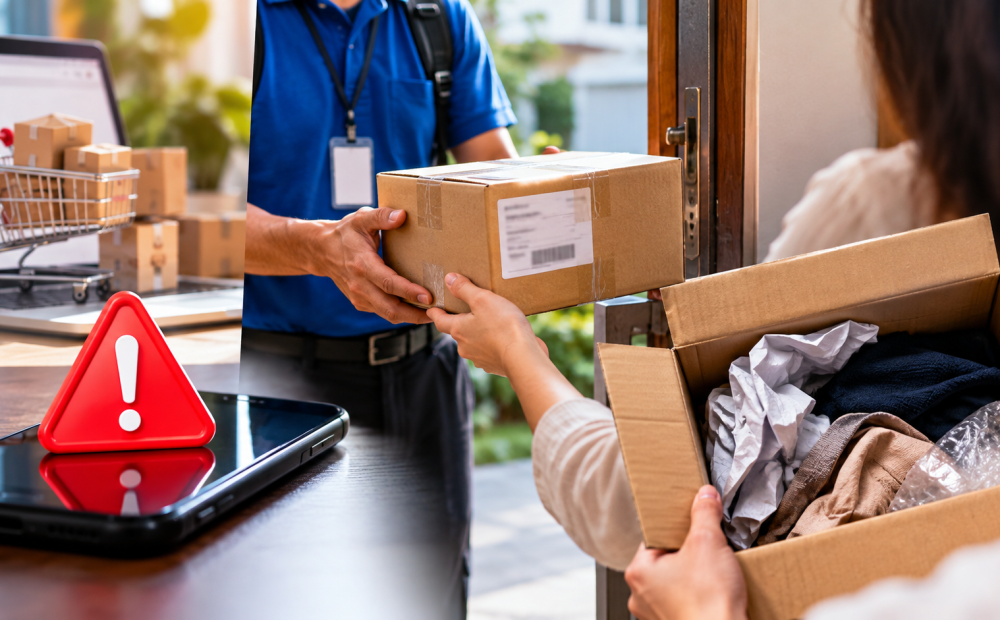
Mumbai: A new delivery scam is targeting online shoppers with unsolicited cash-on-delivery (COD) parcels, using personal information such as names, phone numbers and residential addresses to make fraudulent shipments appear genuine.
The parcels, often priced between ₹500 and ₹5,000, may contain scrap clothing, paper or unrelated low-value items. Victims who pay delivery agents often find it difficult to seek refunds because the shipments do not appear in their shopping accounts.
According to software engineer Piyush Surolia, who has worked with third-party delivery services, fraudsters may obtain customer details by accessing shipping labels at warehouses, courier centres or through local delivery contractors. The information can then be used to generate fake labels and dispatch bulk shipments through regular delivery networks.
Surolia explained that fraudsters can upload spreadsheets containing personal details to digital shipping platforms and print labels in large numbers. Delivery agents collecting cash may have no way to verify whether a customer actually placed the order.
Personal information can also be exposed through food delivery services, diagnostic laboratories, utility bills, loan applications and discarded packaging. Private cybercrime investigator Dinesh Jain said data brokers may compile such details and sell them through encrypted messaging platforms, including Telegram, or online black markets.
Frequent online shoppers, households that regularly use COD services and families where elderly members or domestic staff receive parcels may face greater exposure to the scam.
Consumers should verify unexpected deliveries against their shopping accounts and confirm with the named recipient before making any payment. Family members and domestic staff should also be instructed not to accept unsolicited COD parcels without confirmation.
Experts advise reviewing saved addresses on shopping and delivery applications, removing outdated details and limiting unnecessary sharing of personal information.
The key precaution is simple: never pay for a cash-on-delivery parcel unless someone in the household has confirmed the order.