A 65-year-old retired resident of Pinjore in Haryana’s Panchkula district allegedly lost ₹7 lakh after cybercriminals impersonating Delhi Police and Central Bureau of Investigation (CBI) officers threatened him with legal action and convinced him to transfer money as part of a fabricated investigation.
According to a complaint filed by Mohan Chand at the Panchkula cybercrime police station, the ordeal began on August 25, when he received a call from a person claiming to represent the telecom department. The caller alleged that Chand’s identity documents were linked to criminal activities and that a bank account had been opened in his name for suspicious transactions.
Chand was subsequently connected to another caller posing as a Delhi Police officer. The individual claimed his identity had been misused in a transaction involving the alleged sale of another identity document for ₹2 lakh to a person named Sandeep.
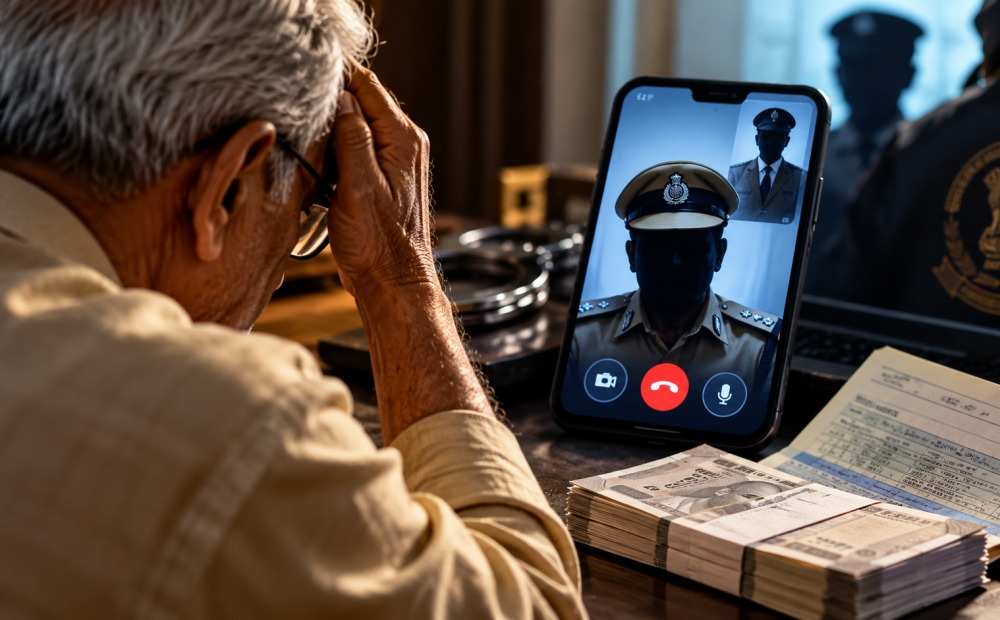
To make the claims appear genuine, the fraudsters arranged video calls featuring individuals dressed in police uniforms, posing as senior police and CBI officials. They instructed Chand to submit a written application addressed to the Supreme Court and assured him that cooperating with the purported investigation would resolve the matter.
The callers also promised to return any money transferred during the inquiry. On September 16, they provided bank account details belonging to Krishkart Logistics Private Limited and directed Chand to deposit ₹7 lakh.
Fearing legal consequences, Chand reportedly liquidated his wife’s fixed deposit and transferred the amount from her Punjab and Sind Bank account. The fraudsters assured him that the money would be refunded within 24 hours and warned him against discussing the case with anyone, citing national security concerns.
Chand did not disclose the transaction until his daughter visited him. After informing her about the incident, he realised he had been cheated.
The case highlights how cybercriminals exploit fear of law enforcement and national security to pressure victims into transferring their savings.