New Delhi: The Supreme Court on Sunday asked authorities in Delhi to remove unnecessary barricades and ensure that restrictions on public movement and transport are imposed only when legally justified, following disruptions during protests against Chief Election Commissioner Gyanesh Kumar.
A bench of Justices Joymalya Bagchi and V Mohana issued the directions while hearing pleas challenging the curbs imposed during Saturday’s demonstrations, including the closure of metro stations and allegations of unlawful detention of protesters.
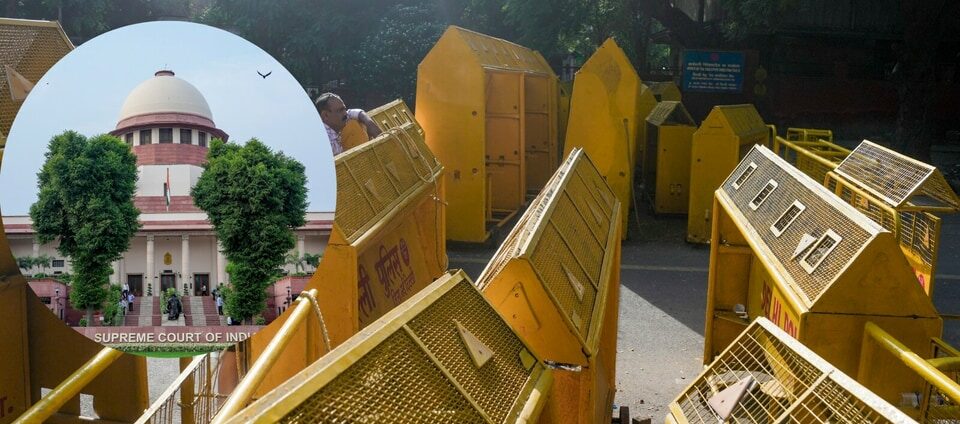
The court stressed that traffic movement across the national capital should remain unhindered wherever possible. It said barricades must be assessed immediately and retained only where required for security, law-and-order management or traffic regulation. Metro and railway services, too, should continue without disruption unless restrictions are essential to maintain public order.
The bench also directed authorities to ensure that internet services are not suspended unlawfully and that peaceful, unarmed demonstrators are not detained illegally in areas where prohibitory orders under Section 163 of the Bharatiya Nagarik Suraksha Sanhita (BNSS) do not apply.
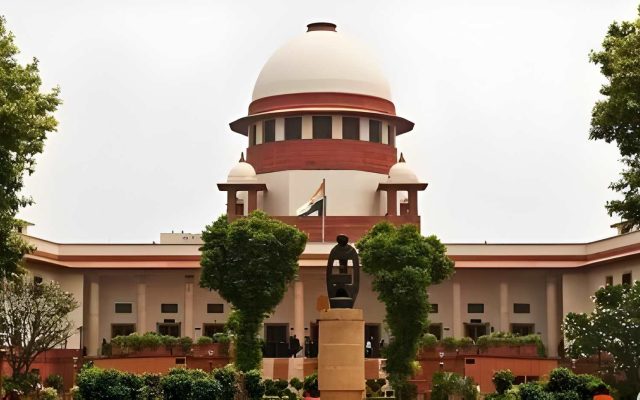
Expressing concern over restrictions near the Supreme Court, the judges ordered the removal of notices invoking Section 163 from the court’s vicinity, if they were still in place. They said such measures should not discourage people from approaching the Supreme Court or other courts to seek justice.
The bench underlined that the right to protest must be exercised in accordance with the law, while making it clear that lawyers and journalists should be able to perform their professional duties without obstruction.
The court also sought details from the Delhi Metro Rail Corporation (DMRC) on the stations shut during the protests. It asked the corporation to provide a map showing which stations were closed and which remained operational.
The judges noted that authorities had initially considered shutting 57 stations but eventually closed 45. They questioned how passengers could use the network effectively when stations in between were inaccessible, even if stations at either end of a route remained open.
The proceedings followed a hearing on Friday, when a bench led by Chief Justice Surya Kant had directed the Centre to prevent a complete halt to metro and train services entering Delhi on October 10. Despite that order, several metro stations were closed on Saturday, leading advocate and petitioner Shailendra Mani Tripathi to raise allegations of contempt.
Solicitor General Tushar Mehta told the court on Sunday that all metro stations had reopened by 10 pm on Saturday and that internet connectivity had been restored. He assured the bench that services were now operating normally. Senior Delhi Police officials were also present during the hearing.
The Supreme Court has listed the matter for further hearing on Tuesday.
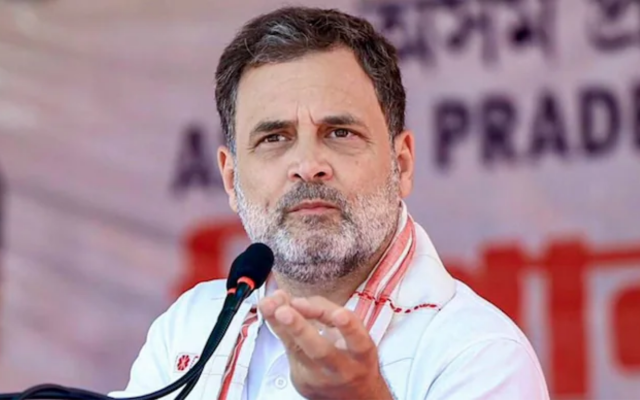
The demonstrations were held amid demands by the Cockroach Janta Party (CJP) and Opposition parties for Gyanesh Kumar’s resignation over alleged irregularities in the Special Intensive Revision (SIR) process.