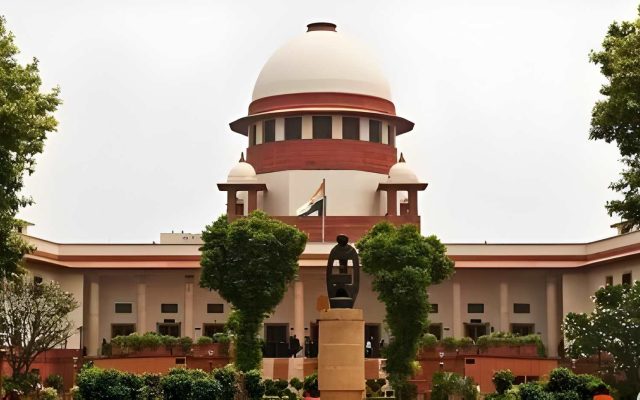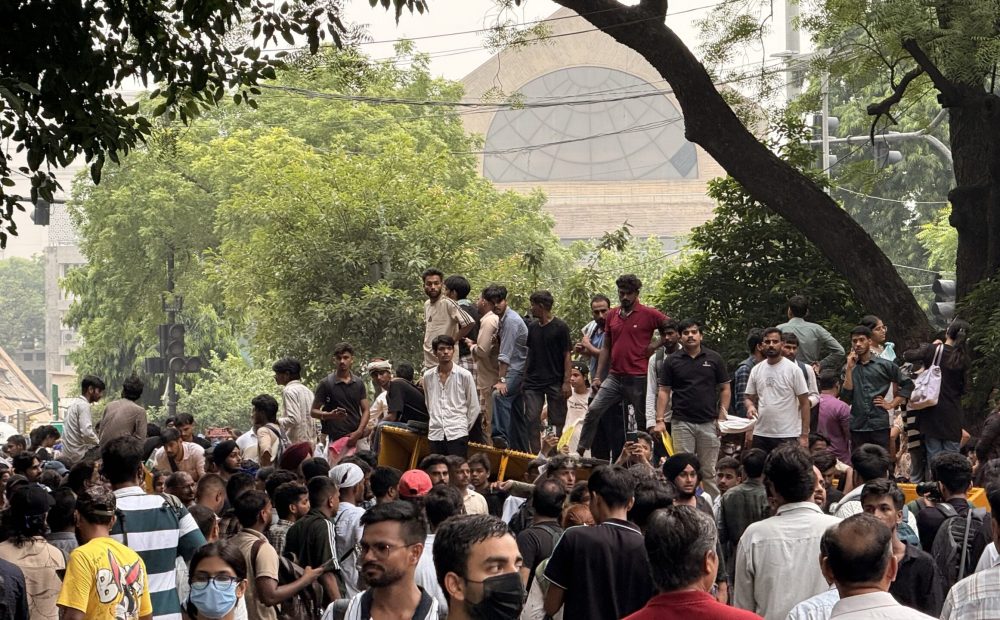
New Delhi: The Supreme Court on Wednesday came down heavily on the Gautam Buddh Nagar administration after an executive magistrate issued a preventive notice to a student over his alleged participation in the Cockroach Janata Party (CJP) protests, despite the court’s order barring coercive action against students linked to the demonstrations.
Chief Justice of India Surya Kant questioned how a magistrate could issue such a notice after the Supreme Court had made it clear that no student could face coercive action for participating in the protests.
“How could the magistrate issue the notice? Our order was clear that no coercive action can be taken against any student across the country. How dare a magistrate do that?” the CJI said.
The issue was brought to the court’s attention by senior advocate Bishwajit Bhattacharyya, who referred to a notice issued Sept. 4 to Akshat Tripathi, a second-year student at Gautam Buddha University. The notice was withdrawn the following day.
The court said it would seek an explanation from the Gautam Buddh Nagar district and executive magistrates over the circumstances surrounding the notice.
The notice accused Tripathi of allegedly spreading anti-government information and encouraging students to join the CJP protest at Delhi’s Jantar Mantar. It also sought to initiate preventive proceedings requiring him to furnish a personal bond of Rs 5 lakh and two sureties of an equal amount to maintain peace for six months.
The proceedings were initiated under preventive provisions of the Bharatiya Nagarik Suraksha Sanhita after police alleged that Tripathi’s activities had created tension on the university campus and could lead to a confrontation affecting public order.
However, the notice was withdrawn after an inquiry found that the information on which it was based was false. It also emerged that Tripathi had left the university for his semester break and was in his hometown when the notice was issued.
Tripathi said he had left the campus May 25 and was in Prayagraj during the period in question. He acknowledged attending the CJP protest at Jantar Mantar on July 20 but questioned how he could have incited students on the university campus while he was away.
The Supreme Court had on Sept. 1 invoked its extraordinary powers under Article 142 to quash cases arising from the July protests. It ordered that FIRs registered between July 20 and 25 across states and Union territories would not be pursued or investigated and would be treated as closed.
The court also directed that no fresh FIRs be registered over the same incidents and made clear that mere participation in the protests could not be treated as an offense.
Calling the episode an “experiment with students of India,” Bhattacharyya urged the court to ensure such incidents do not recur.
“We are surprised how an executive magistrate or a district magistrate can issue a notice when our September 1 order was clear,” Surya Kant said.