Two alleged investment scams that used WhatsApp groups, fake trading platforms and promises of AI-powered profits have cost hundreds of investors more than $15 million, according to the U.S. Securities and Exchange Commission (SEC).
The SEC filed two separate complaints on September 29 against Cryptoaiml Ltd. and Cryptoaiml Capital Foundation, and TSAI Pro Ltd. and TSAI Capital Foundation. The agency alleges that the schemes collected more than $12.5 million and $2.8 million, respectively.
WhatsApp Groups Used To Build Investor Trust
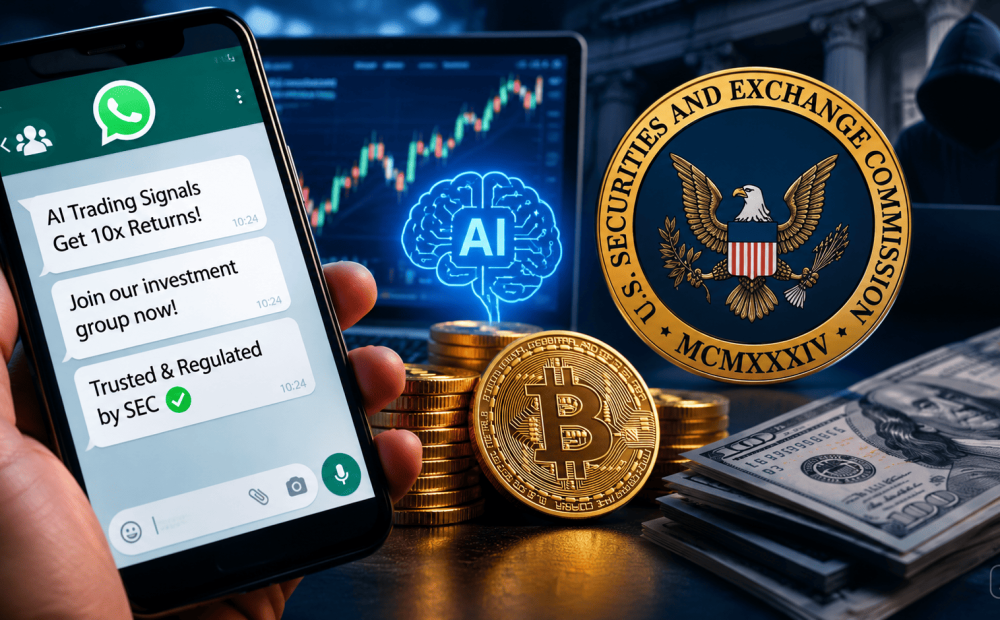
According to the SEC, Cryptoaiml-linked entities operated WhatsApp groups between August 2024 and March 2025, presenting themselves as investment professionals.
Members were allegedly shown AI-generated trading signals and told they could make substantial profits. Investors were then directed to deposit cryptocurrency into an online trading platform that the SEC says was fake.
The agency alleges that no genuine trading took place. Instead, the platform displayed fabricated profits to make investments appear successful.
Problems allegedly began when investors tried to withdraw their money. According to the complaint, they were told their accounts had been frozen and that additional fees had to be paid before funds could be released.
Second Scheme Promoted AI Trading Bots
The SEC’s second complaint concerns TSAI Pro and TSAI Capital Foundation, which allegedly promoted an investment programme through a website, WhatsApp groups and Facebook between September 2024 and March 2025.
Investors were allegedly promised guaranteed returns by depositing money and renting AI trading bots that supposedly generated profits automatically.
The scheme also allegedly encouraged participants to recruit others, offering another way to make money.
But the SEC alleges that the promised trading system did not exist. The agency says there were no AI bots making trades and that investors’ money was not actually being used to generate the advertised returns.
Fake SEC Credentials Added To The Pitch
The alleged schemes also relied on claims of regulatory approval.
The SEC says both operations displayed fake regulatory documents and falsely suggested they were registered or certified by the agency. The entities allegedly used falsified Form D filings to make their operations appear legitimate.
The SEC said the relevant Forms D filed by Cryptoaiml and TSAI have since been removed from its website.
SEC Warns About Investment Groups And Fake Registration Claims
The cases highlight how scammers can combine familiar platforms, artificial intelligence and supposed regulatory credentials to make fraudulent investment opportunities appear legitimate.
The SEC has warned investors not to assume that an investment is genuine simply because someone claims to be SEC-registered or because an opportunity is promoted inside a WhatsApp or social-media group.
Investors can use Investor.gov to check the background and registration status of investment professionals and firms before handing over money.
The SEC’s complaints were filed in the U.S. District Court for the Southern District of New York. The allegations have not been proven in court.