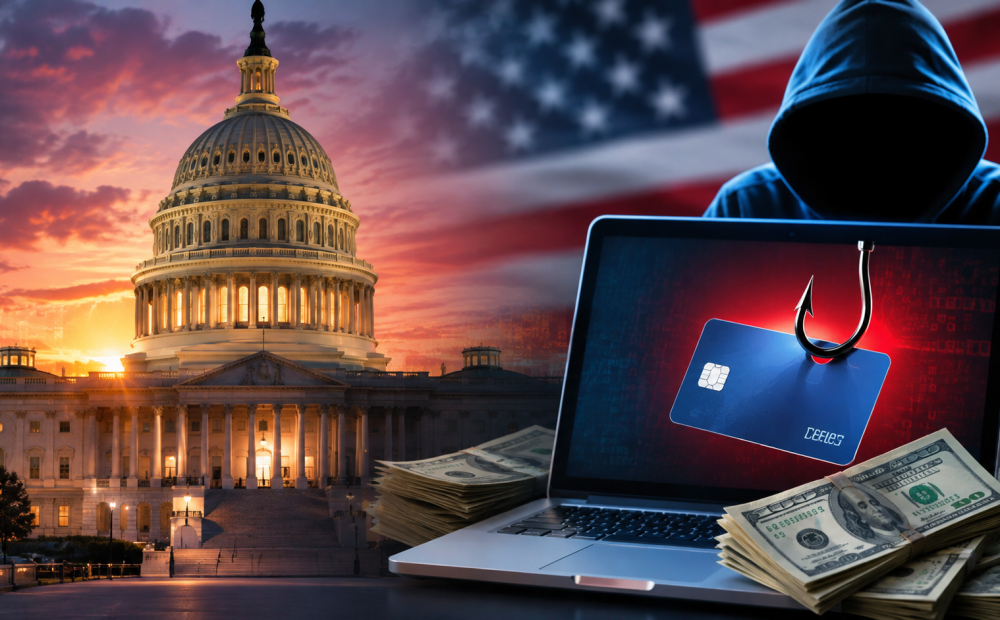
United States: The United States reported nearly $18 billion in cyberfraud losses in 2025, but gaps in federal coordination and limited cooperation with private companies are making it difficult for victims to recover their money, according to a congressional report released on October 27.
According to the Associated Press, the report was issued by Democratic members of the US Congress Joint Economic Committee, Senator Maggie Hassan and Representative Don Beyer. It calls for a coordinated national strategy to tackle international scam networks, improve victim assistance and strengthen collaboration between government agencies and private companies.
Figures submitted to the committee highlight the scale of recovery efforts. The Federal Bureau of Investigation (FBI) returned $336 million to scam victims in 2025, while the Federal Trade Commission (FTC) reported returning $1.83 billion to fraud victims during fiscal year 2025. However, the FTC could not determine how much of that amount was linked to overseas scam compounds. The US Secret Service also returned more than $770 million in seized assets during fiscal years 2024 and 2025 across various fraud schemes.
The report warned that authorities lack a unified system to track funds seized from international scam operations and the amounts ultimately returned to victims. It also raised concerns about the elimination of a US-funded anti-scam programme in Bangladesh, which had trained local law enforcement in cybercrime investigations.
Lawmakers urged Congress to pass legislation establishing a central reporting system for victims and a unified federal approach. They also called for greater accountability among technology, telecommunications and financial services companies.
Kate Griffin of the Aspen Institute said progress had been made, but sustained preventive measures were still needed to reduce victimisation.
The report draws on a yearlong investigation by the Associated Press and FRONTLINE into the global scam industry, which increasingly exploits digital technology and artificial intelligence to target Americans.