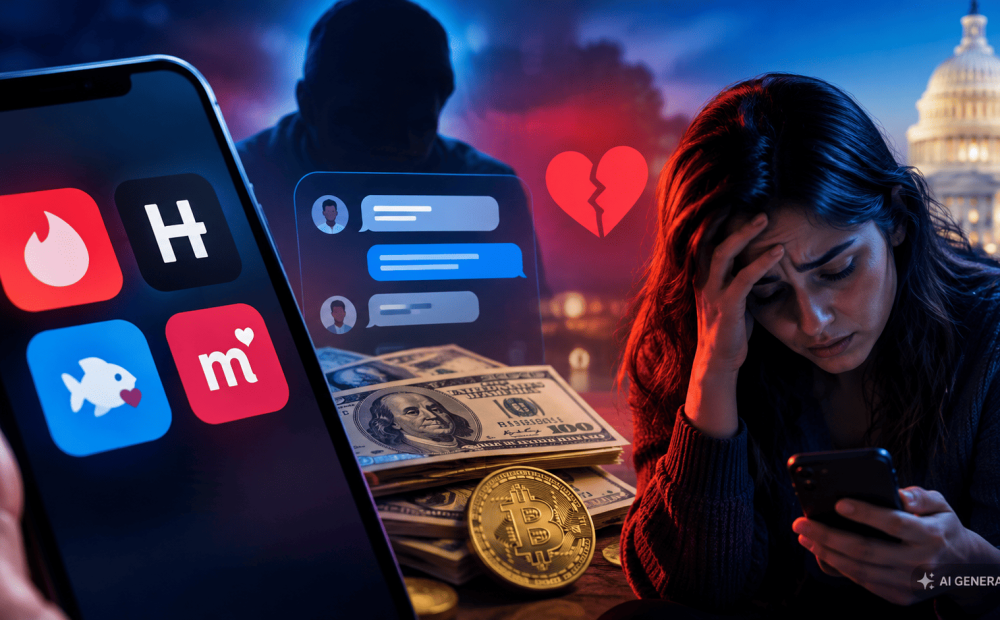
WASHINGTON: A US congressional investigation has raised concerns about the effectiveness of scam detection on popular dating platforms, after internal company records revealed gaps in efforts to identify fraudsters. The inquiry found that millions of accounts flagged as scammers or other suspicious actors had interacted with users on Tinder and Hinge, highlighting the growing risks faced by people seeking relationships online.
According to a report published by The Guardian on October 14, the investigation was led by Senators Maggie Hassan and Marsha Blackburn and examined how Match Group, which owns Tinder, Hinge and Plenty of Fish, handles romance scams. The report found that nearly 1.5 million accounts identified as scammers or other bad actors had matched with at least one user on Tinder and Hinge in the US through the third quarter of 2025. Nearly 500,000 of those accounts had exchanged contact information with another user.
The investigation also highlighted the experience of a woman identified as Mary, who lost almost $100,000 after being targeted by a man she met on Plenty of Fish in 2024. The scammer allegedly built frequent contact with her before repeatedly requesting money for work-related expenses and medical emergencies. She eventually realised the extent of her losses, which had been sent through cryptocurrency payments.
Mary said the continued pressure and repeated contact made it difficult to recognise how quickly the fraud was escalating. Even after she blocked the individual, he allegedly contacted her again using different phone numbers.
The congressional report also raised concerns about Tinder’s technology, citing internal documents indicating that most of its machine-learning models had not been updated for years as of the second half of 2025. Investigators said this affected the platform’s ability to detect scammers and respond to emerging threats.
Match Group said it had strengthened its safety measures, including facial verification and improved AI-based detection systems. The company also disputed aspects of the report, saying its investment in user safety had increased significantly.
Senator Hassan said dating platforms must do more to protect users as criminal networks increasingly exploit technology to target victims.
Romance scams remain a serious financial and emotional threat, with fraudsters exploiting trust and personal connections to solicit money. Authorities urge users to be cautious of online acquaintances who request cryptocurrency, claim emergencies or repeatedly pressure them for financial assistance.