From holiday videos to family photographs and workplace updates, the information you share online can help fraudsters build convincing stories, impersonate people you trust and target your finances.
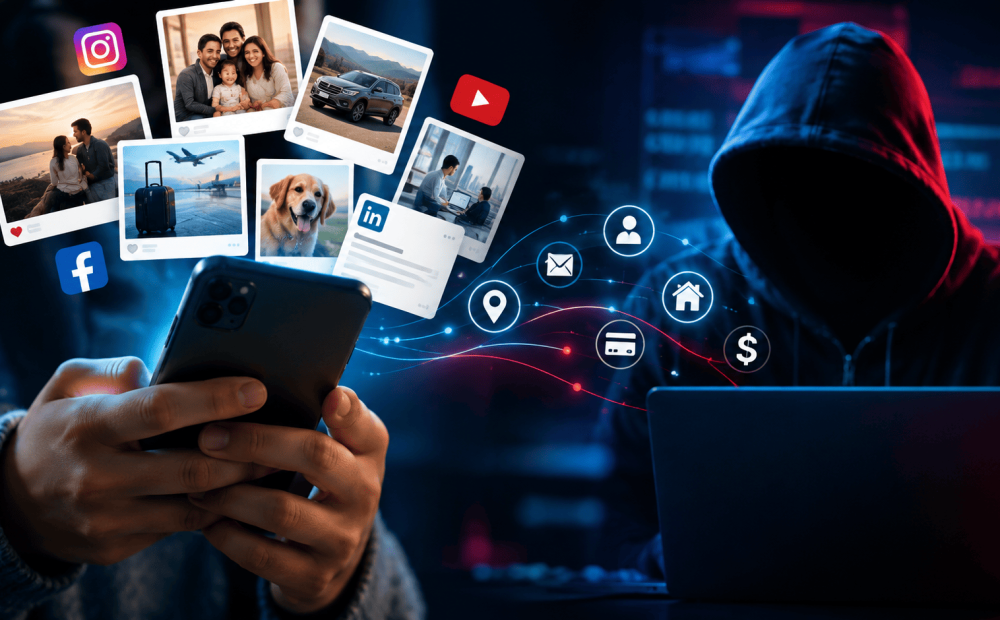
A birthday post, a video filmed at home or a photograph celebrating a new purchase may seem harmless. But to a scammer, these everyday updates can offer valuable clues about your life, relationships, routines and financial interests.
The risk lies not necessarily in a single post, but in how seemingly unrelated details can be pieced together to create a profile of a potential victim. Criminals may use this information to personalise fraud attempts, making their messages appear familiar and trustworthy.
How Your Posts Can Work Against You
Photographs of children can reveal their names and schools, while travel updates may indicate when a family is away from home. Posts about investments, property purchases or expensive possessions could also attract targeted fraudulent offers, although such information does not necessarily establish someone’s actual financial position.
Professional platforms such as LinkedIn can expose job roles, reporting relationships and employees responsible for payments. Scammers may exploit these details to impersonate senior executives, suppliers or colleagues and issue fraudulent payment instructions.
AI Is Making Impersonation Easier
Artificial intelligence adds another layer of risk. Publicly available voice recordings and personal details can potentially be combined to create convincing impersonations. A fraudster might pose as a relative requesting emergency money or as a senior official demanding an urgent transfer.
When such messages contain accurate personal references, victims may be less likely to question their authenticity.
How Can You Protect Yourself?
Avoiding social media is not the solution. Instead, review privacy settings, avoid sharing sensitive personal details or real-time location updates, and check what your photographs reveal in the background.
Use unique passwords and multi-factor authentication. Most importantly, independently verify unexpected requests for money or confidential information, even when they appear to come from someone you know.
The takeaway: Your digital footprint can reveal more than you realise. Think before you post, because information shared casually today could become a tool for fraud tomorrow.